
As of May 2026, bird flu outbreaks are active across dozens of countries simultaneously. The global count stands at over 1,479 outbreaks and events reported since late February 2026 alone, spanning 42 countries and territories, with H5N1 accounting for the vast majority of cases. Active poultry outbreaks have been confirmed in recent months in Argentina, India, Poland, Sweden, the United Kingdom, Bhutan, Bosnia and Herzegovina, and many more.
Where Is Bird Flu Outbreak Now? Latest Location Updates

Sarah Chen
12 May 2026

Human cases remain comparatively rare but continue to be reported, particularly in Asia. [WHO Western Pacific weekly updates are provided as downloadable PDFs](https://cdn. who. int/media/docs/default-source/wpro---documents/emergency/surveillance/avian-influenza/ai_20250822.
pdf? download=true&sfvrsn=4c12d91f1), such as the Avian Influenza Weekly Update example. This is not a single contained event you can point to on one map, bird flu is an ongoing, globally distributed situation in birds, with periodic spillovers into humans and mammals.
How to check if there's a current bird flu outbreak right now

The fastest way to get a real-time answer is to go directly to the surveillance dashboards maintained by international and national health agencies. These are updated regularly and show outbreak locations broken down by species, subtype, and date.
- WOAH WAHIS (World Animal Health Information System): This is the gold-standard database for animal-side outbreaks. WOAH's HPAI Situation Reports (currently at Report 80, covering February 2026) list every country with an active event, including subnational locations and event start dates. Look up any country directly on WAHIS to see the most recent notifications.
- FAO Avian Influenza Dashboard: FAO's interactive map pulls data from WOAH and national sources to show outbreak locations by affected species and circulating virus subtypes. It's the most visual tool available and useful for regional comparisons.
- WHO Avian Influenza Weekly Updates (Western Pacific): If you're concerned about human cases in Asia, the WHO Western Pacific Regional Office publishes weekly PDF updates with confirmed human case counts. These updates are published weekly and indexed by date.
- CDC Bird Flu Situation Summary (US-focused): For the United States, the CDC maintains two separate, regularly updated tables — one for wild bird detections (with state, county, and date fields) and one for commercial poultry and backyard flock outbreaks sourced from USDA APHIS. CDC streamlined its A(H5) reporting cadence in July 2025, so check the page header for the most recent update date.
- Your national agriculture or food safety ministry: Most countries with active outbreaks post their own alerts. If you're in Europe, the EFSA and ECDC publish joint rapid outbreak assessments.
One thing worth understanding before you dig into these tools: WOAH defines an "event" as either a single outbreak or a group of epidemiologically related outbreaks. The event start date on the tracker reflects when the outbreak cluster began, not necessarily when it was reported or confirmed internationally. That distinction matters when you're trying to assess whether something is new or ongoing.
Where outbreaks are happening right now: the geographic hotspots
Bird flu outbreaks in poultry and wild birds are essentially global in 2026. The WOAH Situation Report 80 covering February 2026 includes active events across every populated continent. Here's a snapshot of confirmed recent events with their event start dates:
| Country | Affected Region | Event Start Date | Primary Host |
|---|---|---|---|
| Argentina | Buenos Aires | 19 Feb 2026 | Poultry / Birds |
| Bhutan | Zhemgang | 13 Feb 2026 | Poultry |
| India | Bihar | 11 Feb 2026 | Poultry |
| Poland | Dolnośląskie | 8 Feb 2026 | Poultry |
| Sweden | Torsås | 25 Feb 2026 | Poultry / Wild Birds |
| United Kingdom | England | 26 Feb 2026 | Poultry |
| Bosnia and Herzegovina | Republika Srpska | 24 Feb 2026 | Poultry |
These are illustrative entries from one reporting period. The full WAHIS database contains hundreds more. In terms of broader geography, Europe and Asia remain the most consistently affected regions for poultry outbreaks. The Americas have seen significant spread since H5N1 reached South America via migratory wild birds.
Africa also reports outbreaks regularly, though surveillance capacity varies by country. For human cases specifically, Asia (particularly China, Cambodia, and neighboring countries) continues to account for the largest share of reported spillover events. If you are specifically looking for what is happening in China, focus on WOAH and local health notices for the latest confirmed poultry and human situation updates.
If you want to understand where bird flu is worst in terms of severity and density, that picture is covered in more depth in related resources about the worst-affected regions and the global spread map.
A brief timeline: when did bird flu happen and when was the last outbreak

"When was the last bird flu outbreak" is a question with a tricky answer, because outbreaks have never really stopped. Here's the honest timeline:
- 1997: First known human deaths from H5N1, confirmed in Hong Kong. The outbreak was contained by culling poultry, but the virus wasn't eradicated globally.
- 2003–2006: H5N1 re-emerged and spread across Asia, Europe, and Africa in wild birds and poultry. This was the period most people associate with the phrase 'bird flu pandemic scare.' Over 250 human deaths were confirmed by WHO during this window.
- 2013–2017: H7N9 emerged in China and caused several hundred human cases over multiple waves. It's now controlled but not extinct.
- 2021–present: A new H5N1 clade (2.3.4.4b) began spreading globally via migratory birds, triggering the largest poultry die-offs on record in both Europe and North America. Tens of millions of poultry have been culled across the US and Europe since 2022.
- 2024–2025: H5N1 was confirmed in US dairy cattle herds, a previously unrecognized transmission route. Human cases associated with cattle contact were confirmed in the US.
- 2026 (current): Outbreaks continue across 42+ countries. 1,479 events reported in a single reporting window. Human cases remain rare but monitored closely under WHO IHR Article 6 notification requirements.
There has been no bird flu pandemic in humans in the modern sense: H5N1 has never achieved efficient human-to-human transmission. But the risk is taken seriously by every major public health body precisely because it hasn't stopped circulating.
Outbreak types: seasonal bird flu, HPAI events, and what a pandemic would actually mean
Not all bird flu outbreaks are equal. Understanding the categories helps you put headlines in context.
Low pathogenicity vs high pathogenicity avian influenza (LPAI vs HPAI)
LPAI (Low Pathogenicity Avian Influenza) causes mild or no symptoms in birds and rarely makes news. HPAI (High Pathogenicity Avian Influenza), particularly H5N1, causes severe disease and high mortality in poultry, which is why farms cull entire flocks when it's detected. Virtually every outbreak you read about in 2025 and 2026 is HPAI H5N1 or a closely related subtype. The FAO's current count of 1,479 events references H5Nx strains (including 1,251 confirmed H5N1 events), which are all HPAI strains.
Endemic circulation vs outbreak events
In parts of Asia and Africa, avian influenza circulates year-round in poultry and live bird markets. These aren't "outbreak" events in the dramatic sense, they're endemic situations where the virus is continuously present at a low level. Formal outbreak events, as tracked by WOAH, refer to new detections or clusters that exceed what's considered background circulation for that area.
What a bird flu pandemic would actually require
A bird flu pandemic would require the virus to gain efficient, sustained human-to-human transmission. H5N1 has not done this despite decades of opportunity. The worst human-affecting bird flu outbreak in recent history remains the H5N1 events of 2003–2006, with a case fatality rate in confirmed human cases of roughly 60 percent, but total confirmed human deaths numbered in the hundreds globally, not millions. That's because the virus is terrible at jumping to humans. If you see coverage asking whether the current situation is a pandemic, the short answer in May 2026 is: no, not in humans.
How bird flu spreads and where exposure risk clusters
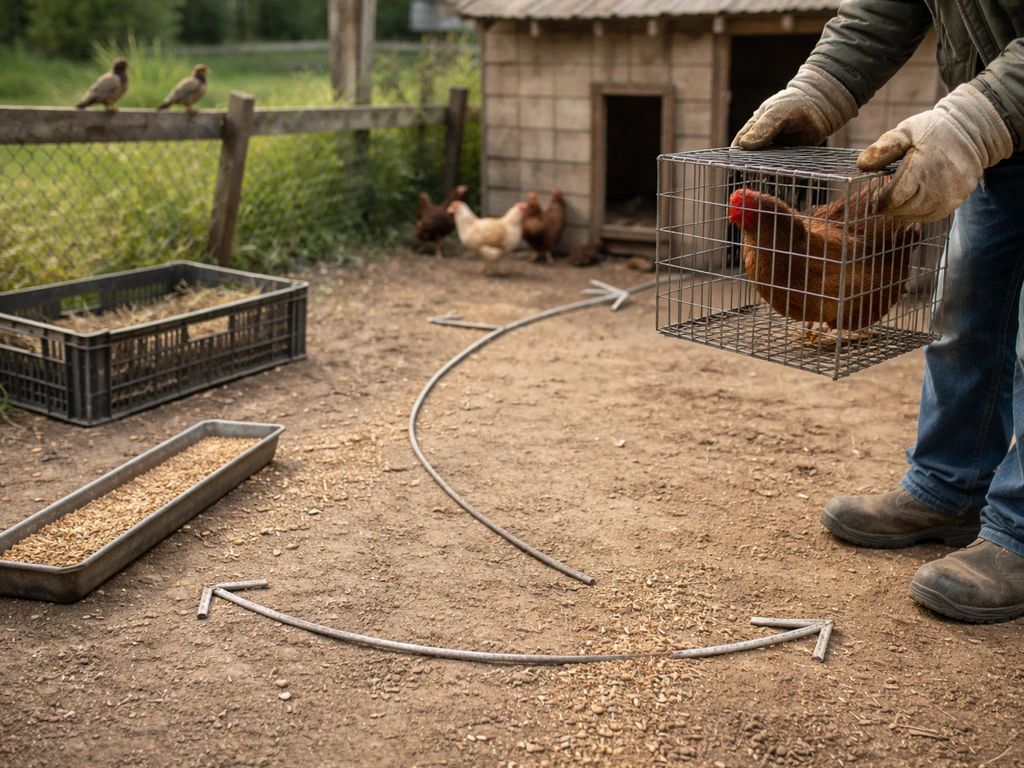
Knowing where outbreaks are is more useful when you understand how transmission actually works, because it tells you what situations carry real risk versus what you can safely ignore.
- Wild bird-to-poultry: The primary driver of geographic spread. Migratory waterfowl (ducks, geese, shorebirds) carry H5N1 asymptomatically and introduce it to domestic flocks when they share water sources or land near farms. This is why outbreaks often track migration flyways.
- Poultry-to-poultry: Once on a farm, HPAI spreads rapidly through respiratory secretions and fecal contamination. A single infected bird can infect an entire shed.
- Animal-to-human: Almost all human H5N1 cases have involved direct or very close contact with infected birds or their droppings. Visiting live bird markets, handling sick or dead poultry, and (more recently) contact with infected cattle are the documented risk scenarios.
- Cattle and mammals: The detection of H5N1 in US dairy herds in 2024 was a significant development. Infected cows shed virus in milk. Human cases in the US were linked to cattle contact, not poultry.
- Human-to-human: Extremely limited and not sustained. A handful of probable family-cluster transmissions have been documented over decades, but none resulted in wider community spread.
- Food: Properly cooked poultry and eggs (internal temperature of 165°F / 74°C) present no risk. Unpasteurized milk from infected herds is a documented exposure route.
The practical implication: your actual risk is defined almost entirely by your proximity to infected animals, not by whether outbreaks are happening somewhere on the same continent as you. Someone in London reading about a UK England outbreak is at essentially zero personal risk unless they work with poultry.
What to actually do: guidance for travelers, households, and farmers
For the general public and travelers
- Avoid live bird markets and poultry farms in areas with active outbreaks, particularly in Asia and parts of Africa. This is the single most effective personal precaution.
- Do not touch sick or dead wild birds. If you find one, report it to your local wildlife or agriculture authority.
- Eat fully cooked poultry and eggs. There are no documented cases of human H5N1 infection from properly cooked food.
- Avoid unpasteurized (raw) dairy products, particularly in the US or any country reporting H5N1 in cattle.
- If you develop fever, cough, or respiratory symptoms within 10 days of exposure to poultry or wild birds in an affected area, tell your doctor about the exposure immediately. Standard flu-like symptoms alone are not cause for alarm.
For backyard flock keepers and small farms
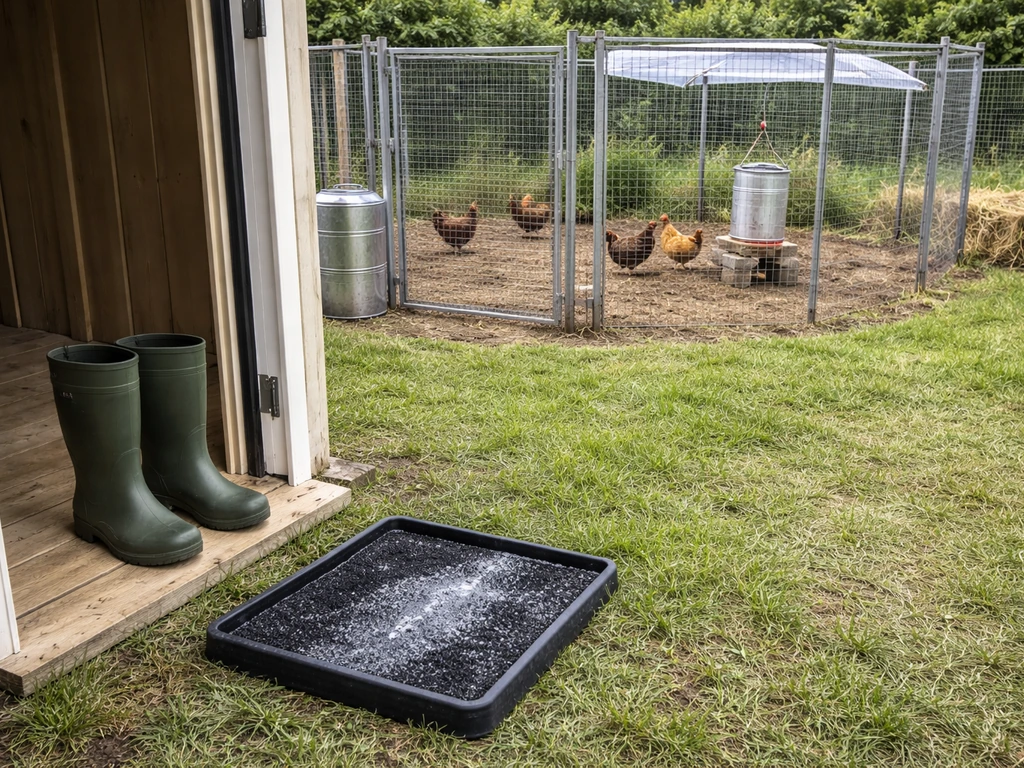
- Implement basic biosecurity: limit access to your flock by people and equipment coming from other farms, and keep wild birds away from feed and water sources. This is especially important during peak migration seasons.
- Know what sick birds look like: sudden unexplained death, respiratory distress, swelling of the head or neck, diarrhea, or a sharp drop in egg production are all warning signs.
- Report suspected HPAI immediately to your national or state agriculture authority. Early reporting protects neighboring farms and often triggers compensation programs for culled flocks.
- Wear PPE (gloves, mask, eye protection) when handling sick birds or cleaning coops after a suspected exposure.
- Check USDA APHIS (in the US) or your national equivalent regularly for county-level outbreak status in your area.
For commercial poultry operations
Enhanced biosecurity protocols issued by USDA APHIS and equivalent national bodies should be your primary reference. The CDC's commercial poultry outbreak table is updated regularly and breaks down events by state and flock type (commercial vs backyard), which is useful for regional risk benchmarking. If you're in an affected state or region, activation of your biosecurity contingency plan, increased surveillance frequency, and staff PPE training are the baseline expectations.
When is bird flu "over" and what does the "last case" actually mean
This is one of the most misunderstood aspects of avian influenza, and it's worth being direct about it: bird flu is never fully "over" in the way a local gastro outbreak is over. H5N1 is now considered endemic in wild bird populations globally. Individual outbreak events are declared over when a farm has been cleared, all susceptible birds have been removed, and the required disease-free period (typically 28 days under OIE standards) has passed without new cases. But that doesn't mean the virus is gone from the region.
When an agency like WOAH lists an event as "closed" or "resolved," it means that specific event on that specific farm or cluster has met the criteria for official resolution. It does not mean the country is free of bird flu. And when news coverage says "the last confirmed human case," it means no new human cases have been reported to WHO since that date, not that the risk has disappeared. Given that human cases are rare and often go undetected in areas with limited surveillance, "last known case" is a floor, not a ceiling.
The more useful question to ask isn't "is bird flu over? " but rather: "Is there active transmission in my area, and am I in a risk group? " If there are no poultry outbreaks within your locality and you have no occupational exposure to birds or cattle, your personal risk is negligible regardless of what the global outbreak count says.
For ongoing situational awareness, bookmark the FAO dashboard and your national agriculture ministry's alert page, and check them when you see a news headline rather than trying to maintain a constant watch. The U. S. EPA provides an HPAI background and directs readers to CDC guidance and situation information, along with related U.
S. monitoring actions Highly Pathogenic Avian Influenza.
Where is the bird flu? Active outbreaks and events are reported across many countries and regions, with birds and poultry in multiple continents affected.
FAQ
How can I tell whether a bird flu “event” is new or just a continuing outbreak cluster?
Check the event start date and compare it to the most recent update date. An event can be marked active for months, and the start date often reflects when the epidemiologically linked cluster began, not when news or international reporting first mentioned it.
If outbreaks are reported “across dozens of countries,” does that mean every region has the same risk to people?
No. Personal risk mostly depends on local exposure to infected animals, not on whether outbreaks exist elsewhere in the same country. People working with poultry, live bird markets, or potentially infected cattle have higher risk than the general public.
What’s the difference between poultry outbreaks and wild bird detections, and should I treat them the same?
They should be treated differently for risk. Poultry outbreaks are closer to farm exposure and commercial biosecurity decisions, while wild bird detections often indicate wider environmental circulation. If you are not near bird habitats, poultry operations, or farm premises, wild bird reports usually matter less for day-to-day personal risk.
How do I interpret “closed” or “resolved” outbreak statuses on surveillance dashboards?
A closed event usually means that specific farm or outbreak cluster met the criteria for resolution, such as completing the required disease-free period after culling and cleaning. It does not guarantee the virus is absent from the wider area.
Why does the “last bird flu outbreak” date in news articles sometimes conflict with current outbreak maps?
News often refers to the last reported human case or the last major headline, while animal trackers keep listing older events as active until official closure. Also, detection timing and reporting timing differ, so “last” can mean last confirmed in a specific dataset, not the last time the virus appeared.
If I live in an area with no poultry farms, do wild bird outbreaks still pose a meaningful risk?
Usually the risk to an individual is low, but it is not zero. Avoid contact with sick or dead birds, and keep pets away from wild bird carcasses. If you own backyard poultry or keep birds indoors, follow local agriculture guidance on biosecurity and reporting.
What should I do if I suspect a bird flu outbreak on my property?
Do not try to treat or transport birds. Isolate any sick poultry, limit contact with other animals and people, and report promptly to your local agriculture or animal health authority so they can test and confirm rather than relying on symptoms alone.
Does “H5N1” mean every outbreak is equally dangerous?
Not exactly. H5N1 is the dominant subtype in many recent reports, but danger to poultry can vary by strain and farm circumstances, and risk to humans still depends on exposure routes. For practical decisions, focus on your local animal-health alerts and biosecurity requirements rather than subtype headlines alone.
How often should I check outbreak updates if I’m trying to stay informed without constant monitoring?
Use a schedule tied to trigger events. For most people, checking when a headline breaks, or reviewing weekly if you live near poultry operations, is more practical than daily scanning. If you are in a high-exposure job, follow the stricter cadence recommended by your employer or regulator.
What are the most common mistakes people make when trying to find “where bird flu outbreak is happening now”?
Relying on a single map without checking event status (active vs closed), assuming “country-level” information means personal exposure risk, and confusing human case dates with animal outbreak dates. Another frequent mistake is treating endemic areas in Asia and Africa as if each detection is a brand-new outbreak.
Next Articles

Where Is the Bird Flu Now? Live Outbreak Tracking Guide
Find where bird flu is spreading now with real-time outbreak maps, how to read confirmed vs suspected cases, and safety

Is Bird Flu in Europe Now? Risk, Symptoms, Safety Steps
Find out if bird flu is in Europe now, current risk, symptoms, food safety, and exact steps for handling exposure safely

What Is Being Done About Bird Flu: Response, Vaccines, Safety
How agencies detect, contain and treat bird flu, plus biosecurity, vaccines, human steps, and safe egg and poultry guida