As of May 7, 2026, highly pathogenic avian influenza (HPAI H5N1) has been detected in the vast majority of U.S. states when you count all three categories together: poultry flocks, wild birds, and livestock (primarily dairy cows). If you're only counting confirmed poultry outbreaks, the number is lower but still spans dozens of states. Wild bird detections cover nearly every state in the continental U.S. Human cases remain rare and concentrated in people with direct animal exposure. The honest answer is: bird flu is widespread across the country in animals, but that does not mean the same level of risk everywhere or for everyone.
What States Have Bird Flu Now A State by State Guide

Sarah Chen
7 May 2026
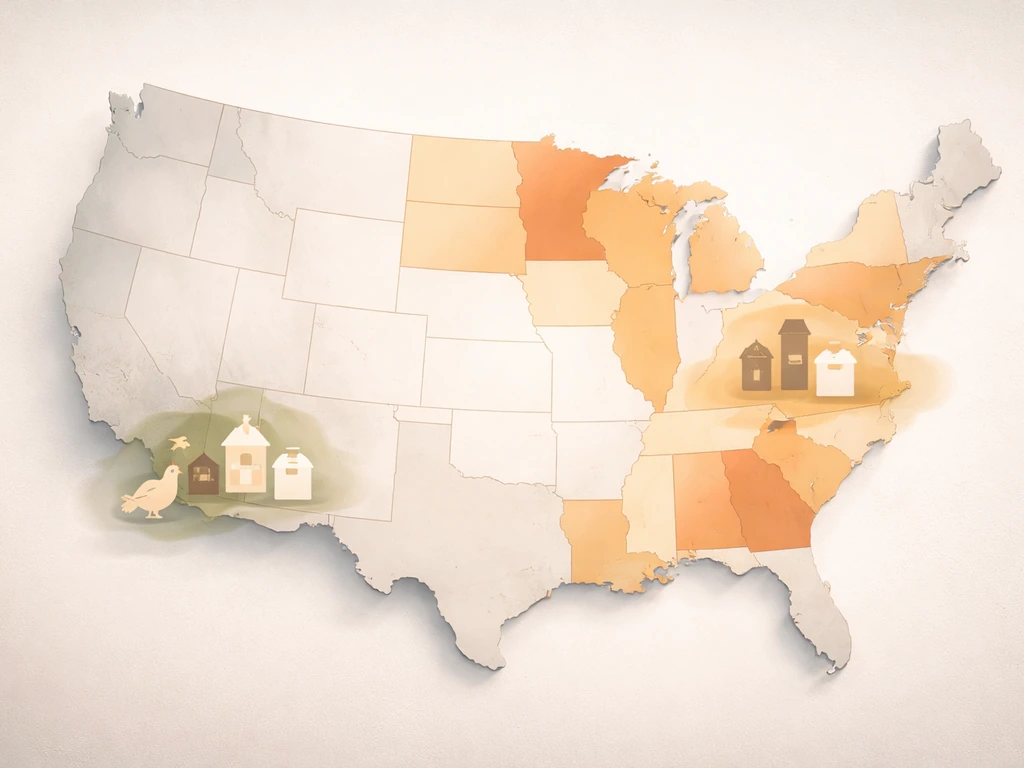
Current U.S. State-by-State Bird Flu Situation (May 2026)
The most accurate real-time picture comes from three separate tracking systems, each updated on its own schedule. Here is where things stand across the main categories as of early May 2026.
Wild Bird Detections
USDA APHIS maintains a dedicated wild bird detections page, last updated May 1, 2026, that shows confirmed HPAI findings at the county level across the U.S. Detections span the overwhelming majority of states, reflecting how migratory waterfowl and shorebirds carry the virus along flyways that cross state lines constantly. The samples come from two sources: APHIS Wildlife Services monitoring, and morbidity/mortality samples submitted by state agencies and private facilities. Detection dates listed are the dates of confirmatory laboratory testing by NVSL (the National Veterinary Services Laboratories), and APHIS notes that dates are updated when sample-collection and detection dates differ. That nuance matters when you're reading the map.
Poultry Flock Outbreaks
Commercial and backyard poultry outbreaks are tracked separately by APHIS. These are the cases that typically trigger quarantine zones, flock depopulation, and egg/poultry supply disruptions. The number of affected states has fluctuated over the course of the ongoing outbreak wave, which began ramping up significantly in 2022. States with large commercial poultry operations, particularly in the Midwest, Southeast, and Mid-Atlantic regions, have repeatedly appeared on these lists. The APHIS poultry detection map is the place to check for current confirmed flock cases by state.
Livestock (Dairy Cow) Detections
The dairy cow outbreak is a newer dimension of this crisis. HPAI A(H5N1) in dairy cows was first officially reported on March 25, 2024, and it quickly spread to herds across multiple states. APHIS tracks this on its 'blank" rel="noopener noreferrer">HPAI Confirmed Cases in Livestock' map, which was last modified March 13, 2026, and is updated each weekday. For livestock, including dairy cows, you can look at the latest list of which states have bird flu in cows. That map shows both the number of new confirmed cases in the past 30 days and cumulative totals by state, making it useful for seeing both current hotspots and historical spread.
Human Cases
Human infections remain uncommon and linked almost exclusively to direct exposure to infected animals. The first confirmed human H5N1 case tied to dairy cows was reported on April 1, 2024, in a Texas farm worker. Since May 2024, CDC began reporting additional sporadic cases in people with exposure to infected dairy cows or poultry. The states involved in human cases are a much shorter list than those with animal detections.
For a detailed breakdown of human case counts by state, the sibling topic on what states have bird flu in humans covers that specifically. For a detailed breakdown of human case counts by state, see the guide on what states have bird flu in humans.
If you want the geographic map for Louisiana specifically, use the guide on where in Louisiana bird flu has been detected For a detailed breakdown of human case counts by state, the sibling topic on what states have bird flu in humans covers that specifically. . The guide on where have bird flu cases been reported explains which places are linked to human cases specifically.
For a state-by-state breakdown focused on humans, see the guide on where bird flu is in the U. right now where is bird flu in the us.
What 'Has Bird Flu' Actually Means: Detections vs. Outbreaks vs. Cases

This is where a lot of confusion starts. When you see a headline saying a state 'has bird flu,' it could mean at least four different things, and the number of states changes dramatically depending on which definition you use. The APHIS National Milk Testing Strategy explains NMTS surveillance for H5N1 in dairy cattle and how “Provisional Unaffected” status depends on whether a state has had confirmed dairy-cattle H5N1 cases in the last 30 days and on completion of testing/surveillance demonstrating disease absence of H5 “Provisional Unaffected” status logic.
| Category | What It Means | Approx. Number of States Affected | Everyday Risk Level |
|---|---|---|---|
| Wild bird detections | HPAI found in tested wild birds (dead or sampled birds) | Nearly all U.S. states | Very low for most people |
| Poultry flock outbreaks | Confirmed HPAI in commercial or backyard flocks | Dozens of states, varies by season | Low for consumers; significant for farmers |
| Livestock detections | HPAI confirmed in dairy cow herds | Multiple states, primarily dairy regions | Low for public; real risk for farmworkers |
| Human cases | Confirmed H5N1 infection in a person | Small number of states | Rare; tied to direct animal exposure |
A wild bird detection in a state does not mean there is an active poultry outbreak there. A poultry outbreak does not mean humans in that state are at elevated risk unless they work with birds directly. Keeping these categories separate is the single most important thing you can do to interpret bird flu news accurately.
Poultry vs. Wild Birds vs. Humans: How the Setting Changes the Count
Wild birds, particularly waterfowl like ducks and geese, are the natural reservoir for HPAI. They carry the virus along migration routes and can shed it into environments where domestic poultry come into contact with contaminated water, feces, or equipment. Because migration doesn't respect state lines, wild bird detections are geographically the broadest category and always will be. By the time migratory seasons peak, virtually every flyway state will have detections on record.
Poultry outbreak counts are more selective. A state only appears on that list when the virus has crossed into a commercial or backyard flock and been confirmed by NVSL testing. These outbreaks tend to cluster in states with dense poultry production, and they can be resolved (removed from the active list) once a flock is depopulated and the quarantine period ends. That means a state can appear, disappear, and reappear on the active poultry outbreak list within a single season.
Dairy cow detections introduced a new geographic pattern starting in 2024. Since HPAI A(H5N1) was confirmed spreading between dairy herds (likely through shared milking equipment, farm worker movement, and cattle transport), the states involved have largely tracked where major dairy production is concentrated. USDA has since confirmed the virus has spread through more than 200 mammals across various species since 2022.
Human cases represent a separate, very short list. Every confirmed human case in the U.S. has been linked to close, direct contact with infected animals, either poultry or dairy cows. There is no confirmed sustained human-to-human transmission of H5N1 in the U.S. as of this writing. So being in a state that has wild bird or even poultry detections does not put the average person at material risk.
How to Verify the Latest State List Right Now

Because this situation changes week to week, bookmarking primary sources is worth your time. Here are the most reliable places to check, what they show, and how often they update.
- USDA APHIS Wild Bird Detections page: Go to aphis.usda.gov and search 'HPAI wild bird detections.' This page shows county-level confirmed detections and was last modified May 1, 2026. Detection dates shown reflect NVSL confirmatory testing, not necessarily when the bird was found.
- USDA APHIS Confirmed Cases in Livestock map: Updated each weekday. Shows new cases in the past 30 days and cumulative state totals. Last modified March 13, 2026. Essential for tracking the dairy cow situation.
- USDA APHIS Poultry Detections: The APHIS 'Current H5N1 Bird Flu Situation in Livestock, Poultry, and People' landing page links to both the active and confirmed flock-level outbreak maps.
- CDC Bird Flu Current Situation page: cdc.gov/flu/avianflu — This is where human case counts, exposure categories, and state breakdowns for human infections are published. Updated as new cases are confirmed.
- Your state's department of agriculture: State ag departments often post their own updates faster than federal pages when a new flock is affected. They also list specific counties, which matters for local farmers.
A few data caveats to keep in mind: There is always some lag between when a sample is collected in the field and when it appears on the federal maps. APHIS explicitly notes that detection dates sometimes differ from collection dates and updates the records accordingly. A state may briefly disappear from the active poultry list after depopulation and quarantine even if wild bird risk persists. And 'confirmed' always means NVSL laboratory verification, not just a field test. Preliminary positives are not included in the official counts until confirmed.
What to Do If You're in a State With Bird Flu
For most people, the answer is: not much needs to change. The presence of HPAI in wild birds in your state is background information, not an emergency alert. But the specifics matter depending on who you are.
For the General Public
- Avoid handling wild birds, especially waterfowl, gulls, or any bird that appears sick or dead.
- If you find a dead bird, contact your state wildlife agency rather than picking it up yourself. If you must move it, use gloves and a plastic bag.
- Do not let pets (especially dogs) interact with dead or sick wild birds.
- Continue eating commercially produced eggs and poultry normally. Proper cooking eliminates any risk from the virus.
- Watch for any news of active poultry outbreaks in your immediate county or region, as those are more locally significant than statewide wild bird detections.
For Backyard Flock and Farm Owners
- Check the APHIS poultry biosecurity page for current enhanced biosecurity guidance, which is typically elevated in states with active nearby detections.
- Limit your flock's exposure to wild birds: cover outdoor runs, secure feed, and eliminate standing water that attracts waterfowl.
- If you also have dairy cattle, review the USDA enhanced movement and biosecurity guidance for livestock currently in effect.
- Report any unexplained sudden deaths or dramatic drops in egg production in your flock to your state veterinarian immediately. Early reporting is critical.
- Keep a log of all people, vehicles, and equipment that enter your property. This contact tracing information is essential if an outbreak is suspected.
For Farmworkers With Direct Animal Contact
If you work directly with poultry or dairy cows in a state with confirmed outbreaks, your exposure risk is genuinely higher than the general public. Wear recommended personal protective equipment (PPE): gloves, eye protection, and a well-fitting respirator (N95 minimum) when handling birds or cleaning infected environments. Wash hands thoroughly and change clothes before leaving the farm. If you develop flu-like symptoms, conjunctivitis (pink eye), or respiratory illness within 10 days of animal exposure, contact your healthcare provider and mention that exposure explicitly. Antiviral treatment with oseltamivir (Tamiflu) is most effective when started early.
Food Safety: Eggs, Poultry, and Dairy
Commercially produced eggs and poultry in the U.S. remain safe to eat. The USDA and FDA maintain inspection systems that pull products from affected flocks out of the commercial supply chain. The key practical rule is temperature: cooking poultry to an internal temperature of 165°F (74°C) and cooking eggs until both whites and yolks are firm eliminates any HPAI risk from the food itself.
Raw milk is a different story. Because HPAI H5N1 has been detected in raw milk from infected dairy cows, drinking raw (unpasteurized) milk carries a real, documented risk. Pasteurization kills the virus. If you're in a state with active dairy herd infections, avoiding raw milk is a straightforward and important precaution. Commercially pasteurized dairy products are safe.
Handling poultry or eggs from your own backyard flock during an active outbreak in your area requires more care. Wash hands after collecting eggs, clean and sanitize nesting boxes regularly, and avoid cracking eggs that show any unusual discoloration. If your flock shows signs of illness, consult your state veterinarian before consuming eggs from those birds.
When to Call a Doctor
Seek medical attention if you develop fever, respiratory symptoms, or pink eye within 10 days of direct contact with birds (wild or domestic), dairy cows, or their environments, especially in a state with confirmed active outbreaks. Tell your provider about the animal exposure upfront. Testing for H5N1 requires specific notification of the state health department and is not part of a routine flu test. Early antiviral treatment significantly improves outcomes.
Bird Flu vs. Other Flu News: Cutting Through the Confusion
One of the most common reasons people search 'what states have bird flu' is because they've seen a headline that conflates avian influenza with regular seasonal flu, pandemic warnings, or general flu activity reports. These are genuinely different things, and mixing them up leads to either unnecessary panic or misplaced reassurance.
- HPAI H5N1 is not the same as seasonal flu. Seasonal flu (H1N1, H3N2, etc.) spreads person to person easily. H5N1 currently does not, and is tracked as a separate, distinct virus.
- Bird flu alerts in a state are not the same as a flu outbreak. CDC's FluView tracker shows seasonal flu activity by state, and those maps look completely different from HPAI detection maps.
- A 'pandemic watch' or 'pandemic potential' headline about H5N1 refers to the theoretical risk of the virus mutating to spread between humans efficiently. That has not happened. Watch language like 'monitoring' vs. 'confirmed spread.'
- Reports of HPAI in mammals (like sea lions, foxes, or mink) are not the same as reports of human cases. Both are concerning from a monitoring standpoint but represent very different risk levels.
- State-level bird flu news sometimes conflates poultry detections with human risk. A headline like 'Bird Flu Hits [State] Farms' most often means a poultry flock was depopulated, not that people are at risk.
If you're seeing conflicting information about case counts, it's worth checking whether the source is counting wild bird detections, flock-level outbreaks, or human cases, since those numbers can differ by a factor of ten or more. If you want the Louisiana-specific number, the next step is to look up how many cases of bird flu in Louisiana by category, since detections, outbreaks, and human cases do not match.
The related topics on how many cases of bird flu exist in the U. For the exact human count across the country, see the guide on how many cases of bird flu in the US how many cases of bird flu exist in the U. S. .
S. and where bird flu has been reported break down those distinctions in more detail and can help you cross-reference what you're reading in the news.
Your Practical Next Steps
Start by identifying which category of bird flu detection is relevant to you. If you're a concerned member of the public with no direct animal contact, checking the CDC current situation page once a week is more than enough to stay informed without getting overwhelmed. CDC maintains a H5 bird flu situation summary that consolidates the current U. S.
public-health picture for human H5 bird flu cases and related updates CDC current situation page.
If you're a farmer or farmworker, bookmark the APHIS poultry and livestock maps and your state ag department's update page, and review biosecurity protocols now rather than waiting for a local outbreak. If you've had direct animal exposure and feel ill, call your doctor today and mention that exposure. Bird flu in the U. S.
right now is a serious and ongoing animal health situation with a real but very limited public health footprint. Understanding exactly where it is, and what 'where' actually means in different contexts, is the most practical thing you can do.
FAQ
Which “states with bird flu” list should I use if I just want to know my real-world risk?
If you want “states with bird flu” for everyday risk, focus on whether you have confirmed dairy herd infections in your state (for raw milk risk) or confirmed poultry outbreaks where you work (for PPE precautions). Wild-bird detections alone usually do not imply an active farm outbreak in that same location.
Why do some maps show a state with bird flu even if there are no new headlines?
Use the county-level wild-bird map and check the confirmation date, because sampling and confirmation can be separated. Also note that a detection can persist on record even after no new findings are being reported, so the absence of a new marker is not the same as eradication.
Can a state stop and then start appearing on the poultry outbreak list again?
Poultry outbreak status can change within a season because active lists are based on confirmed flock infections and end after depopulation and quarantine. A state may show up again later if another facility gets confirmed, so “not currently listed” does not guarantee there was never an outbreak there.
Does having wild-bird detections in my state mean I should worry about catching it from people?
Human case reporting is tied to direct exposure, so “my state has human bird flu” is not something you can infer from animal detections alone. If you are not working with animals or their environments, your baseline risk remains low even if wild birds are positive.
Why do different articles claim very different numbers of states affected?
If you are comparing numbers from two sources, match the definition first: wild-bird detections, confirmed poultry flock outbreaks, confirmed livestock cases, or human cases. Those categories can differ dramatically, so “dozens of states” in one count might be only a few in another.
As a poultry worker, how should I decide what precautions to take if the state label is broad?
For farm-related decisions, look at the specific facility update cycle, not just the state label. Quarantine actions are often facility-specific, and your biosecurity steps should track the nearest confirmed flock or herd worksite, plus any guidance from your state agriculture department.
What’s the practical difference between a suspected case and a confirmed NVSL lab result?
If a site says “suspected” or “preliminary,” it may not be included in official “confirmed” counts until NVSL laboratory verification. For decision-making, treat confirmed NVSL lab results as the benchmark rather than field screening outcomes.
If bird flu is in dairy cows in my state, are eggs and cooked poultry unsafe too?
Yes. If you are in a state with dairy herd infections, the key food question is raw versus pasteurized, not cooked foods. Pasteurization kills the virus, so commercially produced dairy is generally safe, even if some farms are affected.
How should I think about raw milk risk if my state has dairy herd detections?
If you are using raw milk, the risk is tied to whether virus is present in that specific supply at that time. Practically, avoid raw milk during periods when dairy herds are actively confirmed in your region, and choose pasteurized products as the default.
What should I tell my doctor if I develop flu-like symptoms after farm or animal exposure?
If you get sick within about 10 days of direct animal exposure, including exposure to manure, milking areas, poultry housing, or contaminated equipment, contact a clinician and explicitly mention the exposure. Standard flu testing may not capture H5N1 specifically, so your history matters for what tests are ordered.
How can I tell when a news story is really about H5N1 versus seasonal flu?
Don’t rely on a general “flu warning” to gauge bird-flu relevance, because seasonal influenza activity is different and often unrelated. Use bird-flu-specific sources for animal detections and human exposure reporting when deciding what to do.
Does it matter whether a wild-bird detection came from monitoring versus a sick or dead bird submission?
If you are looking at a county on the wild-bird map, confirm whether it is wildlife monitoring versus state-submitted samples, since both feed the map. It can help interpret whether the detection came from routine monitoring or from a submission tied to animal illness or mortality events.
Next Article
How Many Cases of Bird Flu in the US Are There?
Current US human bird flu case totals plus deaths, definitions, reporting timeline, and how to interpret risk safely.