
H3N2 is not bird flu. The term 'H3N2' almost always refers to influenza A(H3N2), a seasonal human influenza virus that has circulated in people since 1968 and is included in the annual flu vaccine. Bird flu, or avian influenza, refers to influenza A viruses that primarily circulate in birds, most notably subtypes like H5N1, H7N9, and some avian H3-lineage viruses. While both labels use the same H and N naming system, seasonal human H3N2 and avian H3 viruses are genetically distinct and belong to completely different evolutionary lineages. The short version: if your doctor says you have H3N2, you have seasonal flu, not bird flu.
Is H3N2 Bird Flu? What H3N2 Means, Risks & Guidance

Sarah Chen
22 Jul 2026
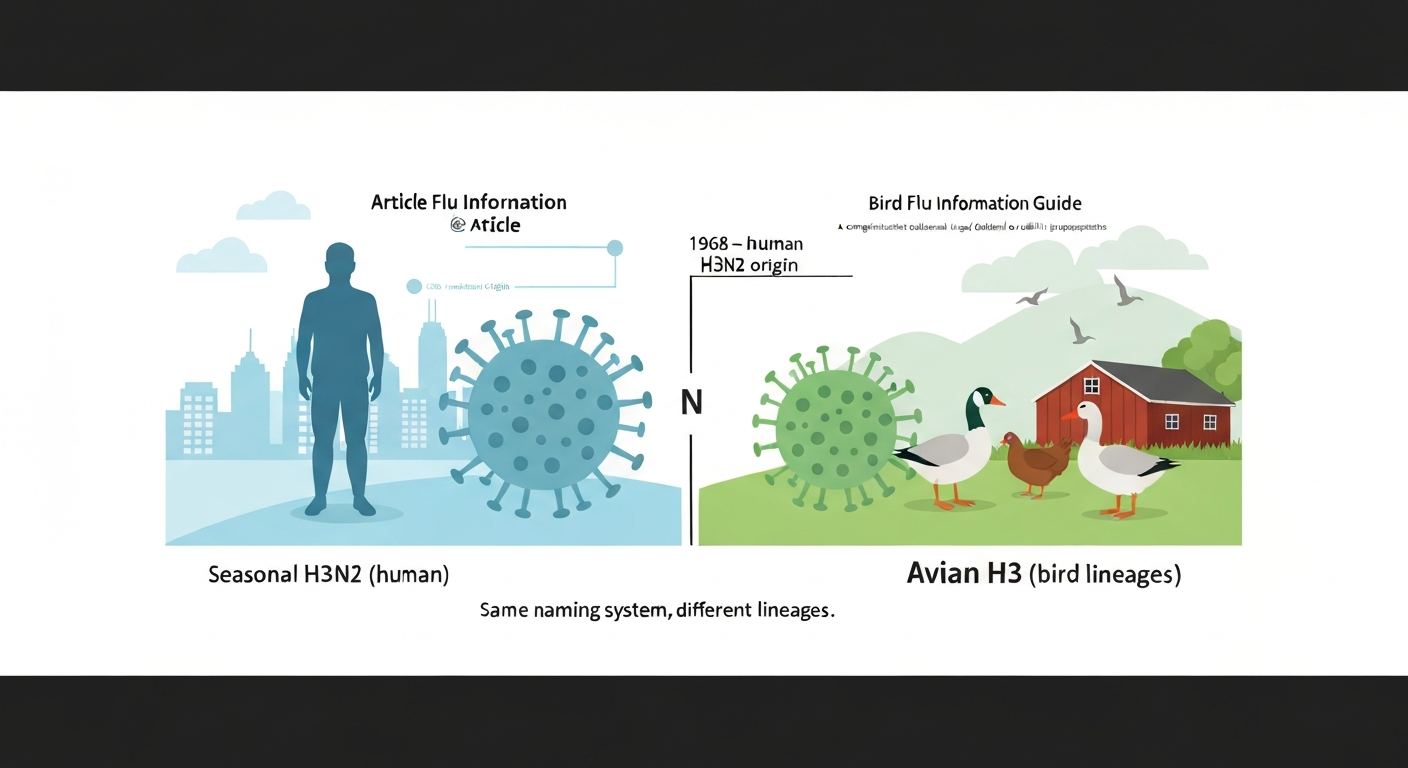
What this article covers (and who it's for)
I put this guide together for three groups who tend to land on this question: people who saw 'H3N2' in a headline and wondered if it was connected to a bird flu outbreak; poultry farmers trying to understand which flu strains actually threaten their flocks; and public-health-minded readers who want a clear-eyed breakdown of risks without the sensationalism. All three groups deserve the same thing: accurate, grounded information with no exaggeration in either direction.
Quick takeaways by audience
| Audience | Core takeaway | Action to take |
|---|---|---|
| Concerned individuals | Seasonal H3N2 is the ordinary flu, not bird flu. It is vaccine-preventable and well-characterized. | Get your annual flu shot, which includes an A(H3N2) component most seasons. Monitor CDC FluView for activity levels. |
| Poultry farmers | Avian H3-lineage viruses do circulate in wild birds and poultry and differ from seasonal human H3N2. LPAI H3 strains require routine biosecurity, not panic. | Enforce flock biosecurity, report unusual mortality to your state veterinarian, and follow WOAH-recommended diagnostics for subtyping. |
| Public-health readers | Seasonal H3N2 and avian H3 viruses are phylogenetically separate. Sporadic zoonotic H3 events (e.g., H3N8 in humans, 2022) exist but show no evidence of sustained human-to-human transmission. | Track WHO Disease Outbreak News and CDC avian influenza updates for any novel zoonotic H3 detections. |
How influenza A subtypes actually work
Influenza A is classified by two proteins that stick out from the surface of the virus particle: haemagglutinin (HA, abbreviated H) and neuraminidase (NA, abbreviated N). HA is the protein the virus uses to grab onto and enter host cells. NA is the protein it uses to break free after replication so it can infect new cells. Scientists have identified 18 distinct HA subtypes (H1 through H18) and 11 NA subtypes (N1 through N11) in nature. When you see a subtype name like H3N2 or H5N1, it simply tells you which version of each surface protein that particular virus carries.
What makes influenza A especially tricky from a public-health standpoint is its genome structure. The virus packs its genetic instructions into 8 separate RNA segments rather than one continuous strand. When two different influenza A viruses infect the same cell at the same time, those segments can get shuffled between the two viruses, a process called reassortment. This is how novel subtypes emerge that combine, say, an avian HA with a human NA and polymerase genes from a third strain. Pandemic viruses, including the 1968 H3N2 pandemic strain and the 2009 H1N1 pandemic strain, were products of exactly this kind of genetic reshuffling.
Why human H3N2 is not the same as avian H3 viruses
Sharing the same H3 designation does not make these viruses relatives in any meaningful clinical sense. Human seasonal H3N2 traces its origin to a reassortment event in 1968 (the 'Hong Kong flu' pandemic) and has been evolving in the human population continuously ever since. Over roughly 55 years of circulating exclusively in people, it has accumulated hundreds of mutations that tune it to the human upper respiratory tract. Its receptor-binding site, the part of HA that latches onto host cells, has adapted to prefer alpha-2,6-linked sialic acid receptors, which are the type lining the human airway.
Avian H3 viruses, by contrast, evolved along completely separate Eurasian and North American wild-bird lineages. Phylogenetic analyses of global H3 sequences from GISAID and GenBank confirm that avian H3 HA genes are genetically distinct from the human seasonal H3N2 clades. Bird-origin H3 viruses preferentially bind alpha-2,3-linked sialic acid receptors, which are abundant in the avian gut and respiratory tract but far less common in the human upper airway. That receptor mismatch is one of the main barriers that prevents most avian flu viruses from spreading easily among people. For a bird-origin H3 virus to become efficiently transmissible in humans, it would need mutations at key positions in the HA receptor-binding site (residues 190, 226, and 228 in H3 numbering) as well as changes in the polymerase gene PB2 (particularly E627K or D701N) that help the virus replicate at the lower temperatures found in the human airway.
The special case of swine-origin H3N2v
There is a third H3N2 to be aware of: influenza A(H3N2) variant virus, written H3N2v. This is a swine-origin H3N2 that began appearing in U.S. pigs after the 2009 H1N1 pandemic and picked up the M (matrix) gene segment from that pandemic strain. The CDC documented human H3N2v clusters in 2011 and 2012, mostly in children who had direct contact with pigs at agricultural fairs. These variant viruses showed limited human-to-human spread in a few household clusters, but no sustained community transmission was detected. H3N2v is not seasonal H3N2 and it is not avian H3, but it is a useful reminder that the H3N2 label can sometimes describe more than one distinct viral lineage, which is part of why the question 'is H3N2 bird flu?' comes up at all.
Where to check for current outbreak data
Influenza surveillance is genuinely global, and authoritative data is publicly available in near real time. The CDC's FluView dashboard tracks seasonal influenza activity in the United States week by week, including the proportion of H3N2 versus H1N1 circulating strains. For global seasonal flu trends, WHO publishes FluNet data and periodic Disease Outbreak News updates that cover novel or unusual influenza detections, including any zoonotic events. WOAH (formerly OIE) maintains its WAHIS database for animal disease events, which includes avian influenza reports from member countries and is searchable by subtype and location. FAO provides situation reports and risk assessments under its Global AIV with Zoonotic Potential tracking program. For any confirmed or suspected novel zoonotic flu event, WHO convenes joint rapid risk assessments with FAO and WOAH, as it did for the 2022 human H3N8 case in China. Checking these primary sources, rather than news headlines, is the most reliable way to assess current risk.
H3N2, H3N8, H10N3, and HMPV compared
One of the most common sources of confusion around H3N2 is seeing it discussed alongside other respiratory viruses in the news. The table below lays out the key differences across the four viruses that generate the most search traffic on this topic.
| Virus | Primary host(s) | Zoonotic risk to humans | Documented human cases | Severity in humans | Vaccines / antivirals | Poultry impact |
|---|---|---|---|---|---|---|
| Influenza A(H3N2) seasonal | Humans (endemic since 1968) | Not applicable — already a human virus | Millions annually worldwide | Mild to severe; can cause pneumonia, hospitalization, death especially in elderly/immunocompromised | Annual seasonal flu vaccine includes H3N2 component; neuraminidase inhibitors (oseltamivir, zanamivir) effective | None — not an avian-origin strain in current circulation |
| Influenza A(H3N8) | Wild birds, horses, dogs; occasional spillover to humans | Low but not zero — two confirmed human cases (China, 2022); no sustained human-to-human transmission detected | 2 confirmed zoonotic human cases as of 2022 FAO/OIE/WHO joint risk assessment | Severe in the two documented cases (pneumonia/ARDS in one child); small sample size limits generalization | No specific H3N8 vaccine for humans; oseltamivir used clinically; antiviral susceptibility confirmed in case reports | LPAI H3N8 subtypes circulate in poultry and wild birds; generally lower pathogenicity than H5/H7 strains |
| Influenza A(H10N3) | Wild birds, poultry | Low; only one confirmed human case reported (China, 2021) | 1 confirmed zoonotic human case (Jiangsu, China, April 2021); no subsequent confirmed cases | Clinical pneumonia in the single reported case; patient recovered; no evidence of onward spread | No H10N3 human vaccine; antiviral treatment used; limited susceptibility data available | LPAI status in poultry; limited documented poultry outbreaks compared to H5/H7 |
| HMPV (Human metapneumovirus) | Humans (distinct virus — not influenza) | Not a zoonotic concern — HMPV is not related to avian influenza or any influenza A virus | Circulates globally; causes millions of respiratory illnesses annually, especially in children under 5 and elderly | Typically mild to moderate cold-like illness; can cause bronchiolitis and pneumonia in vulnerable groups | No approved vaccine as of July 2026 (candidates in development); supportive care; no proven specific antiviral | None — HMPV does not infect poultry |
A closer look at H3N8, H10N3, and HMPV
These three viruses come up repeatedly in searches alongside H3N2, so it's worth giving each one a clear-eyed summary without overstating what we actually know.
H3N8: real zoonotic events, but no alarm bells yet
H3N8 influenza viruses have a long history in horses and dogs and also circulate in wild aquatic birds. The first confirmed human A(H3N8) infection was reported in Henan Province, China, in April and May 2022, involving a child who developed severe pneumonia and acute respiratory distress syndrome. Preliminary FAO/OIE/WHO Joint Rapid Risk Assessment, Human infection with Influenza A(H3N8), China (18 May 2022) confirms the Henan case in April–May 2022 was avian‑origin and found no evidence of sustained human‑to‑human transmission Preliminary FAO/OIE/WHO Joint Rapid Risk Assessment — Human infection with Influenza A(H3N8), China (18 May 2022). Genome sequencing confirmed an avian-origin virus. A joint FAO/OIE/WHO rapid risk assessment concluded that the risk of human-to-human transmission was low at that time, with no evidence of spread beyond the initial case. A second human case was subsequently confirmed in China, again without evidence of onward transmission. The current scientific consensus is that H3N8 does not spread efficiently among people, but its presence in both wild birds and domestic animals means surveillance remains important. For more detail on whether H3N8 poses a serious danger, this is a topic we cover in depth elsewhere on this site. See our in-depth guide “Is H3N8 bird flu dangerous” for a focused risk assessment.
H10N3: one case, one important data point
The first and, as of writing, only confirmed human H10N3 infection was reported from Jiangsu Province, China, in April 2021. The patient had likely been exposed at a live-poultry market, a known source of avian influenza spillover events in China. The virus was characterized as a low-pathogenicity avian influenza (LPAI) strain of avian origin. The patient developed pneumonia and recovered. WHO and the peer-reviewed case report both noted no evidence of sustained human-to-human transmission. One case does not make an outbreak, and risk assessments from the time rated H10N3 as posing a low public-health risk. See h10n3 bird flu is dangerous for a focused analysis of the H10N3 zoonotic case and its risk assessment. That said, any novel avian influenza subtype detected in a human is worth monitoring closely, because it tells us that the species barrier is permeable, even if only occasionally.
HMPV: a common respiratory virus with nothing to do with bird flu
Human metapneumovirus, or HMPV, is not influenza at all. It belongs to a completely different virus family (Pneumoviridae) and does not carry H or N proteins in the influenza sense. HMPV is a common cause of respiratory illness worldwide, particularly in young children, the elderly, and immunocompromised individuals, where it can cause bronchiolitis and pneumonia. It has no connection to avian influenza, poses no zoonotic concern in the bird flu sense, and does not infect poultry. The confusion between HMPV and bird flu appears to come from media coverage of respiratory outbreaks where both terms appear in the same news cycle. They are unrelated.
Symptoms in humans: seasonal H3N2 vs. avian H3 infections
Seasonal H3N2 produces the familiar flu syndrome: sudden fever, chills, muscle aches, headache, dry cough, fatigue, and sometimes sore throat or runny nose. Onset is abrupt, typically within one to four days of exposure. Most healthy adults recover within one to two weeks. Complications including pneumonia, myocarditis, and worsening of underlying conditions are more common in adults over 65, children under 5, pregnant women, and people with chronic health conditions. Seasonal H3N2 has historically been associated with worse seasons for older adults compared to H1N1, partly because of reduced immune protection in people whose early flu exposure was to pre-1968 strains.
The two confirmed human H3N8 cases and the single confirmed human H10N3 case all presented with pneumonia, which is consistent with how other novel avian influenza zoonotic infections typically behave in humans. Avian influenza viruses that do jump to humans tend to go deeper into the respiratory tract than seasonal flu, reaching the lower airway and lung tissue, which is where serious illness occurs. This is not because avian H3 is necessarily more inherently dangerous than seasonal H3N2, but because the human upper airway does a poor job of stopping a virus that isn't adapted to it, allowing deeper infection before the immune response kicks in.
Symptoms in poultry and what farmers should watch for
Avian influenza in poultry is classified as either highly pathogenic (HPAI) or low pathogenicity (LPAI) based on the virus's behavior in experimentally infected chickens and on the molecular characteristics of the HA cleavage site. HPAI strains (most notoriously H5N1 and H5N8) cause sudden, severe illness with very high mortality. Birds may die rapidly with minimal prior clinical signs, or show neurological symptoms, respiratory distress, and cyanosis of the comb and wattles. Egg production drops sharply. LPAI strains, including most circulating avian H3 viruses, typically cause milder respiratory signs, reduced egg production, and lower mortality, though secondary bacterial infections can worsen outcomes.
On a practical level, any unexplained mortality spike, sudden drop in feed or water consumption, or respiratory distress in a flock warrants immediate contact with your state or regional animal health authority. Do not wait for laboratory confirmation before isolating affected birds and suspending movement. Early reporting is both a legal obligation in most jurisdictions and the most effective tool for limiting spread.
Testing and diagnosis
For human patients, influenza subtyping is done using real-time reverse transcription PCR (rRT-PCR), which can distinguish between H3N2, H1N1, and novel subtypes. Rapid antigen tests available in clinics can confirm influenza A or B but cannot subtype the virus. If you test positive for influenza A on a rapid test but your doctor suspects a novel strain (for example, because you had recent contact with sick poultry), a follow-up PCR with subtyping is warranted, and the case should be reported to public health authorities.
For poultry, WOAH's recommended diagnostic protocol includes virus isolation in embryonated eggs, rRT-PCR for rapid detection and subtyping, hemagglutination inhibition (HI) serology, and full genome sequencing to determine pathotype and cleavage-site characteristics. PCR is the front-line tool for rapid field response, while sequencing provides the subtype and pathogenicity data needed for regulatory decisions. Samples should be sent to a WOAH-recognized national or reference laboratory.
How influenza spreads: transmission routes you need to understand
Seasonal H3N2 spreads person to person through respiratory droplets released when an infected person coughs, sneezes, or talks, as well as through contact with contaminated surfaces followed by touching the face. The virus is transmissible from roughly one day before symptoms appear through five to seven days after onset in adults, and longer in children and immunocompromised individuals.
Avian influenza transmission to humans follows a different pattern. The dominant route is direct contact with infected birds or their secretions, including feces, respiratory secretions, blood, and feathers. In the zoonotic H3N8 and H3N2v cases, exposure to live animals (pigs at fairs, poultry markets) was the identified risk factor. Airborne transmission between humans with avian flu strains is inefficient or absent for currently circulating strains, which is why avian flu causes sporadic individual cases rather than community outbreaks.
Biosecurity on the farm: practical steps
- Restrict visitor access to poultry houses and require protective footwear, clothing changes, and hand hygiene at entry points.
- Use dedicated equipment for each poultry house and clean and disinfect shared tools between uses.
- Control wild bird access to feed and water sources; avoid open water sources that attract waterfowl.
- Source replacement birds only from certified disease-free flocks and quarantine new birds for at least 30 days.
- Monitor flock health daily, record feed and water consumption, and track egg production trends.
- Report unexplained illness or mortality to your state veterinarian immediately; do not transport sick birds.
- Ensure farm workers understand flu symptoms and know to report potential exposure to poultry.
Food safety: eggs, poultry, and the actual risk
Properly cooked poultry and eggs are safe to eat even during avian influenza outbreaks. Influenza A viruses, including avian strains, are inactivated by normal cooking temperatures. The USDA recommends cooking whole poultry to an internal temperature of 165 degrees Fahrenheit (74 degrees Celsius), which is more than sufficient to eliminate influenza virus. There is no documented case of anyone contracting avian influenza from eating thoroughly cooked poultry or eggs.
Risk points in food handling are raw poultry and eggs before cooking, not the finished product. Standard kitchen hygiene applies: wash hands thoroughly after handling raw poultry, avoid cross-contamination with ready-to-eat foods, and cook eggs until both yolk and white are firm if you are immunocompromised, elderly, pregnant, or caring for young children. These are the same precautions you would follow for Salmonella, and they cover influenza risk at the same time.
Vaccines and antivirals: what's available and what isn't
The annual seasonal influenza vaccine reliably includes an A(H3N2) component, selected each year by WHO's global surveillance network based on which strains are expected to circulate. Getting vaccinated does not protect against avian influenza subtypes like H5N1 or H7N9, because those viruses are antigenically very different from seasonal strains. But seasonal vaccination remains the single most important step an individual can take to reduce flu burden, because it prevents or reduces severity of the illness most likely to affect you.
For avian influenza subtypes, no licensed human vaccine is currently available for routine use. Several candidate H5N1 vaccines exist in national stockpiles for emergency use, and research on broader H3 and H10 vaccines is ongoing, but nothing is commercially available as of July 2026. On the antiviral side, neuraminidase inhibitors (oseltamivir, brand name Tamiflu; zanamivir) and the cap-dependent endonuclease inhibitor baloxavir are active against seasonal H3N2. The limited case reports for H3N8 and H10N3 also used oseltamivir clinically. The key practical point: antiviral treatment works best when started within 48 hours of symptom onset, so do not wait to seek care if you have had recent contact with sick poultry and develop flu-like symptoms.
What to do after exposure and when to get medical help
If you have had direct contact with sick or dead birds and develop respiratory symptoms, fever, or muscle aches within 10 days of that exposure, call your doctor or local health department before going in person. Tell them about the animal exposure so they can assess the need for influenza testing and notify public health if appropriate. Showing up in an emergency room without calling ahead risks exposing other patients unnecessarily and may delay the correct diagnostic workup.
For most people with seasonal H3N2 flu, rest, fluids, and over-the-counter symptom management are appropriate. Seek medical attention promptly if you experience shortness of breath, persistent chest pain, confusion, severe vomiting, or symptoms that improve but then return with fever and worsening cough. These are potential signs of pneumonia or secondary complications that warrant clinical evaluation and possibly antiviral treatment regardless of how much time has passed since symptom onset.
The bottom line on H3N2 and bird flu
H3N2, as most people will ever encounter it, is seasonal human influenza. It is one of the best-characterized viruses on the planet, monitored by a global surveillance network, covered by annual vaccines, and treatable with widely available antivirals. CDC's Types of Influenza Viruses explains that seasonal influenza A(H3N2) circulates in humans and is included in the annual seasonal flu vaccine. The fact that there are also avian H3 viruses in the world, including strains that have caused a small number of zoonotic human infections, does not change that fundamental picture. Understanding the difference between a shared subtype name and a shared evolutionary history is the key to reading flu news without unnecessary alarm. The H and N labels are a filing system, not a family tree.
FAQ
Is H3N2 bird flu? Short answer and full explanation
Title: Is H3N2 Bird Flu? Short answer and practical guidance Meta (≤160 chars): “H3N2 usually means seasonal human influenza A(H3N2). Some H3 viruses are avian-origin; risk depends on virus lineage and exposure.” Short answer (concise): H3N2 most often refers to seasonal human influenza A(H3N2). "Bird flu" (avian influenza) refers to avian-lineage influenza A viruses (commonly H5, H7 and varied HxNy in wild birds/poultry). Some H3 viruses circulate in birds and can rarely infect people, but seasonal human H3N2 and avian H3 viruses are genetically distinct. Sources: CDC, WHO, FAO/OIE. What "H" and "N" mean (clear definitions) - Influenza A viruses are named by two surface proteins: haemagglutinin (H, HA) and neuraminidase (N, NA). There are multiple H (HA) and N (NA) subtypes (e.g., H3, N2). See WHO: Virology of human influenza (https://www.who.int/europe/news-room/fact-sheets/item/virology-of-human-influenza) and CDC: Types of influenza viruses (https://www.cdc.gov/flu/about/viruses-types.html). - The subtype label (e.g., H3N2) describes HA and NA genes but not the host origin; the same HA subtype (H3) appears in human, avian and swine lineages that can be genetically very different. Distinction: seasonal human A(H3N2) vs avian-origin H3 viruses - Seasonal human A(H3N2): a human-adapted lineage that circulates year-to-year, included in seasonal vaccine formulations when selected (CDC vaccine guidance: https://www.cdc.gov/flu/vaccines/keyfacts.html). These viruses undergo antigenic drift (gradual change). - Avian-origin H3 viruses: H3 HA genes circulate widely in wild birds and poultry and form separate avian lineages (phylogenetically distinct). Occasionally an avian H3 (or reassortant carrying avian HA) has infected humans, but such zoonotic events are sporadic and usually do not lead to sustained human transmission. See FAO/WOAH/WHO risk summaries and genetic studies (e.g., FAO updates https://www.fao.org/animal-health/situation-updates/global-aiv-with-zoonotic-potential/en and genetic analyses indexed in GenBank/GISAID). How novel influenza emerges (brief mechanism) - Influenza A has an 8-segment genome; co-infection can produce reassortment (exchange of segments) and generate novel combinations (Nature Reviews: reassortment review: https://www.nature.com/articles/nrmicro.2016.46). - Host-adaptation requires specific mutations (e.g., receptor-binding changes in HA and polymerase mutations such as PB2 E627K) and epidemiological factors to permit sustained human-to-human spread (review on host adaptation: https://www.ncbi.nlm.nih.gov/pmc/articles/PMC2892379/). Comparative risk summary (H3N2, H3N8, H10N3, HMPV) - A(H3N2) (seasonal human): established human seasonal virus causing annual flu seasons; risk to general public = seasonal flu risk; vaccines and antivirals are available. - Avian H3Nx (including some H3N8): circulate in birds; rare zoonotic infections documented (e.g., human H3N8 cases in China 2022). These are treated as avian influenza events requiring One Health response. - H10N3: documented rare human infection (China 2021); avian-origin LPAI with limited evidence of onward human transmission. - HMPV (human metapneumovirus): not influenza; a different respiratory virus that can cause flu-like illness but is unrelated to ‘‘bird flu.’' Comparison table: H3N2 vs H3N8 vs H10N3 vs HMPV - Format: columns = Virus | Typical host / origin | Known human cases | Human-to-human sustained spread? | Vaccine/antiviral availability | Typical severity in reported human cases - Rows: • H3N2 (seasonal human): Typical host: humans (human-adapted); Known human cases: common seasonal cases worldwide; Sustained spread: yes (seasonal circulation); Vaccine/antiviral: seasonal flu vaccines often include H3N2 component; antivirals (oseltamivir etc.) effective when indicated. Severity: ranges from mild to severe (hospitalizations, pneumonia) especially in older adults, young children, chronic disease. • H3N8 (avian-origin / variant): Typical host: wild birds, poultry; some swine and isolated human zoonoses (reported 2022 human case in China); Sustained spread: no sustained human transmission documented in available reports; Vaccine/antiviral: no specific human vaccine; antivirals may be used clinically; public health surveillance and sequencing follow-up required. Source: FAO/OIE/WHO Joint Rapid Risk Assessment (May 2022) https://www.oie.int/app/uploads/2022/05/h3n8-human-ra.pdf and case report https://pmc.ncbi.nlm.nih.gov/articles/PMC9542523/. • H10N3 (avian-origin): Typical host: wild birds, poultry; Known human cases: single reported human infection (China 2021); Sustained spread: no evidence of onward human-to-human spread; Vaccine/antiviral: none specific; antivirals may be used; continued surveillance recommended. Source: case report https://pmc.ncbi.nlm.nih.gov/articles/PMC8408795/. • HMPV (human metapneumovirus): Typical host: humans (a paramyxovirus, not influenza); Known human cases: common respiratory infections globally; Sustained spread: yes (seasonal epidemics in humans); Vaccine/antiviral: no licensed vaccine; supportive care, some antiviral research. Note: HMPV is not "bird flu." Symptoms and clinical progression - In humans (influenza A in general): sudden onset fever, cough, sore throat, muscle aches, headache, fatigue, sometimes gastrointestinal symptoms in children; severe cases can progress to viral pneumonia, respiratory failure, secondary bacterial infection, or multi-organ complications in high-risk groups. CDC seasonal flu guidance: https://www.cdc.gov/flu/about/disease/index.htm. - In poultry (avian influenza signs vary by pathotype): Low-pathogenic avian influenza (LPAI) H3 may cause mild/no signs or decreased egg production; highly pathogenic avian influenza (HPAI) produces severe systemic disease, high mortality, swelling, respiratory and neurological signs. Diagnostic confirmation needed to determine HPAI vs LPAI (WOAH Terrestrial Manual: https://www.oie.int/fileadmin/Home/eng/Health_standards/tahm/3.03.04_AI.pdf). Testing and diagnosis - Humans: respiratory specimens tested by RT-PCR at public-health or clinical labs to subtype and sequence; clinicians should test patients with severe respiratory disease and relevant exposure history (CDC testing guidance). Sequencing can determine host-origin markers. - Poultry: diagnostics include real-time RT-PCR, virus isolation (egg culture), serology (HI/ELISA) and sequencing for subtyping and pathotype (WOAH Terrestrial Manual above). Transmission routes and on-farm biosecurity (practical guidance for poultry farmers) - Primary zoonotic risk comes from direct contact with infected birds, contaminated environments (feces, feathers), or contaminated equipment and clothing. Live-poultry markets and working with sick birds are higher risk. - Biosecurity checklist (practical steps): • Limit access to flocks; use visitor logs and restrict unnecessary entry. • Use dedicated clothing/footwear; change and disinfect before/after entering poultry areas. • Implement footwear disinfection stations and handwashing; provide PPE when handling sick birds. • Avoid contact between domestic poultry and wild birds; secure feed/storage. • Isolate new or returning birds for observation (quarantine) and test if sick. • Dispose of dead birds safely and report unusual mortality to veterinary authorities promptly. • Maintain cleaning/disinfection protocols for equipment, vehicles, and housing. - Report suspected avian influenza to veterinary services and follow local animal-health authority guidance (WOAH/OIE / national agencies). Food safety guidance for consumers - No evidence that properly cooked poultry or eggs transmit influenza; cook poultry to an internal temperature of 165°F (74°C). Handle raw poultry with usual food-safety steps (separate cutting boards, wash hands). Public-health agencies: FAO/WHO and CDC advise food products from infected flocks that enter the food chain are not a typical route for human infection if processed under normal food-safety controls. Vaccines, antivirals, and limits - Seasonal human A(H3N2): covered by seasonal influenza vaccines when antigenically matched; annual vaccination reduces risk of severe illness. See CDC vaccine facts (https://www.cdc.gov/flu/vaccines/keyfacts.html). - Avian-origin H3/H10/H3N8: no specific licensed human vaccines pre-made for those avian lineages; vaccine development and candidate virus selection depend on risk assessment if a novel virus shows sustained human spread. - Antivirals: neuraminidase inhibitors (oseltamivir, zanamivir) and newer antivirals may be effective against influenza A strains if started promptly; medical guidance required. What to do after exposure and when to seek care - After known or suspected exposure to sick poultry or a confirmed avian influenza event: avoid further contact, wash hands and exposed skin, monitor for symptoms for 10 days (or follow public-health guidance), and report to local health/veterinary authorities. Healthcare providers may consider testing and antiviral prophylaxis for high-risk exposures per public-health recommendations. - Seek immediate medical care if you develop cough, difficulty breathing, chest pain, shortness of breath, persistent high fever, confusion, or severe symptoms — especially if you had recent poultry or animal contact. - For farmers: isolate sick birds, use PPE, notify your veterinarian/animal health authority, and follow containment/disposal instructions. Authorities, surveillance, and outbreak data - Public-health and animal-health agencies conduct surveillance and sequence viruses to identify host origin and adaptation. For authoritative, up-to-date outbreak data and guidance consult: • CDC Influenza portal: https://www.cdc.gov/flu • WHO disease/outbreak news and technical guidance: https://www.who.int/emergencies/disease-outbreak-news • FAO/WOAH (OIE) animal health updates: https://www.fao.org/animal-health/situation-updates/global-aiv-with-zoonotic-potential/en and https://www.oie.int • Genomic data: GISAID/GenBank repositories (for specialist use) Suggested images and infographics - Infographic: transmission routes (wild birds → poultry → humans; direct contact, contaminated surfaces); show distinctions between seasonal human influenza and avian-origin events. - Farm biosecurity checklist poster (visual steps for PPE, disinfection, visitor controls, bird separation). - Comparison table graphic of H3N2 vs H3N8 vs H10N3 vs HMPV. - Flowchart: what to do after exposure (isolate birds, notify vet, monitor people, seek care if symptomatic). Authoritative references and further reading - CDC Types of Influenza Viruses: https://www.cdc.gov/flu/about/viruses-types.html - WHO Virology of human influenza: https://www.who.int/europe/news-room/fact-sheets/item/virology-of-human-influenza - FAO global avian influenza updates: https://www.fao.org/animal-health/situation-updates/global-aiv-with-zoonotic-potential/en - WOAH Terrestrial Manual – Avian influenza diagnostics: https://www.oie.int/fileadmin/Home/eng/Health_standards/tahm/3.03.04_AI.pdf - FAO/OIE/WHO Joint Rapid Risk Assessment H3N8 human infection (May 2022): https://www.oie.int/app/uploads/2022/05/h3n8-human-ra.pdf - Human H3N8 case report (PMC): https://pmc.ncbi.nlm.nih.gov/articles/PMC9542523/ - Human H10N3 case report (PMC): https://pmc.ncbi.nlm.nih.gov/articles/PMC8408795/ - Reassortment review (Nature Reviews Microbiology): https://www.nature.com/articles/nrmicro.2016.46 Tone and final reassurance - Bottom line: Most references to H3N2 mean seasonal human influenza A(H3N2), not generic "bird flu." Avian H3 viruses do exist and have caused rare zoonotic infections; public-health and veterinary surveillance aims to detect and investigate such events early. If you are a poultry worker or have had direct contact with sick birds, follow biosecurity and local health guidance, monitor for symptoms, and seek care promptly if ill. Official agencies (CDC, WHO, FAO, WOAH) provide up-to-date, evidence-based guidance. (End of article)
Is HMPV bird flu?
Short answer: No. HMPV (human metapneumovirus) is a human respiratory paramyxovirus, not an influenza (not "bird flu"). It causes seasonal respiratory illness similar to bronchitis or bronchiolitis and is not related to avian influenza. See CDC and peer-reviewed summaries on HMPV.
H10N3 bird flu — is it dangerous?
Short answer: H10N3 is an avian-origin influenza subtype that has caused at least one documented human infection (China, 2021). That case was managed as a zoonotic LPAI event with no evidence of sustained human-to-human spread. Danger to the general public is currently low, but H10N3 infections warrant surveillance, sequence analysis, and a One Health response. See case report: https://pmc.ncbi.nlm.nih.gov/articles/PMC8408795/ and FAO/WHO updates.
Is H3N8 bird flu dangerous?
Short answer: H3N8 refers to an HA/NA combination found in wild birds, some mammals (including dogs and horses), and rare human infections. A small number of human H3N8 zoonotic cases have been reported (e.g., 2022 China), but no sustained human transmission has been documented. Risk to the general public is low; occupational exposures (poultry workers, live-animal markets) are higher risk and should follow protective measures. See FAO/OIE/WHO rapid risk assessment: https://www.oie.int/app/uploads/2022/05/h3n8-human-ra.pdf.
What is H10N3 bird flu?
Short answer: H10N3 is an avian influenza A subtype circulating in wild birds and poultry. A documented human infection (2021, China) was an avian-origin LPAI case with clinical pneumonia but no evidence of onward human transmission. H10N3 remains primarily an avian virus; public-health response focuses on surveillance and investigation to assess any change in risk. See the case report: https://pmc.ncbi.nlm.nih.gov/articles/PMC8408795/.
Next Articles
Is HMPV Bird Flu? Key Differences, Symptoms, and Risk
No, HMPV is not bird flu. Learn differences, symptoms, transmission, and what to do for humans or poultry.

Is Bird Flu in Europe Now? Risk, Symptoms, Safety Steps
Find out if bird flu is in Europe now, current risk, symptoms, food safety, and exact steps for handling exposure safely

What Is Being Done About Bird Flu: Response, Vaccines, Safety
How agencies detect, contain and treat bird flu, plus biosecurity, vaccines, human steps, and safe egg and poultry guida