Yes, bird flu is active in Europe right now. Between late November 2025 and late February 2026, authorities confirmed 2,514 detections of highly pathogenic avian influenza (HPAI) A(H5) virus across 32 European countries, with 406 outbreaks in domestic birds and 2,108 in wild birds. That said, the risk to the general public remains low. No human cases were reported in the EU or EEA throughout 2024, and the pattern so far in 2026 is consistent with seasonal circulation rather than a new human health emergency. If you eat properly cooked poultry and eggs, avoid sick or dead birds, and wash your hands after handling live birds, you are doing almost everything you need to do.
Is Bird Flu in Europe Now? Risk, Symptoms, Safety Steps

Sarah Chen
19 Jun 2026

Is bird flu in Europe right now?
The short reality: yes, and it never really left. Europe experiences seasonal HPAI circulation every autumn and winter, driven largely by migratory wild birds. In the reporting period from 29 November 2025 to 27 February 2026, detections spanned 32 countries, making this one of the broader recent waves. If you want a country-by-country view of current spread, see what countries have bird flu as another way to compare recent detections.
The good news is that by early spring 2026 detections in birds had started to decline, which follows the typical seasonal pattern as waterfowl migration slows down. In parallel, a Reddit discussion reflects similar timing reported by EFSA/ECDC, with users noting that detections in birds began to decline after an autumn and winter period of high HPAI circulation in waterfowl Reddit users discuss EFSA/ECDC reporting that detections in birds started to decline after a high-circulation autumn/winter period.
The European Commission issued an updated emergency measures decision (Commission Implementing Decision (EU) 2026/896, dated 17 April 2026), which reflects ongoing outbreak management in specific member states. What is being done about bird flu includes ongoing emergency and regulatory actions when outbreaks are detected, alongside routine surveillance and monitoring emergency measures decision. This is standard regulatory housekeeping during active outbreaks, not a sign that something dramatically new has happened. The ECDC's Week 14 (late March 2026) threats report continued to flag avian influenza under routine zoonotic monitoring, not elevated emergency status.
To keep up with the current situation, the most reliable sources are the ECDC's joint avian influenza overview reports (published roughly every three months with EFSA and the EU Reference Laboratory), the EFSA topic page on avian influenza, and the World Organisation for Animal Health's WAHIS database for country-level outbreak data. Check these rather than news headlines, which tend to spike alarm whenever a new detection is reported without explaining that these detections are now routine. Other countries are responding differently to bird flu, including how they handle surveillance, culling, and risk communication.
What counts as bird flu (and what doesn't)
"Bird flu" refers to influenza A viruses that circulate primarily in birds, particularly wild waterbirds and domestic poultry. The viruses are classified by two surface proteins: hemagglutinin (H) and neuraminidase (N). The strains causing most concern in Europe right now are HPAI A(H5), specifically clade 2.3.4.4b viruses, which are highly pathogenic meaning they can cause severe disease and high mortality in poultry. Low pathogenic avian influenza (LPAI) strains also exist and cause milder illness in birds, but EU rules require surveillance for H5 and H7 subtypes even in their low-pathogenic form because they can mutate into dangerous variants.
Bird flu is not the same as seasonal human flu (influenza A(H1N1) or A(H3N2)), swine flu, or COVID-19. These are entirely different viruses. The confusion matters because people sometimes assume a bird flu headline means a human flu epidemic is underway. It doesn't. Avian influenza viruses are poorly adapted to human cells, which is exactly why human infections remain rare even when thousands of birds are affected across a continent.
Where outbreaks occur and how they spread in Europe
Wild migratory waterbirds, especially ducks, geese, and swans, are the primary reservoir and the main vehicle for spreading HPAI across Europe. They carry the virus along flyways and shed it in droppings, feathers, and secretions. Domestic poultry get infected through indirect contact with wild birds, most often when wild bird droppings contaminate feed, water, equipment, or clothing that then reaches poultry houses. Direct bird-to-bird contact between free-ranging poultry and wild birds is another route.
Spread between farms is described as rare, but it does happen, typically via contaminated vehicles, equipment, or people moving between flocks without proper decontamination. The autumn-to-winter period sees the highest number of detections because that is when bird migration peaks and wild bird populations are densest in European wetlands. Between September and November 2025 alone, there were 442 outbreaks in domestic birds and 2,454 in wild birds across 29 European countries, setting the stage for the even larger winter wave that followed.
EFSA's analysis consistently points to wild bird introductions as the dominant entry pathway for new outbreaks, rather than trade or movement of poultry products. This means even countries with strong farm biosecurity can see detections in their wild bird populations regardless of how well farms are managed.
Human risk: likelihood, symptoms, and when to seek care
The ECDC and the European Commission both assess the risk from currently circulating avian influenza viruses as low for the general public, rising to low-to-moderate for people with occupational or direct exposure to infected animals or contaminated environments.
The European Commission’s avian influenza questions and answers summarize ECDC risk communication as low for the general public and low-to-moderate for people with occupational or direct exposure to infected animals or contaminated environments risk is low for the general public and higher for those exposed.
In practical terms: if you don't handle live birds, visit live poultry markets, or work on farms where birds are sick or dying, your personal risk is very close to zero. In 2024, zero human cases were reported anywhere in the EU or EEA. The human cases reported globally between late 2025 and early 2026 were in Cambodia and China, with none in Europe.
If you are a farmer, vet, slaughterhouse worker, or wildlife handler, the picture is different. You have repeated, close exposure to potentially infected animals and their environments. The ECDC recommends that people in these roles use appropriate personal protective equipment (PPE) during any contact with sick or suspect birds, and that health workers be alert for patients with bird exposure who develop respiratory symptoms or eye inflammation.
What symptoms look like in humans
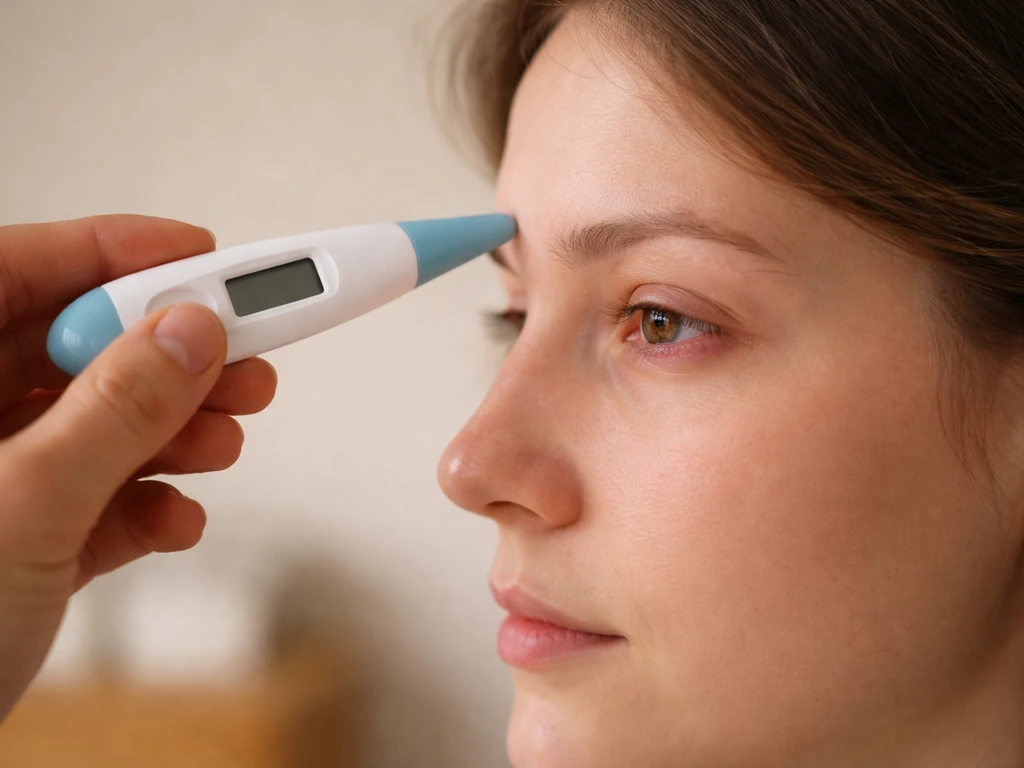
Human avian influenza infections range widely in severity. On the mild end, you might develop conjunctivitis (red, irritated eyes), which can appear one to two days after exposure. More typical flu-like symptoms include fever, cough, sore throat, muscle aches, and fatigue. At the severe end of the spectrum, the virus can cause pneumonia, acute respiratory distress, and life-threatening illness requiring hospitalization. Severe cases can last weeks. The subtype matters a great deal: A(H9N2) tends to cause milder illness, while A(H5N1) has historically been associated with higher mortality, though the globally circulating clade 2.3.4.4b appears to present differently across different outbreaks.
When to seek medical care
If you have had recent close contact with sick or dead birds (or their environments) and develop any of the following within 10 days, get medical attention promptly and tell the doctor about your exposure history:
- Fever (typically 38°C or higher)
- Respiratory symptoms: cough, shortness of breath, chest pain
- Eye redness or discharge (conjunctivitis)
- Severe muscle aches or fatigue that comes on quickly
The exposure history is critical. Doctors need to know you were around birds because avian influenza doesn't show up on standard flu tests and requires specific testing to confirm. Early reporting also triggers public health investigation that protects others.
Poultry risk: signs, containment, and farm biosecurity
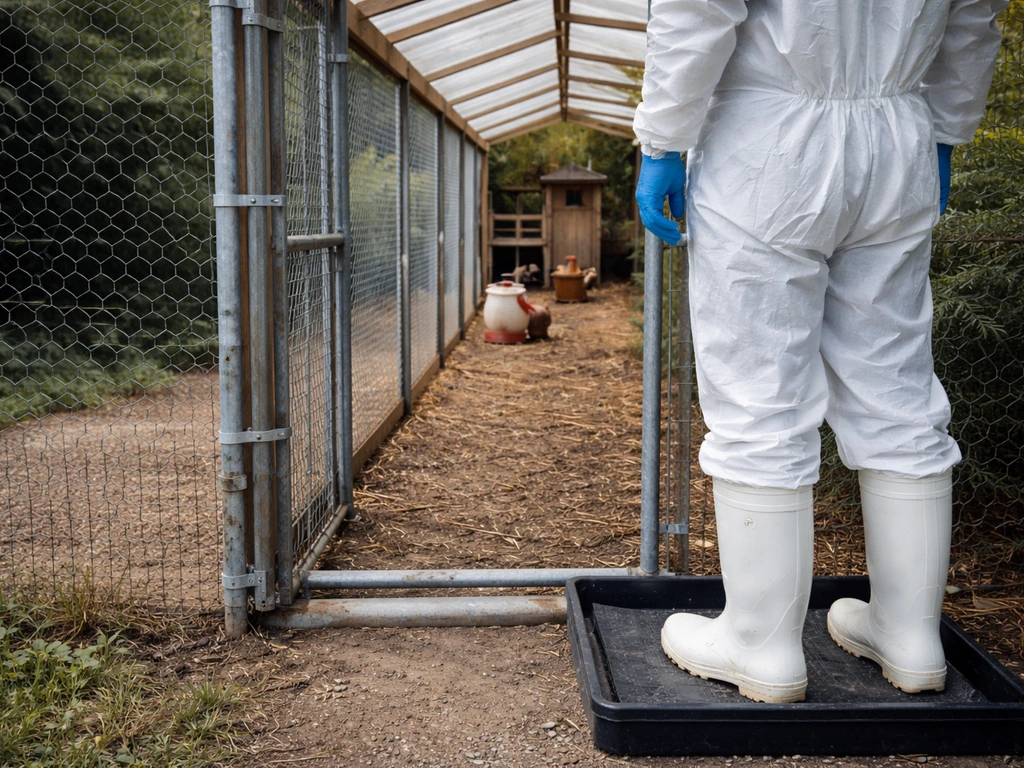
HPAI in poultry is a serious agricultural threat. The virus spreads fast through flocks and mortality can be extremely high, sometimes approaching 100 percent in vulnerable species. If you keep poultry, whether commercially or in a backyard flock, you need to know what to look for and what to do if something seems wrong.
Warning signs in birds
- Sudden unexplained deaths in the flock, especially multiple birds at once
- Severe drop in egg production
- Swelling of the head, neck, or eyes
- Discoloration (bluish-purple tinge) of wattles, combs, or legs
- Neurological signs: loss of coordination, tremors, twisted neck
- Respiratory distress: gasping, nasal discharge
- Dramatic drop in feed and water intake
If you see any of these signs, especially sudden mass mortality, contact your national veterinary authority immediately. Do not wait to see if birds recover. Early reporting is both a legal requirement in EU member states and the most effective way to limit spread. Under EU Animal Health Law (Regulation (EU) 2016/429), confirmed cases trigger compulsory stamping-out (culling of the affected flock) along with movement restrictions and zoning measures in the surrounding area.
Practical biosecurity for farms and backyard flocks
The WOAH and EU Commission guidance converges on the same core biosecurity principles. These are not complicated, but they require consistent discipline:
- Keep poultry housed or netted to prevent contact with wild birds, especially during high-risk migration periods (autumn and early winter).
- Use dedicated clothing and footwear that stays at the farm. Change and disinfect before entering and after leaving poultry areas.
- Disinfect vehicles, equipment, and crates that enter the farm. Shared equipment between farms is a known transmission route.
- Control access to poultry areas. Limit visitors and maintain a log of who enters.
- Keep feed and water covered and inaccessible to wild birds.
- Dispose of dead birds promptly and hygienically according to national regulations.
- Report any unusual illness or deaths to your vet or the relevant authority without delay.
EU member states are required to carry out compulsory surveillance programmes for early detection of HPAI and LPAI H5/H7 infections, which includes testing of domestic flocks. If you are a commercial operator, your national authority will outline specific monitoring obligations. For backyard keepers, the most important thing is keeping birds away from wild bird contact and knowing who to call if birds get sick.
Food safety during outbreaks: eggs, poultry, and safe handling
There is no convincing evidence that avian influenza can be transmitted to humans through eating food. EFSA has stated this explicitly and repeatedly: properly cooked poultry meat and eggs do not pose a bird flu transmission risk. The virus is heat-sensitive and is destroyed by normal cooking temperatures (70°C or higher at the center of the food). This means a well-cooked chicken breast or a fully cooked egg is safe to eat even during an outbreak.
The risk, where it exists in food handling, comes from handling raw poultry and then touching your face or other surfaces before washing your hands. This is true for general food hygiene regardless of bird flu. The same practices that protect you from Salmonella also apply here.
Safe handling checklist
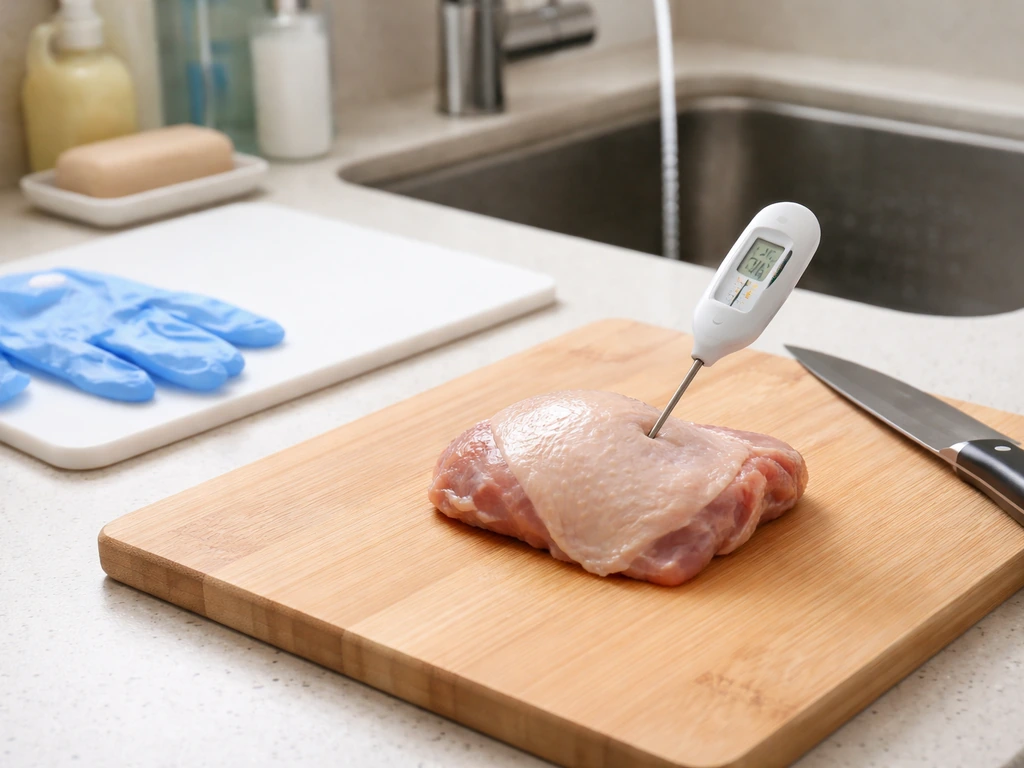
- Cook poultry to an internal temperature of at least 70°C (160°F). No pink meat, no runny yolk if you are in a high-risk group.
- Wash hands thoroughly with soap and water after handling raw poultry or eggs.
- Use separate cutting boards and utensils for raw poultry and ready-to-eat foods.
- Avoid rinsing raw poultry under the tap, which can splash contaminated water around the kitchen.
- Refrigerate raw poultry promptly and avoid leaving it at room temperature.
- Avoid consuming raw or undercooked poultry products, raw eggs, or unpasteurized products from areas with active outbreaks.
If you are traveling and encounter a live poultry market or area with sick or dead birds, avoid direct contact with live birds, surfaces they have touched, or their droppings. This is particularly relevant in countries with higher human case rates, though Europe's food supply chain and regulatory oversight substantially reduce this risk in normal retail settings.
Prevention and control: surveillance, reporting, and practical steps today
Europe's response to avian influenza is built on a layered system: mandatory surveillance at the farm and wildlife level, rapid reporting and stamping-out when outbreaks are confirmed, movement controls and zoning to prevent geographic spread, and international information sharing through systems like WAHIS and the ECDC's surveillance hub. This architecture is why Europe has managed to keep human cases at zero throughout 2024 and into 2026 despite widespread bird-level circulation.
For everyday readers, the most practical prevention steps are straightforward. Don't handle dead or sick wild birds with your bare hands. If you find a dead wild bird, especially a waterbird like a swan, duck, or goose, report it to your local authority (in the UK this is APHA; in most EU countries it's the national veterinary service or a dedicated wildlife hotline). Do not pick it up. If you must move it for safety reasons, use gloves and a plastic bag and wash your hands afterward.
For people who keep poultry, follow national housing orders when they are in place. During autumn and winter in particular, many EU countries issue precautionary housing requirements for domestic birds in high-risk areas. These orders exist because the single most effective intervention is preventing contact between domestic poultry and infected wild birds before the virus arrives, not after.
Anyone wanting to track the situation in specific countries beyond Europe, or understand what different governments are doing in response, can compare approaches across regions. Bird flu is also active in parts of Asia, Africa, and the Americas at different times of year, so it is worth checking international outbreak updates track the situation in specific countries beyond Europe. The scope of international circulation and country-level responses is a useful frame for understanding why the EU's coordinated approach has been relatively effective.
Treatment and vaccines: what to expect if someone is exposed
If you or someone you know has had a significant exposure to infected birds and develops symptoms, the first step is prompt medical evaluation. Tell the doctor exactly what the exposure was: what type of birds, how close the contact was, whether PPE was used, and when the exposure happened. This information drives the clinical and public health response.
The main antiviral used in suspected or confirmed avian influenza cases is oseltamivir, sold under the brand name Tamiflu. It works by inhibiting neuraminidase, a surface protein the virus uses to spread between cells. For confirmed cases, oseltamivir treatment should start as quickly as possible, ideally within 48 hours of symptom onset, though it can still be beneficial later in severe cases. In high-risk exposure situations (for example, a farm worker who was in close contact with a confirmed HPAI flock without adequate PPE), post-exposure prophylaxis (PEP) with oseltamivir may be considered depending on the exposure type, whether PPE was breached, and time elapsed since exposure.
On the vaccine front, the situation is evolving. As of June 2026, there is no approved, widely available vaccine for A(H5N1) for the general public in Europe. Several candidate vaccines exist and some countries have stockpiled prepandemic vaccines as part of contingency planning, but these are not routinely administered. Eligibility and access, if a vaccine were deployed, would be determined by national health authorities based on occupational risk and outbreak circumstances. This is a realistic area where the situation could change if the virus were to acquire efficient human-to-human transmission, but current evidence, with no documented human-to-human transmission from the circulating strains, does not support that scenario.
The overarching message from ECDC, EFSA, WHO, and EMA is consistent: the public health risk from avian influenza in Europe today is real but well-characterized and currently low for most people. The surveillance systems, regulatory frameworks, and treatment protocols are in place. Staying informed through official sources, following basic hygiene and food safety practices, and reporting sick or dead birds promptly are the three things that matter most for virtually everyone reading this.
FAQ
Is bird flu in Europe the same thing as a human flu outbreak risk?
No. The viruses causing current bird outbreaks (HPAI, such as A(H5)) are different from the seasonal human influenza strains. Even during heavy wild-bird circulation, human infections in Europe have remained extremely rare, and standard flu tests do not confirm avian influenza. If a person has relevant animal exposure plus symptoms, clinicians must request the specific avian influenza testing.
Can I get bird flu from touching chickens or eggs at retail stores?
Properly cooked eggs and fully cooked poultry are not considered a transmission route. The practical risk is indirect, such as handling raw poultry and then touching your face before washing hands. For retail items, keep raw meat separate from ready-to-eat foods, follow package cooking guidance, and avoid cross-contamination in the kitchen.
What symptoms should I watch for after contact with dead wild birds?
Seek medical advice promptly if you develop respiratory symptoms or eye inflammation within about 10 days after close exposure to sick or dead birds or contaminated environments. Conjunctivitis (red, irritated eyes) can appear early, sometimes 1 to 2 days after exposure. Tell the doctor the exposure details, since avian influenza is not picked up by routine “flu” testing by default.
Should I report a single dead bird, or only mass deaths?
Report even single dead wild birds, especially waterbirds, because local authorities track patterns, not just clusters. Mass mortality is an urgent signal, but early reporting helps teams interpret whether deaths match known HPAI activity or other causes. Do not handle the bird yourself unless local instructions tell you how to move it safely.
I work with birds sometimes, but not on farms, what PPE should I consider?
If your work involves handling wild birds, assisting with rescues, cleaning areas with bird droppings, or slaughterhouse tasks, treat exposure as higher risk than general public contact. The key decision is whether you may be in contact with sick or dead birds or heavily contaminated environments, then use appropriate PPE and follow your workplace or local authority guidance. If PPE was not used during a close contact, inform occupational health or your clinician if symptoms develop.
If spread between farms is rare, how do outbreaks still reach domestic flocks?
Outbreaks usually start with wild-bird virus introductions, then farms get infected indirectly. The common “bridge” is contaminated vehicles, equipment, clothing, or feed and water that has been contaminated by wild-bird droppings. Good biosecurity focuses on preventing that indirect transfer, not only separating birds from each other.
What does “housing orders” mean, and do I need to follow them if I keep backyard chickens?
Housing orders are country-level directives issued during higher-risk periods (often autumn and winter) that require preventing contact between domestic birds and wild birds. For backyard keepers, compliance typically means keeping birds indoors or under enclosed, wildlife-proof netting, and protecting feed and water from contamination. If your area has an order, follow the exact local requirements rather than general advice.
Is it safe to travel within Europe during a bird flu wave?
Travel is generally considered low risk for most people. Practical precautions include avoiding contact with live birds, cages, droppings, and surfaces that appear contaminated, especially in settings like live poultry markets. If you visit such locations, keep hands clean, do not touch your face, and wash thoroughly afterward.
Should I take antiviral medication or prophylaxis if I was near outbreaks?
Do not self-medicate. Antivirals like oseltamivir are used for suspected or confirmed cases, and prophylaxis is considered only in specific high-exposure situations based on exposure type, PPE use, and timing since exposure. The correct step is to contact a clinician or occupational health service and describe exactly what happened, when, and what protective measures were used.
Are vaccines available for the public in Europe right now?
As of June 2026, there is no approved, widely available A(H5N1) vaccine for general public use in Europe. Some countries have candidate vaccines and contingency stockpiles, but deployment would be restricted by national health authorities based on occupational risk and outbreak circumstances. Decisions would likely occur only in response to higher-risk scenarios.
If my region has no confirmed human cases, can I assume my personal risk is zero?
Not zero, but it is very low for most people. Human risk rises mainly with occupational or direct exposure to infected animals or contaminated environments. If you have been cleaning poultry areas, handling sick or dead birds, or working in close proximity without appropriate protection, treat your situation differently and get medical advice if symptoms appear.
What should I do if I accidentally touch a dead bird or its droppings?
Avoid further contact with your face and do not continue handling items that could spread contamination. Wash hands thoroughly with soap and water as soon as possible, change or launder contaminated clothing if needed, and disinfect surfaces that were touched. If you had close, unprotected exposure, monitor for symptoms for about 10 days and seek medical advice if respiratory or eye symptoms develop.
Next Article
What Is Being Done About Bird Flu: Response, Vaccines, Safety
How agencies detect, contain and treat bird flu, plus biosecurity, vaccines, human steps, and safe egg and poultry guida