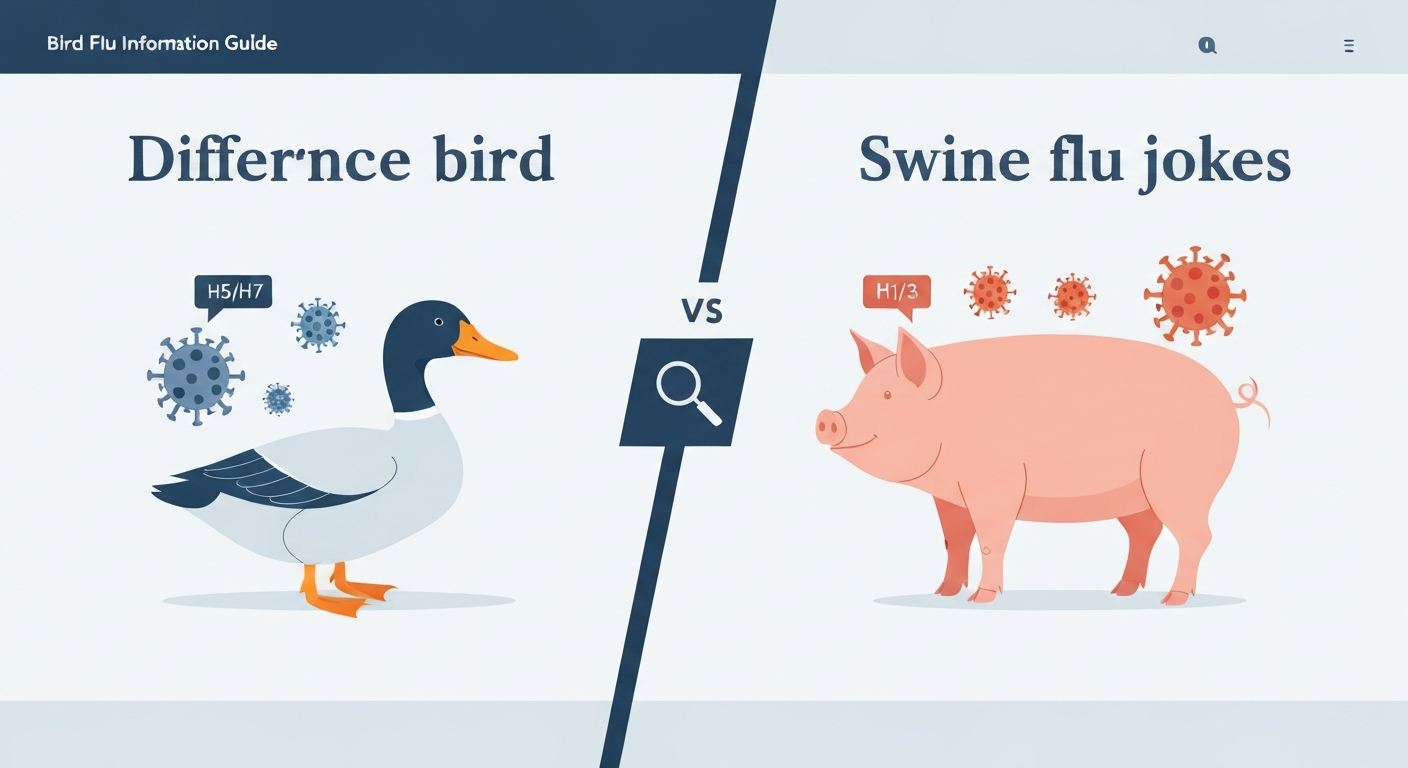
Bird flu and swine flu are both caused by influenza A viruses, but they come from different animal reservoirs, circulate in different host species, spread through different routes, and carry very different risks for humans. The most important avian strains to know are A(H5N1) and A(H7N9), which can cause severe illness in people. Swine flu strains (typically H1N1, H1N2, and H3N2 in pigs) are generally milder in humans, and the 2009 pandemic strain A(H1N1)pdm09 was actually a novel swine-origin virus. If you landed here after seeing a joke or meme about the two, you are in good company, but here is what the science actually says.
Difference Between Bird Flu and Swine Flu Joke: Facts vs Memes

Sarah Chen
28 Jul 2026
Why people search 'bird flu vs swine flu joke', and why the facts matter more
Jokes and memes about bird flu and swine flu have circulated for years, usually playing on the idea that humans could catch both at once or riffing on the imagery of sick animals. That kind of humor is harmless enough on its own, but it can blur real distinctions that matter for public health. When people confuse the two viruses, they sometimes dismiss genuine outbreak warnings or, on the other side, panic unnecessarily about poultry on their dinner plate. Neither reaction is useful. The real differences between these two disease categories are worth understanding clearly, and this article walks through all of them.
What are bird flu and swine flu, exactly?
Avian influenza, commonly called bird flu, refers to infections caused by influenza A viruses that primarily circulate in birds. All influenza A viruses are classified using two surface proteins: hemagglutinin (HA, labeled H1 through H18) and neuraminidase (NA, labeled N1 through N11). The subtypes that carry the highest zoonotic risk (meaning risk of jumping to humans) include A(H5N1), which has caused confirmed human infections with high case-fatality ratios since the early 2000s; A(H7N9), which triggered multiple waves of severe human infections in China; and A(H9N2), which circulates widely in poultry and has contributed internal genes to other dangerous reassortant viruses. A newer concern is A(H5N9), which is related to but distinct from H5N1 and is part of ongoing surveillance discussions.
Swine flu is a broad label for respiratory disease in pigs caused by influenza A viruses, and in human medicine it often refers to infections in people that originated from pig-adapted strains. The predominant subtypes circulating in pigs globally are H1N1, H1N2, and H3N2, including what are called triple-reassortant lineages, viruses that picked up gene segments from human, avian, and swine influenza viruses over time. The 2009 pandemic A(H1N1)pdm09 strain was a novel reassortant of swine-origin genes; it is now labeled with that parenthetical designation specifically to distinguish it from other H1N1 lineages. Unlike the most severe avian strains, most swine-origin infections in humans cause illness that resembles seasonal flu.
Bird flu vs swine flu: side-by-side comparison
| Feature | Bird Flu (Avian Influenza) | Swine Flu (Swine Influenza) |
|---|---|---|
| Primary reservoir | Wild aquatic birds (waterfowl, shorebirds) | Domestic pigs |
| Key subtypes | H5N1, H5N9, H7N9, H9N2 | H1N1, H1N2, H3N2 (incl. triple-reassortant) |
| Main spread in animals | Fecal-oral, contaminated water and surfaces | Aerosol/respiratory droplets between pigs |
| Human infections | Rare; mostly occupational or direct animal contact | Sporadic to pandemic; 2009 H1N1 was global |
| Severity in humans | Often severe; H5N1 has historically high CFR | Generally similar to seasonal flu in most cases |
| Human-to-human spread | Very limited; not sustained | Limited in most swine strains; efficient in 2009 pandemic strain |
| Mixing vessel risk | Wild birds seed reassortment via pigs | Pigs can co-infect with avian, human, swine viruses |
| Vaccine availability (humans) | Pre-pandemic candidate vaccines; no licensed routine vaccine | Seasonal flu vaccines cover some strains; 2009 pandemic vaccine deployed |
| Key antiviral | Oseltamivir (Tamiflu); early treatment critical | Oseltamivir; generally good susceptibility |
Where these viruses live: reservoirs and host range
Wild aquatic birds, particularly waterfowl from the orders Anseriformes (ducks, geese, swans) and Charadriiformes (shorebirds, gulls), are the primary natural reservoir for all influenza A viruses. They maintain the broadest subtype diversity on Earth, and most of the time they carry these viruses without showing obvious symptoms. The problem starts when wild birds mingle with domestic poultry. Spillover from wild birds into backyard flocks and commercial operations drives most of the avian influenza outbreaks we see in domesticated chickens, turkeys, and ducks. The clade 2.3.4.4b lineage of A(H5N1), responsible for the widespread panzootic (a word meaning pandemic in animals) affecting wild birds and poultry across multiple continents in recent years, is a direct example of this wild-to-domestic pathway.
Pigs occupy a uniquely dangerous position in influenza ecology. Unlike birds, pigs have receptors in their respiratory tracts for both avian-adapted and human-adapted influenza viruses. That means a single pig can be infected simultaneously by an avian strain and a human or swine strain, allowing gene segments from completely different lineages to mix inside the same cell. This process, called reassortment, can produce novel viruses with new combinations of surface proteins. The 2009 pandemic virus is the most famous recent product of this kind of mixing. Systematic reviews of swine surveillance data worldwide document that reassortment events in pig populations are frequent and geographically widespread, which is exactly why veterinary influenza surveillance in pigs is taken seriously as an early-warning system for pandemic risk.
Humans are incidental hosts for both bird flu and most swine flu strains. When human infections do occur, they are almost always linked to direct or very close contact with infected animals or heavily contaminated environments, not to casual exposure.
How they spread to humans and animals
Transmission in bird flu
In birds, avian influenza spreads efficiently through the fecal-oral route: infected birds shed massive quantities of virus in their droppings, which contaminate water sources, soil, equipment, clothing, and feed. Wild waterfowl often carry the virus in their gut with minimal signs, making contaminated water bodies a silent amplifier. In poultry flocks, respiratory secretions also play a role, and the virus can survive in cool, moist environments long enough to be picked up by birds or people days after initial contamination. Human infections most often occur when people handle sick or dead birds without proper protection, or when they are exposed to heavily contaminated environments such as live bird markets or culling operations.
Transmission in swine flu
Between pigs, swine influenza spreads primarily through aerosols and direct respiratory contact, the same basic mechanism as seasonal flu in humans. Pigs in close-quarters housing can amplify transmission rapidly. People who develop swine-origin infections (sometimes called variant influenza infections, designated with a 'v' suffix, for example A(H3N2)v) almost always have a documented link to pig contact, typically at agricultural fairs, farms, or slaughterhouses. Sustained human-to-human transmission of typical swine strains does not occur, though the 2009 pandemic strain was an exception because it had already adapted to efficient human transmission by the time it was identified.
Occupational risk and PPE basics
If you work with poultry or pigs, your occupational risk is meaningfully higher than the general public, but it is manageable with the right precautions. Poultry workers, cullers, veterinarians, abattoir staff, and pig farm workers are consistently the highest-risk groups in surveillance data. CDC and WHO guidance recommends the following when working in environments with potential zoonotic influenza exposure:
- Respiratory protection: N95 respirator (or higher) when there is aerosol risk, such as during culling, necropsies, or work in enclosed, poorly ventilated spaces
- Eye protection: safety goggles or face shield to prevent mucosal exposure from splashes or aerosols
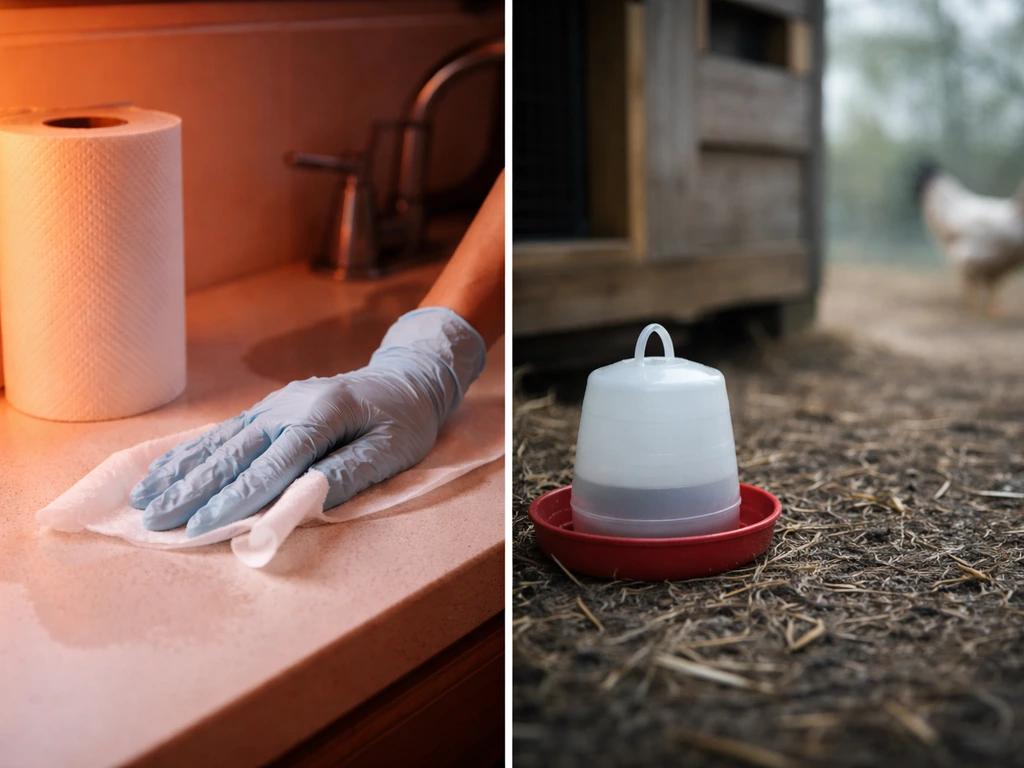
- Gloves: waterproof or nitrile gloves, changed and disposed of properly after handling sick animals or contaminated material
- Impermeable gowns or aprons: changed before leaving work areas and laundered or disposed of on-site
- Biosecurity practices: dedicated site clothing, boot dips, shower-out protocols on high-risk operations, and restricted access during outbreaks
- Post-exposure monitoring: exposed workers should be monitored for fever and respiratory symptoms for at least 10 days after exposure, and antiviral prophylaxis (oseltamivir) may be recommended by public health authorities in some high-risk situations
Symptoms and how severe things can get
In humans
The clinical picture in humans depends heavily on which specific strain is involved. A(H5N1) infections typically present with high fever, cough, shortness of breath, and can progress rapidly to pneumonia, acute respiratory distress syndrome (ARDS), and multi-organ failure. WHO cumulative case data show that confirmed human H5N1 infections have historically carried a high case-fatality ratio-reported-to-who--2003-2026--7-july-2026), though it is important to note that confirmed cases represent a biased sample (the most severely ill people are most likely to be tested). A(H7N9) infections, particularly in later waves in China, also caused severe lower-respiratory illness in a high proportion of confirmed cases. In contrast, most documented human infections with typical swine influenza strains (H1N1v, H3N2v) cause fever, cough, sore throat, body aches, and fatigue, much like seasonal flu, and the majority of patients recover without hospitalization.
In poultry
Avian influenza strains are classified as either highly pathogenic (HPAI) or low pathogenic (LPAI) based on how severe the disease is in chickens. HPAI strains, such as most H5 and H7 lineages that have caused human cases, can kill up to 90 to 100 percent of an infected flock within days: birds show sudden death, swollen heads and combs, hemorrhages in the legs, and a sharp drop in egg production. LPAI strains cause milder respiratory and egg-production losses. This distinction matters practically: HPAI outbreaks trigger mandatory culling and movement restrictions under international animal health rules.
In pigs
Swine influenza in pigs causes respiratory illness (fever, coughing, nasal discharge, reduced appetite) that looks very similar to influenza in humans. Mortality in pigs from influenza alone is generally low; morbidity (the proportion of animals showing illness) can be high within a herd. Economic losses come from reduced growth rates and secondary bacterial infections rather than direct pig deaths. Pigs recover within one to two weeks in uncomplicated cases.
Comparative severity snapshot
| Strain | Affected Species | Severity in Humans | Severity in Animals |
|---|---|---|---|
| A(H5N1) | Wild birds, poultry, occasional mammals, humans | High; frequent severe pneumonia and ARDS | High (HPAI): mass mortality in poultry |
| A(H7N9) | Poultry (mild/asymptomatic), humans | High in confirmed cases; severe lower respiratory illness | LPAI in birds: mostly asymptomatic in poultry |
| A(H9N2) | Poultry, humans (rare) | Mild to moderate in most reported cases | Moderate; respiratory and production losses |
| Swine H1N1/H1N2/H3N2 | Pigs, occasional humans | Mild to moderate; seasonal flu-like | Moderate; respiratory illness, low mortality |
| A(H1N1)pdm09 (2009) | Humans, pigs | Mild in most; severe in high-risk groups | Mild in pigs; reverse zoonosis documented |
How infections are diagnosed
For both bird flu and swine flu, the gold standard for confirming active infection is real-time reverse transcription polymerase chain reaction (rRT-PCR). This molecular test detects viral genetic material in samples and can identify the influenza A subtype. In humans, upper respiratory samples (nasopharyngeal swabs) are the most common specimen type; lower respiratory samples such as bronchoalveolar lavage are preferred when pneumonia is present, because avian strains tend to replicate more efficiently in the lower respiratory tract. In poultry, standard sample types are tracheal or oropharyngeal swabs and cloacal swabs (because avian flu sheds heavily from the gut), or fresh feces. In pigs, nasal swabs or deep nasal swabs are typical. Speed matters: samples should be collected as early in illness as possible and kept cold during transport to reference laboratories.
Virus isolation in cell culture and full genome sequencing are used alongside PCR for surveillance and detailed characterization, particularly to identify reassortment events, track spread between farms or regions, and detect molecular markers of mammalian adaptation (for example, the PB2 E627K mutation in the polymerase gene is a well-known marker associated with improved replication of avian viruses in mammals). Serological tests, including hemagglutination inhibition (HI) assays and ELISAs (enzyme-linked immunosorbent assays), are valuable for animal surveillance and for estimating population-level past exposure, but they require subtype-specific reagents and careful interpretation. Serological assays (e.g., HI, ELISA) are useful for animal surveillance and for detecting past exposure in humans, but they have limited sensitivity for detecting recent low‑titer or asymptomatic human infections and require subtype‑specific reagents and interpretation by reference labs WOAH's Terrestrial Manual notes serological assays (HI, ELISA) are useful for surveillance but have limited sensitivity for detecting recent low‑titer or asymptomatic human infections and require subtype‑specific reagents and interpretation by reference labs.. Serosurveys in occupational groups (such as poultry workers) have generally shown low seroprevalence to zoonotic strains like H7N9, suggesting that most exposures in the field do not produce detectable infections, though these studies have well-documented sensitivity limitations.
Vaccines and antivirals: what exists and what does not yet
For bird flu in humans
There is currently no licensed, routinely administered vaccine for avian influenza in humans. What do exist are pre-pandemic candidate vaccines: stockpiled formulations developed against H5N1 and other high-risk subtypes that governments and the WHO maintain for potential rapid deployment if a pandemic emerges. These candidates have demonstrated immunogenicity in clinical trials, but they are not part of routine public vaccination schedules. The main antiviral treatment option is oseltamivir (brand name Tamiflu), a neuraminidase inhibitor. Antiviral treatment should be started as early as possible, ideally within the first 48 hours of symptom onset, and current guidance supports giving it even when diagnosis is not yet confirmed in high-risk exposure situations. Zanamivir is a second-line option.
For swine flu in humans
Annual seasonal influenza vaccines are reformulated each year based on circulating strains and typically include components targeting H1N1 and H3N2 lineages. The 2009 pandemic strain A(H1N1)pdm09 is now included in seasonal vaccines as a standard component. However, typical swine-origin variant strains (H1N1v, H3N2v) may not be well matched by seasonal vaccines because they are antigenically distinct from human-adapted lineages. Oseltamivir remains the primary antiviral for treatment and post-exposure prophylaxis; most currently circulating swine-origin influenza strains retain susceptibility to it.
Vaccines in animals
Vaccination of poultry against avian influenza is practiced in some countries, particularly in endemic settings where eradication through culling alone is not feasible. Inactivated whole-virus vaccines and, more recently, recombinant vector vaccines are available for poultry. The challenge is antigenic diversity: a vaccine matched to one clade of H5N1 may provide incomplete protection against a drifted variant. Vaccination in pigs for swine influenza is common in commercial production systems, primarily using multivalent inactivated vaccines targeting the predominant circulating subtypes in a given region.
Food safety and farm biosecurity: practical steps
One of the most persistent myths driven by jokes and memes is that you can catch bird flu or swine flu from properly cooked food. You cannot. Influenza viruses are inactivated by standard cooking temperatures: internal poultry or pork temperatures of 74°C (165°F) or higher will eliminate any influenza virus present. Properly pasteurized eggs are also safe. The food-safety risk comes from handling raw, infected birds or pork in an unhygienic way (cross-contaminating other foods with raw juices, not washing hands) rather than from eating fully cooked products.
For farmers and producers, biosecurity is the single most effective tool available before an outbreak reaches your operation. Practical measures include:
- Restrict access: limit non-essential visitors to poultry or pig facilities, and require anyone entering to change clothing and footwear or use provided protective gear
- Separate wild bird contact: use covered housing, secure water and feed storage, and net or roof runs where possible to reduce wild bird interaction with domestic flocks
- Monitor for early signs: any unusual increase in mortality, drop in egg production, or respiratory illness in birds or pigs warrants immediate reporting to a veterinarian and potentially to state or national animal health authorities
- Disinfect equipment and vehicles: use approved disinfectants on vehicles, equipment, and footwear between sites, and maintain logbooks of movement
- Source animals carefully: buy stock from certified disease-free sources and quarantine new animals before mixing them with existing flocks or herds
- Work with your vet and local animal health officials: especially during regional outbreak periods, stay informed through official surveillance updates rather than social media
How bird flu and swine flu compare to other respiratory viruses
It is worth briefly noting where bird flu and swine flu sit relative to other respiratory illnesses that often come up in comparisons. Norovirus, for example, is a completely different pathogen (a calicivirus, not an influenza virus) and causes gastrointestinal illness rather than respiratory disease, the two share almost nothing clinically or epidemiologically beyond the fact that both spread in environments involving animals. Human metapneumovirus is another respiratory pathogen that sometimes gets lumped into comparisons with influenza, but it belongs to an entirely separate virus family. For a direct comparison, see the explainer titled "human metapneumovirus vs bird flu". And the term 'avian flu' and 'bird flu' refer to exactly the same category of disease, there is no meaningful distinction between them, just a difference in formal versus common language.
Talking about these diseases responsibly
Jokes and memes about bird flu and swine flu are not the problem. The problem is when humor hardens into misinformation: claims that these diseases are the same thing, that cooked chicken is dangerous, that wearing a mask near a chicken farm will give you the flu, or that past outbreaks were exaggerated. Sharing those ideas, even in a joking context, can reduce vaccine uptake, discourage biosecurity compliance, and make people less likely to report unusual animal deaths (which is one of the most important signals in outbreak detection). If you share content about these viruses, linking to factual outbreak data from WHO, CDC, FAO, or WOAH takes about 30 seconds and makes a genuine difference. For a concise, side-by-side comparison, see our swine flu vs bird flu summary.
The core message is straightforward: bird flu and swine flu are distinct disease categories with different reservoirs, different transmission dynamics, different risks for humans, and different clinical outcomes. Neither is something to panic about for the average person going about daily life. Both are worth understanding clearly, because the next influenza pandemic, whenever it comes, will most likely trace its origins to exactly the kind of animal-human interface these two disease categories represent.
FAQ
What is a short, search‑friendly summary answer to the core question?
'Bird (avian) flu' and 'swine flu' are both caused by influenza A viruses but differ in typical host reservoirs, common subtypes, transmission ecology and human clinical risk: avian influenza primarily circulates in wild and domestic birds (notable zoonotic strains include A(H5) and A(H7)), can cause severe disease in poultry and occasionally severe human infections; swine influenza circulates in pigs (common subtypes H1N1, H1N2, H3N2), can infect humans—most human swine‑origin infections cause illness similar to seasonal flu—and pigs can act as mixing vessels for reassortment. When explaining them, emphasize the biological differences, occupational risks, diagnostics, prevention steps and why jokes or memes can mislead without context.
What exactly is 'avian' or 'bird' flu?
Avian (bird) influenza refers to infections caused by influenza A viruses that naturally circulate in birds, especially wild waterfowl. Subtypes are named by their hemagglutinin (H) and neuraminidase (N) proteins (for example A(H5N1), A(H7N9), A(H9N2)). Many avian viruses infect only birds; some strains can cross into domestic poultry causing outbreaks, and some rare spillovers to humans have been reported.
What is 'swine flu' (swine influenza)?
Swine influenza denotes influenza A virus infections in pigs. Common swine subtypes are H1N1, H1N2 and H3N2 (including triple‑reassortant lineages). Swine viruses sometimes infect humans—occupational exposure is the common route—and the 2009 A(H1N1)pdm09 pandemic was caused by a novel virus with swine‑origin gene segments.
How do host ranges and reservoirs differ between avian and swine influenza?
Wild aquatic birds (ducks, geese, shorebirds) are the primary natural reservoirs for influenza A and maintain broad subtype diversity; domestic poultry acquire viruses from wild birds and amplify them. Pigs are reservoirs for swine influenza strains and can be infected by avian and human viruses as well, which makes them potential 'mixing vessels' for reassortment. Humans are incidental hosts for many zoonotic avian and swine viruses but can sustain transmission when viruses adapt to humans.
What biological features influence cross‑species infection?
Key factors include viral receptor binding preference (avian HAs prefer α2,3‑linked sialic acids common in bird tissues; human‑adapted HAs prefer α2,6‑linked receptors common in human upper airways), and specific internal gene mutations (for example PB2 E627K or D701N) that increase replication in mammals. These molecular changes are tracked in genomic surveillance to assess adaptation risk.
How are avian and swine influenza transmitted, and who is at occupational risk?
Avian influenza spreads among birds by direct contact, contaminated feces and water, and contaminated environments; transmission to humans typically requires close contact with infected birds, contaminated materials or during culling. Swine influenza spreads in pigs mainly via respiratory droplets/aerosols and direct contact; human cases occur most often among pig farm workers, abattoir staff, veterinarians and others with close pig contact. Occupational risk groups are recommended to use PPE and follow biosecurity guidance.
Next Article
Norovirus vs Bird Flu: Key Differences and What to Do
Norovirus vs bird flu explained: symptoms, how they spread, and clear steps for home care or urgent medical biosecurity.