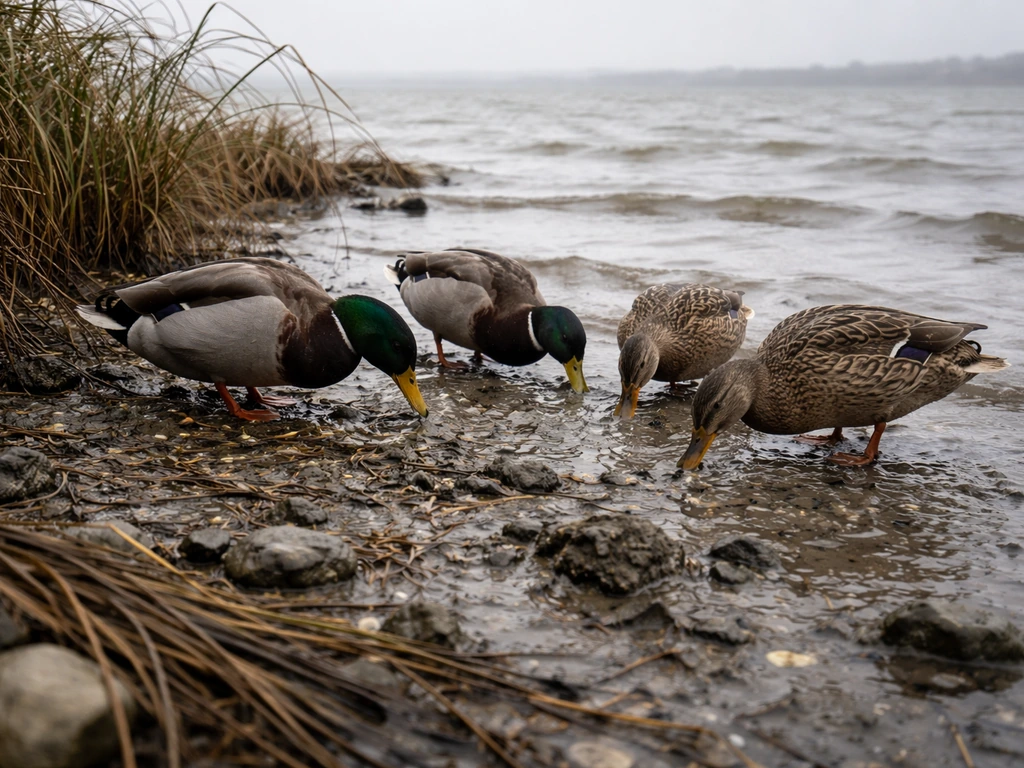
Bird flu spreads from farm to farm mainly through the movement of infected birds and people, contaminated equipment and vehicles, and contact with wild migratory waterfowl. Unlike human seasonal flu, which travels person to person through respiratory droplets across communities, avian influenza moves along agricultural and ecological pathways: a truck that visits an infected flock and then drives to the next farm, a catching crew that handles sick birds in the morning and healthy ones in the afternoon, a shared drinker contaminated with duck feces from a nearby pond. Understanding those specific routes is the key to stopping spread, because every route also points directly to a control measure. For more detail on how did bird flu spread, see how did bird flu spread.
How Does Bird Flu Spread From Farm to Farm: Practical Guide

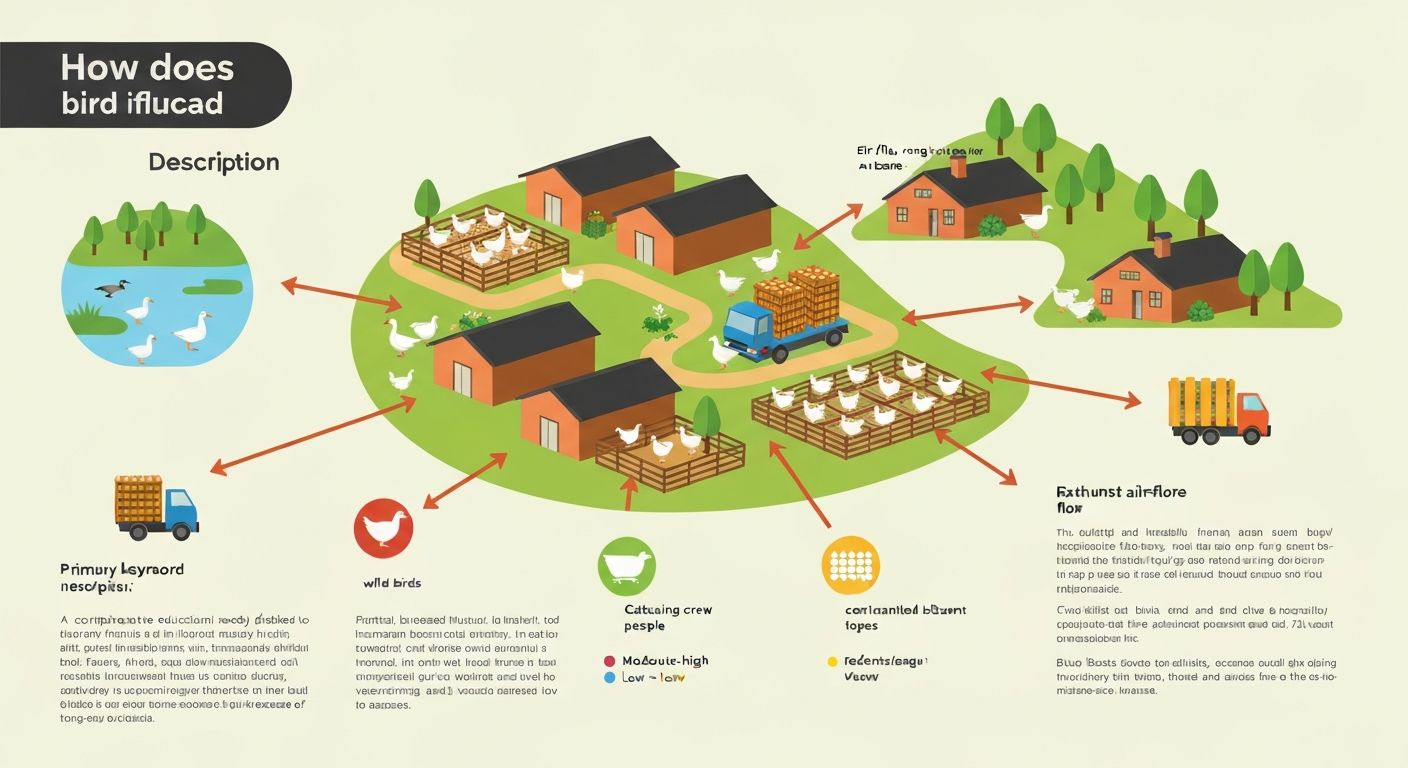
Farm-to-farm transmission versus human seasonal flu: why the distinction matters
Human seasonal influenza is a community-spread respiratory infection. Its reproduction number sits above 1 in most populations without intervention, meaning one infected person reliably infects more than one other person in everyday social settings. Avian influenza in poultry flocks behaves differently. Within a flock, highly pathogenic avian influenza (HPAI) spreads explosively once it arrives, often killing the majority of birds within days. But between farms, spread is not automatic. It depends on specific contact events: physical movements of birds, people, vehicles and materials that bridge the gap between one flock and another. This distinction is important because it means farm-to-farm transmission is, in principle, interruptible. Remove or sanitize the bridges, and you can stop the chain.
It also means the risk landscape for a farmer is very different from the risk landscape for a commuter sitting next to someone sneezing. A farmer's risk is driven by proximity to wild bird habitat, farm density in the region, the number of vehicles and people moving through the premises, and the quality of on-farm biosecurity. Those are all manageable variables. Seasonal flu risk, by contrast, is driven by population immunity and airborne exposure in shared spaces, which individual farmers have far less control over.
How bird flu actually gets from one farm to another
FAO, WOAH (formerly OIE) and CDC all converge on the same core list of farm-to-farm transmission pathways. Each one deserves a clear explanation, because in practice farmers sometimes underestimate the less obvious routes.
Wild birds and migration
Migratory waterfowl, especially ducks, geese and shorebirds, are the primary natural reservoir of avian influenza viruses. They carry many strains without showing symptoms and shed virus into water, sediment and soil along flyways. When a farm sits near wetlands, open water or flight paths, the probability that an infected wild bird lands in or near the poultry house rises sharply. The 2022-2023 HPAI H5N1 clade 2.3.4.4b outbreaks in British Columbia and the Yukon, for instance, involved repeated independent introductions from wild birds followed by local farm-to-farm chains, a pattern confirmed by phylogenetic sequencing. In other words, wild birds seeded multiple farms independently; then local contacts propagated the virus further. Open water on or near the farm is a quantified risk factor: a pooled meta-analysis found farms with open water sources had roughly 2.9 times the odds of infection compared with farms without them.
Infected poultry movements and live-bird markets
Moving live birds between farms during the incubation period (up to 21 days under WOAH standards) is one of the most direct transmission routes. A bird may be shedding virus before any clinical signs appear, meaning even birds that look healthy at the time of sale or transfer can seed a new flock. Live-bird markets intensify this risk by aggregating birds from multiple farms, mixing species, and creating high-throughput environments where virus can amplify and then be carried home with purchased birds. A systematic review and meta-analysis published in the Journal of Infectious Diseases concluded that market interventions such as closures, rest days and poultry bans consistently reduce avian influenza exposure, confirming that markets function as reservoir and amplification hubs capable of seeding both farm infections and human cases.
Contaminated vehicles, equipment and crates
Trucks, trailers, catching crates, egg trays, feed delivery vehicles and service vans are mechanical bridges between farms. If a vehicle visits an infected premises and is not properly cleaned and disinfected before moving on, contaminated material on tires, wheel arches, crates and clothing can transfer live virus to the next stop. This route is often difficult to prove retrospectively without movement logs, which is exactly why logging and sanitizing all on-farm vehicle visits is a recommended control during high-risk periods. Studies and outbreak investigations consistently identify animal and human movements as epidemiologically important even when direct proof is hard to establish after the fact.
Farm workers, visitors and catching crews
People are highly mobile fomites (objects or materials that carry infection). A catching crew that handles birds at an infected farm and then moves to a second farm the same day, without changing boots and outer clothing and washing hands and face, can carry virus mechanically. The same applies to veterinarians, feed representatives, AI technicians and biosecurity auditors. CDC and ECDC guidance both flag agricultural workers and farm visitors as high-risk interfaces. The control is not to ban visits, but to enforce farm-specific clothing, boot changes or disinfection, and visitor logs at every entry point.
Fomites: feed, water, bedding, feathers and manure
The word fomite refers to any inanimate object that can carry an infectious agent. For avian influenza on farms, the most important fomites are shared or reused equipment, but also feed (particularly if stored where wild birds can access it), drinking water contaminated with wild bird feces, used bedding and litter, loose feathers, and manure. Experimental studies show H5N1 virus can survive on detached feathers for weeks at low temperatures (weeks to months at or below 4°C), shortening significantly with warmth and UV exposure. Manure and litter spread via muck-spreading or careless disposal can contaminate adjacent land or waterways. Any of these materials moving off-farm or between houses without treatment is a potential transmission event.
Rodents and insects
Experimental and field studies show that houseflies and other filth flies can carry avian influenza virus RNA, and occasionally infectious virus, for hours to days after contact with infected material, making them plausible mechanical vectors for short-range transmission within and between nearby buildings. Rodents can mechanically transfer contamination on their bodies and in their droppings as they move between houses or farms. Neither insects nor rodents are considered major long-range drivers, but they are a real contributing factor at the farm and house level, and integrated pest control is a justified component of biosecurity programs.
Short-range airborne spread
Airborne spread deserves careful, evidence-based framing rather than either dismissal or alarm. Air sampling during the 2015 US HPAI outbreaks and subsequent modeling work found infectious virus inside infected poultry houses and within roughly 70 meters of houses in some cases. Infectious virus at hundreds of meters is uncommon, and the risk drops rapidly with distance. It is strongly influenced by building ventilation design, particle size, humidity, temperature and UV. Exhaust fans on high-density tunnel-ventilated houses can project contaminated particles into the immediate surroundings. The practical implication for farms is that downwind poultry houses should be monitored carefully during a local outbreak, and exhaust air management is worth considering in high-density areas. But the available evidence does not support treating airborne spread as a dominant long-distance route between farms separated by normal agricultural distances.
Transmission routes at a glance: a quick-reference table
| Transmission route | Risk level | Key control action | Who acts |
|---|---|---|---|
| Wild bird contact (open water, outdoor access) | High | Net/cover housing; fence off ponds; reduce outdoor access during migration | Farmer, farm manager |
| Live infected bird movements | High | Movement standstills; health attestations; pre-movement testing | Farmer, vet, regulator |
| Live-bird markets | High | Avoid purchasing from markets during alerts; comply with bans | Farmer, trader, regulator |
| Contaminated vehicles and equipment | High | Mandatory wash-and-disinfect before farm entry; visitor logs | Farmer, driver, service companies |
| Farm workers and visitors | High | Farm-specific PPE, boot dips, hand hygiene, visitor logs, no multi-farm same-day visits without protocol | Farmer, farm manager, visitors |
| Fomites (feathers, manure, bedding, feed, water) | Moderate-High | Covered feed storage; treat/dispose of litter safely; secure water supplies | Farmer |
| Rodents and insects | Moderate | Integrated pest management; seal entry points; remove attractants | Farmer |
| Short-range airborne spread | Low-Moderate (within ~70 m) | Monitor downwind houses; manage exhaust fans; heightened surveillance near cases | Farmer, surveillance authority |
Environmental persistence: how long does the virus actually survive?
One of the reasons avian influenza is harder to contain than many people expect is that the virus persists in the environment long after infected birds have been removed. In cool, neutral-pH water and sediment, such as farm ponds, wetland edges and manure-contaminated drainage channels, the T90 (time to 90% reduction in viable virus) ranges from days at 30°C to many months at 0°C. This means a wetland where infected wild birds rested in autumn can still carry viable virus by winter. Manure spread on fields and then rained into watercourses creates a similar reservoir effect. On-farm, contaminated litter and water in drinker systems can sustain the virus for days at normal barn temperatures. Detached feathers, as noted above, can carry live virus for weeks at refrigeration temperatures.
The practical implications are significant. Decontamination after an outbreak is not just about removing visible organic material; it requires thorough cleaning to reduce organic load, followed by approved disinfectant applied at the right concentration and contact time, and then a rest period before restocking. WOAH protocols include a 21-day observation or standstill period as part of control measures, which reflects both the virus's maximum incubation period and the need to allow environmental contamination to decline before new birds are introduced. Farmers who rush restocking without completing these steps risk re-infecting a freshly placed flock from residual environmental contamination.
How bird flu has moved between farms and regions: historical patterns
The pattern of how avian influenza has spread historically reveals a consistent structure. Wild birds seed new geographic regions during migration. Once the virus reaches poultry in a region, local transmission via animal movements, shared services and proximity takes over. Spatial and quantitative modeling of past epidemics in the Netherlands, the United States in 2015 and Europe between 2021 and 2023 found that animal movements and trade, local farm density and proximity were consistently the dominant between-farm drivers, though their relative importance varied by context. Risk mapping and farm‑level transmission modeling for HPAI, between‑farm reproduction number and transmission 'kernels' showed that animal movements/trade, local farm density/proximity, and farm type were dominant between‑farm drivers in analyses of the Netherlands, the US (2015) and Europe (2021–23) Risk mapping and farm‑level transmission modeling for HPAI — between‑farm reproduction number and transmission 'kernels'. The 2015 US outbreak, in which over 50 million birds were lost, was partly attributed to short-range airborne spread from tunnel-ventilated turkey houses in high-density areas, alongside the usual movement routes. The 2022-2023 North American H5N1 outbreaks affected farms in British Columbia and the Yukon, with genomic data confirming both repeated wild-bird introductions and subsequent farm-to-farm chains through local contacts.
Epidemiological proximity matters measurably. The meta-analysis of farm-level risk factors found that farms located near an infected farm had approximately 4.5 times the odds of becoming infected, compared with farms with no infected neighbors. This is not surprising, but the quantified magnitude reinforces the value of movement controls and targeted surveillance around detected cases. In high-density poultry regions, a single index case can set off a cluster of infections within a short geographic radius within days.
Where bird flu comes from: reservoirs, origins and addressing the China myth
Avian influenza viruses originate in wild bird populations, primarily waterfowl in the orders Anseriformes (ducks, geese, swans) and Charadriiformes (shorebirds, gulls). These birds circulate a vast diversity of influenza A subtypes globally, largely without illness to themselves. Poultry become infected when they come into contact with wild birds or their contaminated droppings, water or soil. The viruses that matter most in current global outbreaks, particularly H5N1 clade 2.3.4.4b, have been tracked across multiple continents via migratory flyways using genomic sequencing shared through platforms like GISAID and visualized via tools like Nextstrain.
The question of whether bird flu came from China deserves a direct, evidence-based answer. For a focused discussion on origins and evidence, see the related piece titled did bird flu come from China. The H5N1 lineage that drives current outbreaks did emerge in Asia, with early detection in Guangdong, China in 1996 in geese, and subsequent spread through live poultry trade and wild birds across Asia and into Europe and Africa. However, peer-reviewed genomic studies caution clearly that phylogeographic clustering (grouping viruses by geography in a family tree) is not sufficient on its own to prove a country is the ongoing source of a particular outbreak. Virus origins are complex, involving wild bird flyways that cross many countries, reassortment events (where viral gene segments mix) in multiple locations, and surveillance gaps that skew apparent origins toward places with better testing. Attributing modern outbreaks solely or primarily to China overstates what the genomic data actually show and distracts from the real biosecurity actions needed everywhere. The virus now circulates globally in wild bird populations year-round and can arrive at any farm in any country via migratory birds.
Understanding the true global ecology of avian influenza, rather than focusing on a single national origin, is what allows farmers and authorities to anticipate risk based on migration seasons, flyway geography and local wild bird activity. For more on the deeper evolutionary history of these viruses, the broader question of where bird flu comes from is worth exploring alongside the history of how bird flu has spread globally over recent decades.
Detecting an outbreak: signs to watch, sampling and testing
Early detection is critical. The faster a case is confirmed, the faster movement controls can be imposed and the fewer farms become involved. HPAI in chickens and turkeys typically presents dramatically: sudden death without premonitory signs, or a rapid cascade of respiratory distress, swollen heads, cyanosis (blue discoloration) of combs and wattles, cessation of egg production, and neurological signs. In ducks and geese, signs can be subtler, and some waterfowl may shed large amounts of virus before showing obvious illness, which is why routine surveillance of mixed-species or outdoor flocks matters more than waiting for a mortality event.
The clinical signs that should trigger immediate veterinary contact and formal reporting include: a sudden unexplained drop in feed and water consumption of more than 20%, an unexplained mortality spike above the flock's baseline, respiratory distress in multiple birds simultaneously, neurological signs such as loss of coordination or head tremors, and severe drop in egg production. Any of these warrants calling the national veterinary authority or emergency disease hotline without waiting to see if the situation resolves.
Laboratory confirmation uses several complementary methods. Real-time reverse-transcription PCR (rRT-PCR) on swabs from the trachea and cloaca of live birds, or from tissues of dead birds, is the standard frontline diagnostic tool, providing results within hours. Virus isolation in embryonated eggs remains the gold standard for confirming viable virus and is required for official HPAI notification. Serological tests (antibody detection) help in retrospective surveillance. Genomic sequencing then assigns the strain to a clade and helps trace transmission links. WOAH's Terrestrial Animal Health Code designates avian influenza as a notifiable disease, meaning confirmed or even strongly suspected cases must be formally reported to national authorities without delay, who then notify WOAH.
Responding to an outbreak: step-by-step
When HPAI is confirmed or strongly suspected on a farm, the response follows a structured sequence. Each step has a clear purpose, and shortcuts at any stage increase the risk of further spread.
- Immediate standstill: Stop all bird, vehicle, egg and personnel movements on and off the infected premises from the moment suspicion is raised, before waiting for laboratory confirmation. This is the single most important early action.
- Notify authorities: Contact the national or regional veterinary authority immediately. In the US this means USDA APHIS; in the UK it is the Animal and Plant Health Agency (APHA); in the EU, the relevant national competent authority. Official notification triggers the statutory response framework.
- Quarantine the premises: Establish a protection zone (typically 3 km radius) and a surveillance zone (typically 10 km) around the infected farm, within which movement restrictions and enhanced monitoring apply. Zone dimensions vary by jurisdiction.
- Humane depopulation (culling): All susceptible poultry on the infected premises are culled as rapidly as possible using approved humane methods. Speed of depopulation directly reduces total virus shedding and therefore the risk of further spread. The goal is completion within 24 hours of confirmation wherever practical.
- Safe carcass and litter disposal: Carcasses, litter, manure and eggs must be disposed of in a biosecure manner. Approved methods include on-site burial in lined pits, composting under controlled conditions, rendering, or incineration, depending on national regulations and site suitability. No material should leave the premises untreated.
- Farm decontamination: After removal of all organic material, the entire facility undergoes a two-stage decontamination: thorough cleaning to remove all visible organic matter (which inactivates disinfectant), followed by application of an approved disinfectant at label-specified concentrations and contact times. This process is typically repeated.
- Standstill and observation period: A minimum rest period, usually aligned with the 21-day WOAH incubation/observation standard, applies before restocking. Environmental sampling may be required before the all-clear is given.
- Trace-forward and trace-back investigation: Authorities trace all movements of birds, people, vehicles and equipment from the infected farm in the 21 days before detection (trace-back) and from the farm to other farms (trace-forward) to identify potentially exposed flocks for testing and surveillance.
- Enhanced surveillance of contacts: All farms in the protection and surveillance zones, and all farms identified in trace investigations, are subjected to clinical inspections and sampling. This is where genomic sequencing and epidemiological data are combined to map spread.
Vaccination, compensation and regulatory roles
Vaccination against avian influenza is an evolving area of policy. Several European countries, including France, Italy and the Netherlands, have implemented or are expanding vaccination programs for ducks and some chicken sectors, primarily using inactivated vaccines matched to circulating H5 strains. China has used vaccination extensively for years in its domestic poultry sector. The US has historically not vaccinated commercial poultry due to trade concerns and the difficulty of distinguishing vaccinated from infected birds (the DIVA problem), though regulatory positions are being reviewed in the context of persistent H5N1 pressure. Vaccination does not fully prevent infection but can reduce viral shedding and mortality, slowing farm-to-farm spread when used alongside robust biosecurity.
Compensation matters enormously in outbreak response. If farmers face financial ruin from reporting a suspected case, some will delay or avoid notifying authorities, allowing the virus to spread further before controls kick in. Most high-income countries with HPAI response frameworks offer compensation for birds culled under government orders, typically at market value or a formula-based equivalent. In the US, USDA APHIS indemnity programs cover birds, eggs and associated materials. In the EU, member states are required to compensate farmers for mandatory culling. Transparent, timely compensation is therefore not just a welfare issue; it is a critical epidemiological tool that incentivizes early reporting.
Regulatory roles in outbreak management involve coordination across veterinary, public health and trade authorities. WOAH sets international standards and notification requirements. National veterinary authorities implement movement controls, zone delineation, culling orders and compensation. Public health authorities manage surveillance for human cases and, where relevant, recommend PPE for workers involved in depopulation. Agricultural trade authorities manage the implications for export certification and market access, since HPAI outbreaks often trigger automatic import bans from trading partners.
On-farm biosecurity: practical priorities for farmers
The USDA APHIS biosecurity self-assessment checklist and FAO toolkit both organize farm biosecurity around the same core principle: controlled access. The goal is to create a clear separation between the areas where infectious material might be present (outside the farm boundary, vehicles, visitors) and the area where your birds live. In practice, this means a Controlled Access Zone (CAZ) at the farm perimeter and a Restricted Access Zone (RAZ) within the poultry house area, with defined transition points and protocols at each.
- Establish a single, controlled access point to the farm with a visitor log and hand hygiene station
- Require all visitors, including vets, feed drivers and service technicians, to change into farm-specific footwear or use clean overshoes and outer clothing before entering the RAZ
- Install and maintain functional boot dips with an approved disinfectant solution at all poultry house entrances; change solution regularly as organic load accumulates
- Implement a mandatory vehicle wash-and-disinfect protocol before any vehicle enters the RAZ; keep records
- Store feed in sealed, bird-proof and rodent-proof containers or silos; never allow wild birds access to feed storage or spilled grain
- Secure all drinking water supplies; prevent surface water contaminated by wild bird feces from entering drinker systems
- Conduct regular integrated pest management: block rodent entry points, remove harborage material, manage fly populations with traps and environmental controls
- Net or screen openings in poultry houses during wild bird migration seasons if housing is not fully enclosed
- Avoid purchasing birds from live-bird markets or informal traders, particularly during elevated-risk periods
- Require catching crews and transport drivers to document their previous farm visits and adhere to your biosecurity protocols
- Monitor flocks at least twice daily and keep records of feed/water consumption, mortality and production, so you can identify an unexplained deviation quickly
- Know your reporting hotline number and your vet's emergency contact; do not wait more than 24 hours to make the call if something looks wrong
What this means for human health: risk, symptoms and food safety
Most people who encounter avian influenza on a farm will not become ill. The human health risk from current H5N1 clade 2.3.4.4b is primarily associated with direct, close and sustained contact with infected birds or their secretions, particularly during depopulation of infected flocks without adequate personal protective equipment. The global number of confirmed human H5N1 cases remains in the hundreds over more than two decades, a very low number given the scale of poultry outbreaks worldwide. That said, H5N1 carries a high case fatality rate among confirmed human cases, which is why PPE during depopulation, including fit-tested respirators (N95 or equivalent), gloves, eye protection and disposable coveralls, is a genuine public health priority, not bureaucratic theater.
Human symptoms of avian influenza infection overlap with severe seasonal flu: high fever, respiratory illness, and in severe cases pneumonia and multi-organ failure. Anyone who has had direct contact with confirmed or suspected infected poultry and develops fever, cough or breathing difficulty within 10 days should inform their healthcare provider of that exposure history. Antiviral treatment with oseltamivir (Tamiflu) is most effective when started early.
On food safety: properly cooked poultry and eggs are safe to eat. Avian influenza virus is inactivated by cooking to an internal temperature of 74°C (165°F). There is no evidence of human infection through consumption of well-cooked poultry products. The food safety risk arises in handling raw, infected material without hygiene precautions, not in eating properly prepared food. Eggs with visibly cracked shells or contaminated surfaces from an infected flock should not be used, but commercially produced eggs from inspected flocks within normal supply chains carry no meaningful risk to consumers.
The bottom line for farmers, vets and public health workers
Farm-to-farm spread of bird flu is not inevitable, and it is not random. It follows identifiable pathways, every one of which can be partially or fully interrupted by specific, practical measures. The farms that stay uninfected during regional outbreaks are almost always the ones that control access rigorously, keep wildlife away from poultry, log and sanitize every vehicle visit, and call the vet the moment something looks wrong. The farms that get caught up in secondary spread are often the ones where a shortcut was taken: a driver skipped the disinfection step, a batch of birds arrived from an unverified source, or a flock showing early signs went unreported for two days while the farmer hoped it would resolve on its own. Evidence-based biosecurity is not a burden on farm productivity; over the course of an outbreak, it is the most economically rational investment a farmer can make.
FAQ
What is farm‑to‑farm transmission of avian influenza and how is it different from human seasonal flu?
Farm‑to‑farm transmission means the virus spreads between poultry premises (backyards, commercial farms, live‑bird markets) by routes that move infectious virus or infected birds from one location to another. It is an animal disease process; human seasonal flu refers to influenza viruses adapted to humans spreading between people. Avian influenza viruses (AIVs) are typically hosted by wild birds and poultry and can sometimes infect people, but farm transmission concerns how farms become infected or seed other farms, not routine human‑to‑human seasonal transmission.
What are the primary routes by which bird flu spreads from farm to farm?
Primary farm‑to‑farm transmission routes are: - Wild birds and migration: infected wild waterfowl can shed virus into water, fields or via contaminated feathers. - Movement of infected poultry: buying, selling or moving birds between flocks or farms. - Live‑bird markets and trade networks: markets can amplify and redistribute infection. - Contaminated equipment and vehicles: crates, feed trucks, egg trays, catching gear. - Farm workers and visitors: contaminated clothing, boots, hands and equipment. - Fomites (feed, water, bedding, feathers, manure): contaminated materials moved between sites. - Rodents and insects: mechanical transfer by flies, rodents, scavengers. - Short‑range airborne spread: virus carried in dust or aerosols near infected houses (generally limited distance). - Environmental persistence: virus surviving in cool water, sediments or litter and remaining infectious for days to months depending on temperature and conditions.
What evidence supports each transmission route?
Evidence includes: - Wild birds and migration: repeated outbreak investigations and phylogenetic data show wild‑bird introductions preceding some farm clusters; environmental sampling finds virus in wetlands. - Infected poultry movements and markets: epidemiologic and meta‑analyses show markets act as amplification hubs; movement/network studies and outbreak tracing link trade to spread. - Vehicles/equipment and people: outbreak investigations and systematic reviews identify contaminated vehicles, crates and personnel as common risk factors; logging/sanitizing movements reduces transmission. - Fomites and environment: experimental and field studies show virus persistence in water, feces, feathers and litter (longer at low temperatures). - Rodents/insects: experimental studies demonstrate mechanical carriage by houseflies and plausible rodent transfer. - Airborne/short‑range: air sampling and environmental studies have isolated infectious virus inside houses and up to tens of metres; long‑distance airborne spread is uncommon. Overall, the relative importance varies by region, season and farming system.
How have past outbreaks typically spread geographically?
Patterns vary by outbreak and region: - Many epidemics show repeated introduction events from wild birds (especially during migration seasons) followed by secondary local farm‑to‑farm transmission in areas of high poultry density. - In dense production regions, farm proximity, animal movements and shared services produced rapid local spread. - In other settings, sporadic farm infections coincided with wetland contact or live‑bird market links. Genomic sequencing plus movement and timing data have been used to distinguish wild‑bird seeding from subsequent farm chains; however, sequence data alone do not prove directionality without epidemiologic trace‑back.
Where does bird flu come from and how should origin claims be interpreted?
Avian influenza viruses naturally circulate in wild waterfowl and other wild birds worldwide and can spill over to domestic poultry. Geographic detections reflect where surveillance finds viruses, not a single 'origin' country. Genomic platforms help classify clades and trace relationships, but phylogeographic clustering must be combined with timing, movement and field data before asserting direction of spread. Avoid simple origin claims (e.g., 'it came from country X') without supporting epidemiologic evidence.
How is bird flu detected, surveilled and reported on farms?
Key steps: - Routine surveillance: passive (reporting of increased mortality, drops in egg production) and active (targeted sampling, environmental sampling near wetlands/markets). - On‑farm sampling: swabs (oropharyngeal/cloacal), dead bird testing and environmental swabs. - Laboratory testing: RT‑PCR for viral RNA; virus isolation and sequencing for clade assignment where needed. - Reporting: avian influenza is notifiable to veterinary authorities (internationally listed by WOAH/OIE). National regulations prescribe immediate reporting when suspected. - Use combined epidemiologic and genomic data for tracing; sequence sharing platforms assist but require context. Follow local veterinary authority guidance for submission and movement restrictions.
How Did Bird Flu Spread How Transmission Works and Why
See how bird flu spreads between birds, other animals, and people, plus why it spreads fast and how to reduce risk.