Bird flu did not start on a single date. That is the honest, direct answer. Avian influenza has been circulating in wild bird populations for a very long time, and what we call 'outbreaks' are moments when the virus spills over into poultry, dairy herds, or humans in a way that gets detected and documented. The strain most people mean when they say 'bird flu' today, HPAI H5N1 (highly pathogenic avian influenza, subtype H5N1), was first isolated from a sick farmed goose in Guangdong Province, southern China, in 1996. The first recognized human outbreak followed in Hong Kong in 1997. Everything else, including what is happening right now, flows from that ecological chain.
When Did Bird Flu Start? Origins, First Outbreaks, and Timing

Sarah Chen
15 Apr 2026

What 'bird flu' actually means (and why the label matters)
The CDC defines avian influenza as a viral disease of birds caused by infection with avian influenza Type A viruses. WOAH (the World Organisation for Animal Health) expands that definition for high-pathogenicity events to include any high-pathogenicity avian influenza virus, irrespective of its subtype, detected in domestic or wild birds. In plain terms: 'bird flu' is not one virus.
It is a family of Type A influenza viruses that naturally live in wild birds and can, under the right conditions, jump to poultry, mammals, and occasionally people. Human infections have been confirmed from multiple subtypes, including H5N1, H7N9, H5N6, H7N7, and H9N2. When someone says 'bird flu' in 2025 or 2026, they almost always mean H5N1, but the question 'when did bird flu start?
' has different answers depending on which strain and which type of event you mean: the earliest bird-to-bird circulation, the first documented poultry outbreak, the first human case, or the start of the specific outbreak you just read about in the news.
If you want to go deeper on the full arc of how scientists came to understand this virus family, when bird flu was first discovered covers the scientific and historical background in more detail.
Where avian influenza came from geographically
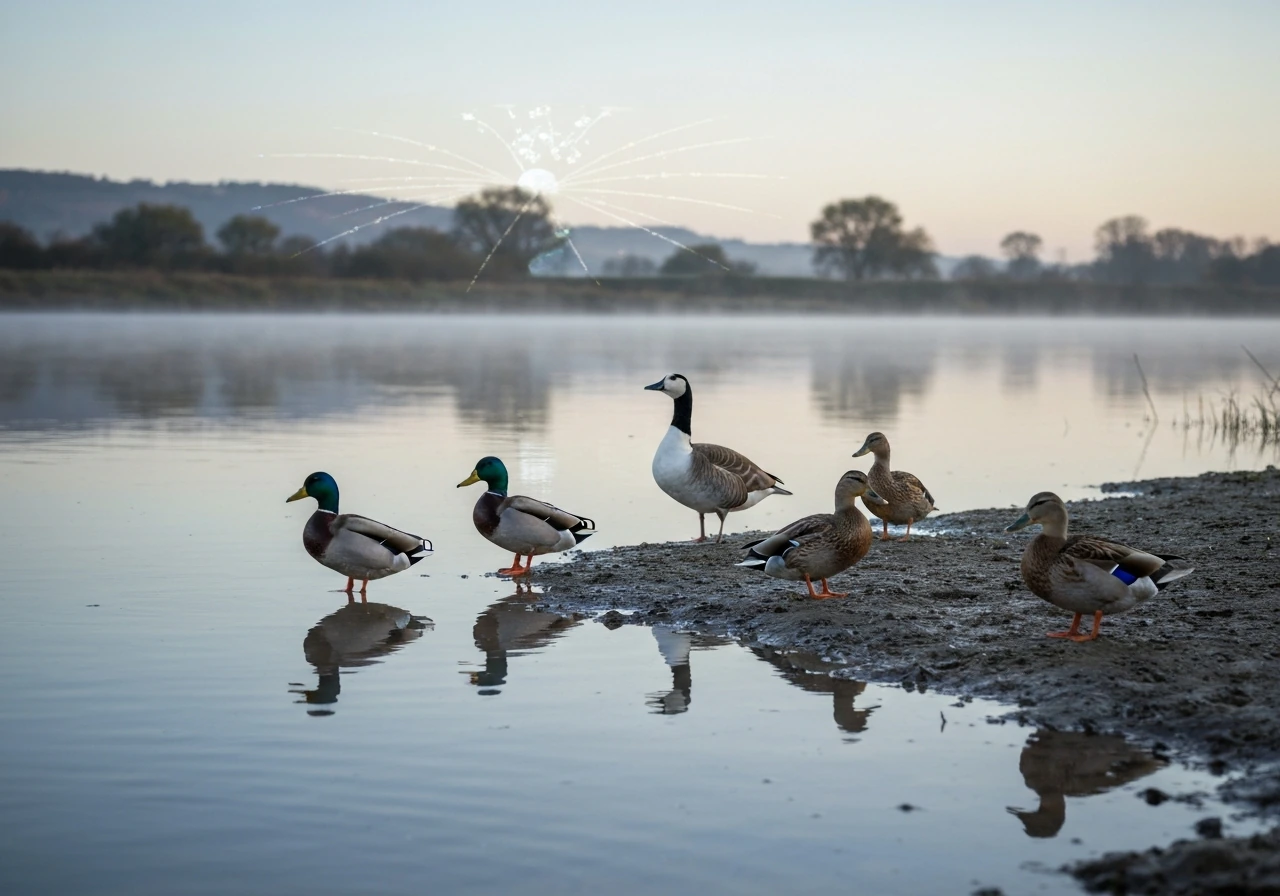
Wild aquatic birds, particularly waterfowl like ducks and geese, are the natural reservoir for avian influenza viruses. The virus can circulate in these populations without causing visible illness, which is part of what makes it so hard to pin to a single geographic origin.
What we can say with confidence is that the HPAI H5N1 lineage that drives today's global outbreaks traces back to a specific place and time: a flock of farmed geese in Guangdong Province, southern China, in 1996. The isolate is formally designated A/Goose/Guangdong/1/1996. Its characterization was first presented publicly at a symposium on October 6, 1996.
Southern China has historically been a hotspot for influenza emergence because of the density of domestic poultry, waterfowl farming, and wild bird migration routes that all converge in the same ecosystems. Surveillance gaps in that region, including limited knowledge of influenza virus genetic diversity in wild and domestic bird populations at the time, meant the virus had almost certainly been evolving for some period before it was isolated and characterized.
For a structured look at the history of bird flu across all its major phases, including earlier recognized poultry events in Scotland (1959) and England (1991) that predate the H5N1 lineage, that article puts the full timeline in context.
The first human outbreak: Hong Kong, 1997
The 1996 Guangdong goose isolate set the stage, but the event that put HPAI H5N1 on the world's radar was in Hong Kong in 1997. Large HPAI H5N1 outbreaks were detected in poultry farms there, with the first poultry farm outbreaks confirmed in March 1997. By the end of that year, 18 people had been infected and 6 had died. That is the first documented instance of H5N1 jumping from birds to humans and causing fatal illness. The key mechanism was direct contact with infected poultry at live bird markets and farms. Hong Kong's response, a mass culling of approximately 1.5 million birds, is widely credited with stopping broader human-to-human spread at that point.
Those 18 cases and 6 deaths in 1997 are the anchor date for 'when did bird flu first infect humans?' If you are researching where the first bird flu death occurred, Hong Kong 1997 is that answer for H5N1, the strain responsible for essentially all current zoonotic concern.
The most recent outbreaks: what started when

The H5N1 story did not end in 1997. It went through multiple waves, spread across Asia, Europe, Africa, and eventually the Americas, and took a significant new turn in 2024. Here is a timeline of the most relevant recent events:
| Date | Event | Location |
|---|---|---|
| 1996 | HPAI H5N1 first isolated from farmed goose (A/Goose/Guangdong/1/1996) | Guangdong, China |
| March 1997 | HPAI H5N1 detected in Hong Kong poultry farms | Hong Kong |
| Late 1997 | 18 human H5N1 cases, 6 deaths; mass poultry cull | Hong Kong |
| Oct–Nov 2005 | First lab-confirmed H5N1 human case in mainland China (Hunan Province) | China |
| April 1, 2024 | First U.S. human H5N1 case linked to dairy cow outbreak (Texas) | United States |
| Dec 14, 2025 | APHIS announces first HPAI detection in a dairy herd in Wisconsin | United States |
| Feb 19, 2026 | WOAH records HPAI event start date in Buenos Aires Province | Argentina |
| Feb 26, 2026 | WOAH records HPAI event start date in England | United Kingdom |
| Feb 28, 2026 | WOAH records HPAI event start date in Northern Ireland | United Kingdom |
The April 1, 2024 U.S. case is particularly significant because it marked a new transmission pathway: H5N1 spreading through dairy cattle herds and then reaching a farmworker. The CDC confirmed this as the first human H5N1 case linked to a dairy cow outbreak in the United States, and WHO was officially notified the same day. It was also the first confirmed human H5N1 infection in the U.S. in 2024. For a detailed breakdown of what is currently happening with bird flu, including the ongoing dairy herd situation and the most recent poultry detections, that resource is updated regularly.
How bird flu starts: the transmission pathway from wild birds to you
Understanding how an outbreak starts helps you make sense of why they keep recurring. The basic chain looks like this: wild aquatic birds carry the virus asymptomatically and spread it through their droppings and respiratory secretions. When wild birds come into contact with domestic poultry, either through shared water sources, open-air markets, or farm environments without adequate biosecurity, the virus can cross over. In live bird markets, where multiple species are housed together under stress, the conditions for viral mixing and amplification are nearly ideal. From poultry, the virus can reach people who handle or slaughter infected birds, or in more recent events, through infected dairy cattle.
WOAH notes that during the Northern Hemisphere winter, wild bird migration increases and lower temperatures can help avian influenza viruses survive longer in the environment, which raises the exposure risk for poultry. That seasonal pattern explains why so many 'outbreak start dates' cluster in the autumn and winter months. It is not a coincidence; it reflects migratory flyways and environmental conditions that bring wild birds and farmed animals into closer proximity.
Why bird flu keeps emerging: farming, evolution, and surveillance
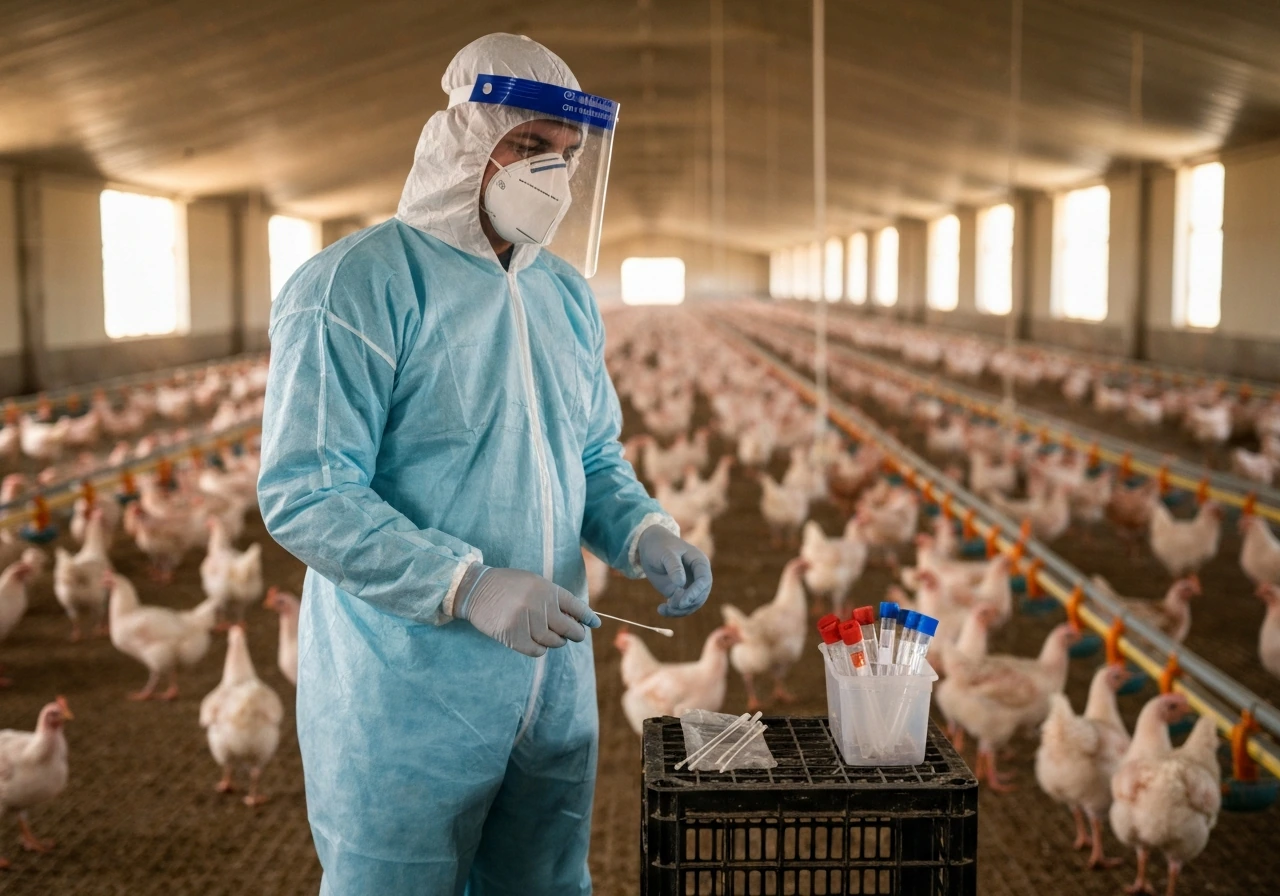
There is no single villain here, and no single moment where a bad decision 'caused' bird flu. The drivers are structural and biological. Intensive poultry farming creates large flocks of genetically similar birds with high contact rates, which gives the virus more opportunities to spread and mutate rapidly. Wild bird migration routes are fixed by geography and cannot be changed.
And influenza Type A viruses are exceptionally good at genetic reassortment, meaning two different strains infecting the same cell can swap gene segments and produce a new variant with different properties. This is how the precursor A/Goose/Guangdong/1/1996 virus evolved into the H5N1 lineage that eventually spread globally. Surveillance gaps, particularly in regions where domestic waterfowl, wild birds, and dense human populations coexist, mean that viruses can circulate undetected for months or years before they are characterized.
This is also why what happened to bird flu after 1997 is such a complicated story: the virus did not go away after the Hong Kong cull. It continued to evolve, spread through migratory flyways, and re-emerge in new regions and new host species. The dairy cattle transmission in the United States is a direct example of that ongoing evolutionary and ecological process.
The main structural drivers, summarized
- Wild aquatic bird reservoirs: ducks, geese, and shorebirds carry HPAI viruses over long distances via migration routes, seeding new outbreaks in poultry as they move
- Live bird markets and mixed-species housing: close contact between multiple species under stress accelerates transmission and gives the virus opportunities to reassort
- Intensive poultry and dairy farming density: large, genetically uniform flocks with high contact rates amplify outbreaks once a virus enters
- Biosecurity gaps: inadequate separation between wild bird habitats and farm environments is one of the most direct controllable risk factors
- Virus evolution: influenza Type A reassortment means new variants with different host ranges or pathogenicity can emerge without warning
- Surveillance limitations: regions with limited veterinary and public health infrastructure may not detect outbreaks until they are already well established
Did bird flu ever reach pandemic level?
Not yet, in the technical sense. A pandemic requires efficient and sustained human-to-human transmission, which HPAI H5N1 has not demonstrated. The 1997 Hong Kong outbreak, the 2004 to 2006 resurgence across Asia, and the ongoing dairy-linked cases in the U.S. all involved humans infected primarily through direct animal contact, not from other people. That distinction matters enormously for risk assessment. For a full account of when the bird flu pandemic was and was not declared, including the WHO criteria and what would actually need to change for H5N1 to meet the threshold, that article walks through the specifics clearly.
How to verify 'when did bird flu start' for a specific outbreak

If you read a news headline about a new bird flu outbreak and want to verify exactly when it started, here is a practical workflow. Different sources use different timestamps, and knowing which one you are looking at prevents confusion.
- Check WOAH's WAHIS (World Animal Health Information System) for official animal outbreak records. WOAH situation reports include an 'Eventstartdate' field for each notified event. For example, WOAH records show the Argentina (Buenos Aires) HPAI event start date as February 19, 2026, and the England event as February 26, 2026. This is the most precise 'official start' timestamp for animal outbreaks.
- Check WHO Disease Outbreak News (DON) for human cases. WHO DON entries record the date WHO was notified of a lab-confirmed case, which is typically a few days after detection. The U.S. H5N1 case linked to dairy cattle was notified to WHO on April 1, 2024, the same day CDC publicly announced it. These two dates can differ, so compare both.
- Check national authority announcements for confirmation dates. For example, GOV.UK's official veterinary surgeon notes confirmed the Argentina February 2026 HPAI case on February 23, 2026, which is slightly after WOAH's event start date of February 19, 2026. Confirmation date and event start date are not the same thing.
- Check CDC's bird flu timeline page for U.S.-specific events and the broader historical timeline. For USDA-regulated contexts (poultry, dairy herds), check APHIS announcements directly. APHIS announced the first HPAI detection in a Wisconsin dairy herd on December 14, 2025.
- Cross-reference at least two official sources before accepting a start date. Event start, detection date, confirmation date, and public announcement date are four different timestamps that can all appear in different reports for the same outbreak.
One thing worth knowing: 'event start date' in official databases often refers to when the event was first recognized or when samples were collected, not necessarily when the virus began circulating in that flock or herd. Surveillance has limits, and the true biological start of any outbreak almost always precedes the official record date by days to weeks. That gap is a feature of real-world disease surveillance, not a sign of cover-up or incompetence.
The short version if you need it fast
HPAI H5N1 was first isolated in farmed geese in Guangdong, China in 1996. The first human cases were 18 infections and 6 deaths in Hong Kong in 1997. The virus never went away after that; it spread globally through migratory birds, evolved through reassortment, and has continued to produce new outbreaks in poultry, wild birds, and increasingly in mammals including dairy cattle. The first U.
S. human case linked to dairy cattle was confirmed on April 1, 2024. Western Livestock Journal reports that [Wisconsin confirmed its first HPAI case in a dairy herd](https://www. wlj.
net/wi-confirms-first-hpai-case-in-dairy/) after the USDA/APHIS announcement, aligning with the December 2025 detection date discussed for dairy cattle. As of April 2026, HPAI events are ongoing across multiple countries. For any specific outbreak you are trying to date, WOAH's WAHIS system and WHO's Disease Outbreak News are the two most reliable starting points.
FAQ
Why can’t we give one exact “start date” for bird flu?
If you mean the earliest bird-to-bird circulation, there is no single confirmed start date, because surveillance generally cannot prove when virus first entered a wild bird population. For HPAI H5N1 specifically, the earliest well-dated anchor is the first isolation of A/Goose/Guangdong/1/1996 in 1996, which implies circulation was already happening before that sample was characterized.
Which “when did it start” date should I use, strain isolation, poultry outbreak, or first human case?
“Bird flu started” could refer to different milestones: isolation of a specific strain in 1996, first detected poultry outbreaks in March 1997 (Hong Kong), first recognized human H5N1 infections in 1997, or the first day an event was entered into a reporting system. When you ask for a date, specify which milestone you want, otherwise different articles will legitimately give different answers.
Why do outbreak “start dates” in databases sometimes seem delayed compared with what people report in the news?
A reported start date often reflects recognition, sample collection, or lab confirmation, not the earliest day transmission began. It is common for the true biological onset to be earlier by days to weeks, especially when cases are mild at first or when there is a delay between farm exposure, illness onset, testing, and official notification.
Does the start date change depending on which subtype people mean (H5N1 versus H7N9, for example)?
Yes. The article’s “bird flu” framing is strain-dependent, and human infections have been confirmed from multiple subtypes besides H5N1. If someone asks “when did bird flu start?” for a particular subtype (for example, H7N9), you need that subtype’s first isolation and earliest human detection, not the H5N1 timeline.
How should I date a specific outbreak in a specific country if the region already had earlier detections?
If you are dating a specific local event, focus on when the first confirmed case in that place was detected in the relevant host category (poultry, wild birds, or dairy cattle) rather than when the wider region was already known to have detections. Also note that “first case” and “first cluster” can differ, particularly in poultry where herds or farms may be connected by markets or shared suppliers.
When people say “human spread started,” do they mean person-to-person transmission or animal contact?
For the early H5N1 human infections in 1997, the transmission mechanism emphasized in the article is direct contact with infected poultry at live bird markets and farms. That means “start of human spread” in that context is not the same as sustained person-to-person transmission, and you should interpret dates accordingly for risk assessment.
Does the virus always start in autumn or winter because of migration, or can outbreaks begin outside those months?
Seasonality can help you interpret plausible timing, but it cannot prove when virus entered a specific flock or herd. Winter and colder conditions can increase environmental persistence and exposure risk during migration periods, so autumn and winter start dates are common, but biological introduction can still occur earlier via contaminated birds, water, or equipment.
For the U.S. 2024 dairy event, was April 1, 2024 the first day the virus infected cattle?
If the question is about the U.S. timeline related to dairy, the article highlights April 1, 2024 as the first confirmed U.S. human H5N1 case linked to a dairy cow outbreak. However, this date is about confirmation of a human case linked to dairy, not necessarily the first day infection began in cattle on any particular farm.
If WOAH and WHO report different start dates for the same outbreak, what should I check first?
Use both systems you mentioned, but treat them as complementary rather than identical: WOAH WAHIS is typically used for animal health event reporting, while WHO Disease Outbreak News is oriented to human health updates. If dates conflict, check host category, lab confirmation stage, and whether the “start date” means sample collection versus first detection.
Next Article
Is Bird Flu in Europe Now? Risk, Symptoms, Safety Steps
Find out if bird flu is in Europe now, current risk, symptoms, food safety, and exact steps for handling exposure safely