
Yes, bird flu has been confirmed in Oklahoma, and detections have continued into 2026. The Oklahoma Department of Agriculture, Food & Forestry (ODAFF) has recorded multiple confirmed cases of Highly Pathogenic Avian Influenza (HPAI) across the state, including a backyard flock detection in Wagoner County on January 8, 2026, two backyard flock detections in Grady and McClain Counties in November 2025, a Woodward County detection in March 2025, and several commercial flock detections in Adair County in 2024. That said, confirmed HPAI does not mean an active statewide emergency is unfolding right now. This guide walks you through how to check the current status, what the findings mean, and exactly what to do whether you are a curious resident, a backyard flock owner, a commercial farmer, a hunter, or someone tracking this from a public health angle.
Is Bird Flu in Oklahoma? How to Check Status & Protect Flocks

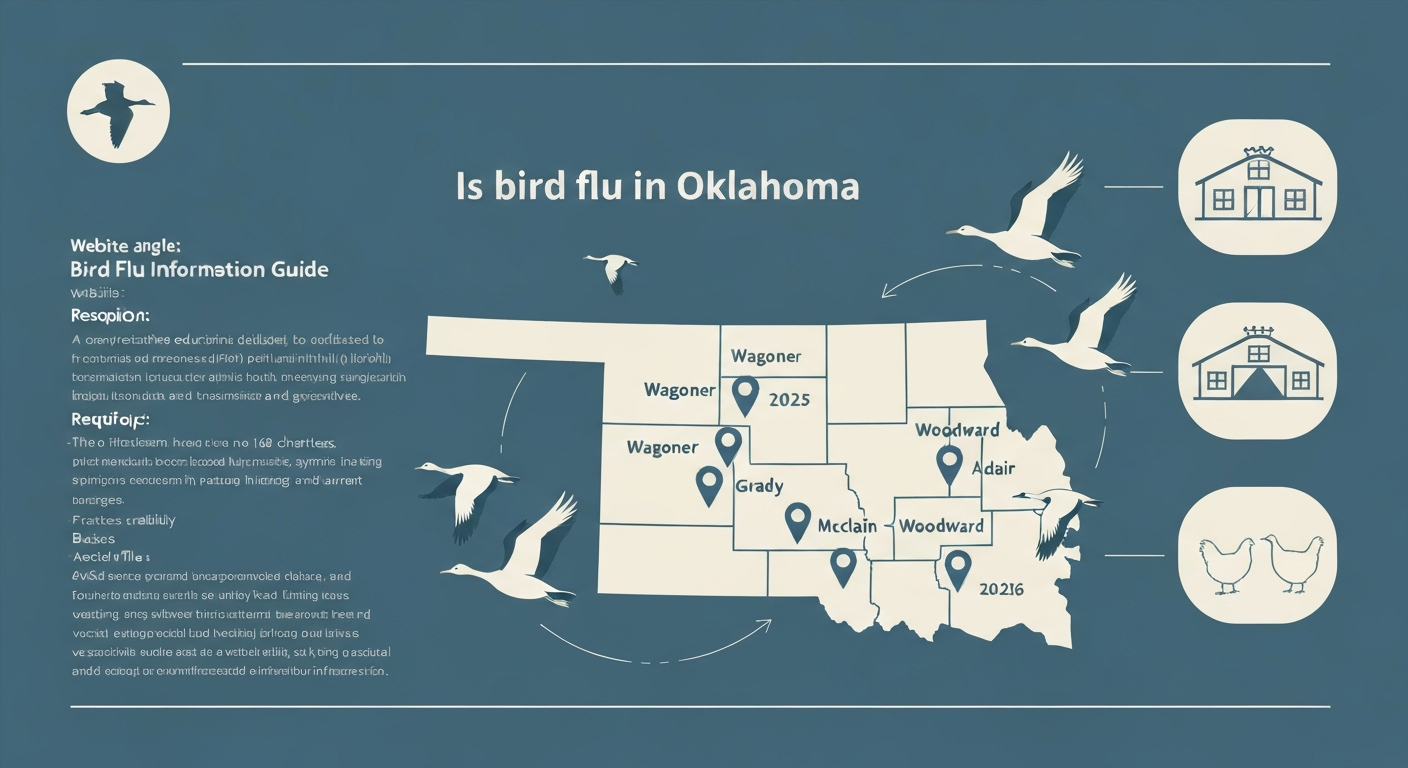
Quick overview and who this guide is for
Oklahoma sits along major migratory flyways and has a significant commercial and backyard poultry sector, which means HPAI surveillance here is ongoing and meaningful. The confirmed detections listed above are not rumors or projections, they come directly from ODAFF's disease alerts page. However, 'bird flu is in Oklahoma' does not automatically mean your backyard chickens are at risk today, or that you face a personal health threat. Risk depends on your exposure, your biosecurity practices, and where you are in the state. This article is written for four main audiences: residents and families who want honest context, backyard and small-flock poultry owners, commercial producers, and hunters or wildlife enthusiasts who handle wild birds. Each group faces slightly different considerations, and I have tried to be specific about those differences throughout.
How to check the current official status for Oklahoma and nearby states
Outbreak status changes frequently, sometimes week to week, so the most useful thing I can give you is a reliable method for finding current information rather than a snapshot that will age quickly. Here is the step-by-step approach I recommend.
- Start with ODAFF's Disease Alerts page (oklahomaag.gov). Search for 'HPAI' or navigate to the Animal Industry division. This is where Oklahoma-specific confirmed detections are posted with county names and dates. Bookmark it and check it after any regional news report.
- Cross-reference with the USDA APHIS 'Detections of HPAI in Poultry and Livestock' page (aphis.usda.gov). APHIS maintains a map and downloadable table updated each weekday. Filter by state to isolate Oklahoma entries. The table shows species (commercial, backyard, wild bird), county, and confirmation date.
- Check APHIS's 'Detections of HPAI in Wild Birds' page separately, since wild-bird detections are tracked on a different table from domestic flocks. Wild-bird data is updated as of the most recent APHIS modification date, which was July 16, 2026 at the time of this writing.
- For the human health picture, go to CDC's 'A(H5) Bird Flu: Current Situation' page (cdc.gov/bird-flu). As of March 6, 2026, CDC had recorded 71 total U.S. human A(H5) cases since February 2024 and assessed the current public health risk to the general public as low.
- For neighboring states — Kansas, Arkansas, Missouri, Iowa, and Wisconsin — check those states' department of agriculture websites directly. Links and context for each are in the regional risk section below.
- Sign up for ODAFF email alerts if you are a producer. The agency posts disease alert bulletins when new detections are confirmed, which is faster than waiting to notice a website update.
- If you cannot find recent information online, call ODAFF directly. The State Veterinarian's office number is 405-522-6141. For general HPAI questions, ODAFF also operates a 2-1-1 line.
Key official sources to monitor and how to read them
Not all official sources tell the same story, and understanding what each one tracks helps you avoid confusion. Here is a breakdown of the main agencies and what their data actually represents.
| Source | What it tracks | Update frequency | Best used for |
|---|---|---|---|
| ODAFF Disease Alerts | Oklahoma confirmed HPAI cases in domestic flocks (backyard and commercial) | Posted as confirmed; not on a fixed schedule | Oklahoma-specific domestic flock status |
| USDA APHIS Poultry/Livestock Map | All confirmed U.S. HPAI detections in domestic and commercial flocks | Every weekday | National and state-level domestic flock picture |
| USDA APHIS Wild Bird Table | Confirmed HPAI detections in wild birds by state and species | Ongoing; last modified July 16, 2026 | Wild bird surveillance and flyway tracking |
| CDC A(H5) Current Situation | U.S. human H5 cases, exposure categories, and public health risk assessment | Updated as new cases are confirmed | Human health risk and case counts |
| WOAH WAHIS / FAO EMPRES-i | International animal health events including avian influenza by country | Ongoing | Global context and cross-border lineage tracking |
| GISAID | H5Nx genome sequences deposited by labs worldwide | Continuous | Researchers tracking strain evolution (clade 2.3.4.4b) |
One thing that trips people up is the difference between a 'presumptive positive' and a 'confirmed' case. When a NAHLN (National Animal Health Laboratory Network) lab runs an initial screening test, typically an rRT-PCR matrix or H5 assay, and gets a positive result, that is reported as presumptive. The sample then goes to USDA's National Veterinary Services Laboratories (NVSL), which runs confirmatory testing including virus isolation, sequencing, and characterization to define the exact subtype (such as H5N1) and pathotype (HPAI or LPAI). Only after NVSL confirms does the case appear in official APHIS tables. So if you see a news report about a 'suspected' case, wait for NVSL confirmation before drawing conclusions.
What avian influenza actually is: strains, HPAI vs LPAI, and how it differs from regular flu
Avian influenza viruses are influenza A viruses that primarily infect birds. They are named using the H (hemagglutinin) and N (neuraminidase) protein system, H5N1 and H7N9 are the strains you hear about most often. There are 18 known H subtypes and 11 N subtypes, but not all combinations pose the same risk to poultry or people.
The critical distinction is between Low Pathogenic Avian Influenza (LPAI) and Highly Pathogenic Avian Influenza (HPAI). Pathogenicity here refers specifically to how severely the virus affects chickens and turkeys, not humans. LPAI strains typically cause mild respiratory symptoms or a drop in egg production. HPAI strains, particularly H5 and H7 subtypes, can kill up to 90-100% of an infected domestic flock within days. This is why HPAI triggers mandatory reporting, quarantine, and depopulation protocols under federal law, while many LPAI detections are managed differently.
The strain driving current detections in Oklahoma and across the U.S. is H5 clade 2.3.4.4b, a Eurasian-lineage virus that has caused what virologists describe as a global panzootic (a pandemic in animals) since around 2021. It is the focus of WHO, FAO, and WOAH surveillance as documented in their joint public health assessment from May 2026. It is also the strain being sequenced and deposited into GISAID by labs tracking its evolution.
Avian influenza is not the same as seasonal human flu. Seasonal flu (influenza A H1N1 or H3N2, and influenza B) spreads easily between people through respiratory droplets and is the flu you get a yearly shot for. H5N1 does not spread efficiently between humans, all 71 U.S. human cases recorded through early 2026 were linked to direct animal exposure, not person-to-person transmission. The concern with HPAI is not that it is currently a human epidemic but that it has the biological potential to mutate. That is the distinction that public health agencies monitor carefully, and it is why calling HPAI 'just a bird problem' understates the surveillance effort without justifying panic.
How bird flu spreads and why Oklahoma's location matters
The primary driver of HPAI spread across states is migratory wild birds, particularly waterfowl like ducks and geese that carry the virus asymptomatically and shed it through their droppings. Oklahoma lies along the Central Flyway, one of North America's four major migratory routes, which channels large volumes of waterfowl through the state during spring and fall migrations. That geographic reality is not something biosecurity practices can change, it is why continuous surveillance matters regardless of what the current detection count shows.
Secondary spread happens when domestic poultry come into contact with wild birds or their feces, contaminated water sources, infected equipment, vehicles, clothing, or feed brought in from elsewhere. Live bird markets and poultry movements across state lines are additional risk factors because they can introduce virus into areas that otherwise have no wild-bird exposure. Flock-to-flock transmission through shared equipment or personnel is well documented and is why HPAI response involves movement restrictions around infected premises.
Oklahoma's neighboring states are all relevant to this picture. Kansas has reported both HPAI and LPAI detections in 2026, including backyard flock cases and a low-pathogenic detection on a Crawford County poultry farm. Arkansas documented HPAI in commercial and backyard flocks in late 2025 through early 2026, including confirmed cases in Drew County and White County; the Arkansas Department of Agriculture operates a poultry disease hotline at 501-823-1746. For the latest Arkansas-specific detections and guidance, see Is bird flu in Arkansas Is bird flu in Arkansas?. Missouri has a documented history of HPAI in domestic birds and wild bird populations, and the state had a confirmed human H5 case in 2024. For state‑specific updates, see is bird flu in missouri for the latest detections and guidance. Iowa confirmed multiple HPAI detections in 2026, including a January 22 detection in a Kossuth County mixed-species flock significant enough to trigger a governor's disaster proclamation. For current confirmation and location details in Iowa, see the guide titled "is bird flu in iowa". Wisconsin confirmed HPAI in a Dane County backyard flock on March 2, 2026. For more detail on Wisconsin’s situation, see Is bird flu in Wisconsin. The cumulative picture across these states reinforces that this is a regional issue, not an isolated Oklahoma event.
Clinical signs to watch for in poultry and wild birds
Knowing what sick birds look like is one of the most practical early-warning tools available to flock owners and hunters. HPAI in domestic poultry often moves fast, and the signs can look like several other diseases, which is why lab confirmation is essential. Do not assume a single sick bird means HPAI, but do report unusual mortality promptly.
- Sudden, unexplained death — often with no warning signs — in multiple birds over a short period (hours to days)
- Severe respiratory distress: gasping, nasal discharge, coughing, sneezing
- Neurological signs: loss of coordination, twisted necks (torticollis), tremors, inability to stand
- Significant drop in egg production, or soft-shelled and misshapen eggs
- Swollen head, face, eyelids, comb, or wattles with a blue or purple discoloration (cyanosis)
- Watery or bloody diarrhea
- Lethargy, inappetence, huddling, or withdrawal from the flock
In wild birds, the picture is less predictable because some species (especially dabbling ducks) carry HPAI with no visible symptoms. However, raptors, herons, shorebirds, and corvids are more likely to show illness or be found dead. Finding multiple dead wild birds of the same or different species in one location is the trigger for reporting to wildlife authorities, not a single carcass. Normal bird mortality happens constantly in nature; clusters of dead birds, especially waterfowl or raptors, are the signal worth reporting.
Human symptoms, exposure routes, and when to call a doctor
The CDC's A(H5) case count of 71 U. CDC’s A(H5) Bird Flu: Current Situation (updated Mar 6, 2026) reports 71 total U.S. human A(H5) cases since February 2024 (7 detected through routine flu surveillance and 64 through active monitoring) and states the current public‑health risk to the general public is low while continuing targeted monitoring of exposed people. S. human infections since February 2024 represents people with documented direct animal exposure, not community spread. Of those, 64 were detected through active monitoring of exposed individuals, meaning many would not have sought care on their own for what they thought was a mild illness. Seven were found through routine flu surveillance. That tells you something important: mild cases do occur, and most people who have caught H5 from animals have not become severely ill. But some have, which is why exposure history and prompt medical reporting matter.
CDC defines relevant exposures broadly. You are considered potentially exposed if you have had direct or close contact with infected birds (live or dead), infected livestock including dairy cattle, bird carcasses, feces or litter from infected premises, raw unpasteurized milk from infected herds, or surfaces contaminated with infected bird or animal material. Hunters who handle harvested waterfowl, farmers who work in or near infected premises, and anyone assisting with depopulation of infected flocks are all in scope.
CDC recommends active symptom monitoring from day zero of exposure through 10 days after last exposure. Symptoms to watch for include fever (temperature at or above 100°F / 37.8°C), cough, sore throat, runny or stuffy nose, muscle or body aches, headaches, fatigue, eye redness or discharge (conjunctivitis), and in more serious presentations, shortness of breath or pneumonia. Gastrointestinal symptoms like diarrhea and vomiting have also been reported. If you develop any of these symptoms within 10 days of a known exposure to potentially infected birds or animals, call your healthcare provider before going in. Tell them about the exposure so they can take appropriate precautions. Do not simply walk into an emergency room without calling ahead.
What to do if you find sick or dead birds in Oklahoma
This section is where the practical guidance gets specific. The steps differ slightly depending on whether the birds are your domestic flock or wild birds you have come across.
If the sick or dead birds are your domestic poultry
- Do not move birds off your property. Isolate the sick birds from the rest of the flock immediately if you can do so without spreading contamination.
- Call the ODAFF State Veterinarian's office at 405-522-6141. This is the primary reporting number for poultry owners in Oklahoma. Have your flock size, the number of affected birds, and approximate dates of onset ready.
- Do not dispose of dead birds until instructed by officials. Carcasses may be needed for diagnostic sampling.
- Limit traffic in and out of your premises — people, vehicles, and equipment. HPAI can travel on boots, tires, and clothing.
- Use personal protective equipment (PPE) including gloves and a face mask (N95 if available) when handling sick or dead birds.
- ODAFF's Sick Bird/Dead Bird submission program handles sample collection logistics. Officials will guide you through what samples are collected (typically cloacal and oropharyngeal swabs, and in some cases organ tissue from dead birds) and where they go for testing.
- NAHLN labs perform the initial rRT-PCR screening. If the result is presumptive positive, NVSL confirms. You will be notified through your state veterinarian contact.
If the sick or dead birds are wild birds
- Do not handle dead wild birds with your bare hands. If you need to move a carcass, use gloves and double-bag it in plastic.
- Report clusters of dead wild birds (especially waterfowl, raptors, or shorebirds) to the Oklahoma Department of Wildlife Conservation (ODWC) or to ODAFF's general line.
- Hunters: after harvesting waterfowl, wear gloves while cleaning birds, wash hands thoroughly afterward, and do not eat birds that appeared sick before harvest. Cook all game birds to an internal temperature of 165°F (74°C).
- Wash any surfaces, tools, or clothing that contacted wild bird carcasses before using them elsewhere.
Testing and diagnosis pathways in Oklahoma
Understanding how HPAI testing works helps you interpret news reports and avoid confusion between a 'suspected' and a 'confirmed' case. Oklahoma participates in the NAHLN, the USDA-APHIS network of approximately 60 state and university diagnostic labs that provide standardized HPAI surveillance and surge testing capacity across the country.
When a sample is submitted, whether from a poultry owner through ODAFF's program, a veterinarian, or a wildlife agency, it typically goes first to a NAHLN-affiliated lab. ODAFF's April 2026 State Board packet notes an ongoing Sick Bird/Dead Bird submission channel and documents dozens of suspect submissions received since Jan 1, 2026. There, technicians run a matrix gene rRT-PCR to confirm the sample is influenza A, followed by an H5 screening assay. If that screens positive, a Eurasian-lineage 2.3.4.4b-specific rRT-PCR test is run as a developmental assay. A positive at this stage is reported as a presumptive positive.
The sample then goes to NVSL, which is USDA's reference laboratory for animal disease. NVSL performs confirmatory rRT-PCR, virus isolation (growing the virus in a controlled lab environment), and whole-genome sequencing to determine the precise subtype (for example, H5N1 vs. H5N2), clade (2.3.4.4b in most current cases), and pathotype (HPAI or LPAI). A pathotype determination is based partly on sequencing the hemagglutinin cleavage site, which is the molecular feature that distinguishes high-pathogenicity strains. Only after NVSL completes this process is a case counted as confirmed and added to APHIS's official tables.
For wild-bird detections, the same pathway applies: NAHLN screening followed by NVSL confirmation, with results feeding into APHIS's wild-bird detection table. The reason this multi-step process exists is precision: HPAI confirmation triggers significant federal response including mandatory quarantines, indemnity payments, and movement restrictions. False positives at the screening stage are manageable; acting on them as if they are confirmed would cause unnecessary disruption.
Biosecurity measures for farms and backyard flocks
Biosecurity is not glamorous, but it is the single most effective tool available to poultry owners between now and any future detection. The goal is to reduce every point of contact between your birds and potential virus sources.
- Keep domestic poultry housed or in enclosed runs that prevent contact with wild birds and wild bird droppings, especially near ponds, streams, or wetlands that attract waterfowl.
- Use dedicated footwear for the coop or barn and change or disinfect before entering and exiting. HPAI can survive on boots and travel between premises easily.
- Clean and disinfect equipment, feeders, and waterers regularly. HPAI virus is susceptible to common disinfectants (quaternary ammonium compounds, sodium hypochlorite) when applied correctly to clean surfaces.
- Source replacement birds only from reputable, tested flocks. Introducing new birds without a quarantine period is one of the most common ways disease enters a small flock.
- Control rodents and other wildlife around feed storage and coops. Rodents can carry contaminated material between premises.
- Do not share equipment or clothing between flocks without thorough disinfection.
- Restrict visitor access to your flock during active regional outbreaks. If visitors must enter, provide dedicated coveralls and footwear.
- Keep records of flock health so you can identify changes in behavior, feed consumption, or egg production quickly.
Food safety, hunting guidance, and vaccine information
Is poultry and eggs from Oklahoma safe to eat?
Yes. Poultry and eggs that have gone through normal commercial processing and regulatory inspection channels are safe. HPAI-positive flocks are depopulated and do not enter the food supply. Cooking poultry to an internal temperature of 165°F (74°C) kills influenza viruses, as it does most foodborne pathogens. Eggs should be fully cooked, runny yolks carry slightly more risk if a flock were infected, though commercial inspection makes this a remote concern. Raw or unpasteurized milk is a separate matter: CDC has identified raw milk from infected dairy cattle as an exposure route in some human H5 cases, and that guidance stands regardless of bird flu status in any specific state.
Vaccines for humans and animals
There is no approved H5N1 vaccine for the general public in the U.S. at this time. The federal government has stockpiled candidate H5N1 vaccine doses that could be deployed if a pandemic were declared, but routine vaccination of the public is not currently recommended and would not be warranted given CDC's current low-risk assessment for the general population. Antiviral medications such as oseltamivir (Tamiflu) and baloxavir are effective against H5N1 and are used for treatment and post-exposure prophylaxis in exposed individuals, generally under medical supervision.
For poultry, the U.S. has historically relied on stamping-out (depopulation) rather than vaccination as its primary HPAI control strategy, partly because vaccination can complicate surveillance by making it harder to distinguish vaccinated-and-infected birds from vaccinated-and-clean birds. USDA has been evaluating conditional-use vaccine options in certain contexts, particularly for backyard flocks, but this is an evolving policy area. Check with ODAFF or your accredited veterinarian for current guidance if you are considering this for your flock.
Oklahoma and federal contacts at a glance
| Agency / Resource | Contact / Access | Primary use |
|---|---|---|
| ODAFF State Veterinarian's Office | 405-522-6141 | Report sick or dead domestic birds; request guidance |
| ODAFF General HPAI Hotline | 2-1-1 (Oklahoma relay) | General public HPAI questions |
| ODAFF Disease Alerts Page | oklahomaag.gov (search 'HPAI disease alerts') | Latest Oklahoma confirmed detections |
| USDA APHIS HPAI Poultry Map | aphis.usda.gov (search 'HPAI confirmed cases') | National domestic flock detection table updated weekdays |
| USDA APHIS Wild Bird Detections | aphis.usda.gov (search 'HPAI wild birds') | Wild bird surveillance table |
| CDC A(H5) Situation Page | cdc.gov (search 'H5 bird flu current situation') | Human case counts and risk assessment |
| Arkansas Poultry Disease Hotline | 501-823-1746 | Report suspected HPAI in Arkansas |
| WOAH WAHIS | wahis.woah.org | International animal disease events |
| FAO EMPRES-i | empres-i.fao.org | Global avian influenza tracking |
The bottom line is straightforward: bird flu has been confirmed in Oklahoma and in every neighboring state, but the current public health risk to people who are not directly handling infected birds or animals remains low by CDC's assessment. For poultry owners, the risk is real and warrants consistent biosecurity. For the general public, the most useful actions are staying informed through official channels, following basic food safety practices, and knowing when and how to report unusual bird mortality. The situation is active and monitored, which is exactly what you want from a public health standpoint.
FAQ
Is bird flu in Oklahoma right now?
To know the current official status for Oklahoma, check the Oklahoma Department of Agriculture, Food & Forestry (ODAFF) Disease Alerts page and USDA APHIS HPAI detection maps. ODAFF posts county-level confirmed detections and sick/dead bird program updates: https://ag.ok.gov/disease-alerts/. USDA APHIS maintains national livestock and wild‑bird HPAI tables and maps (refresh for the latest weekday updates): livestock map https://direct.aphis.usda.gov/livestock-poultry-disease/avian/avian-influenza/hpai-detections/hpai-confirmed-cases-livestock and wild‑bird detections https://www.aphis.usda.gov/livestock-poultry-disease/avian/avian-influenza/hpai-detections/wild-birds. These official sources show confirmed detections and dates; rely on them rather than social media for current status.
How do I read the official maps and tables (ODAFF, APHIS)?
Look for date-stamped entries and county-level detail. APHIS tables distinguish detections in wild birds vs. livestock and list species, state, county, and confirmation dates; notes explain testing steps (NAHLN screening, NVSL confirmation/sequencing). ODAFF disease alerts list confirmed cases by county and provide report/response guidance. Always check the map/table caption for ‘‘last updated’’ and click entries for supporting notices or press releases.
What is avian influenza (bird flu) and which strains matter?
Avian influenza (AIV) are influenza A viruses that naturally circulate in wild waterfowl. Highly pathogenic avian influenza (HPAI) strains—currently dominated globally by H5 clade 2.3.4.4b—cause severe disease in poultry and sometimes affect mammals, including rare human infections. These viruses are distinct from seasonal human influenza viruses (different subtypes, ecology, and typical host range). Public health and animal health agencies sequence viruses to determine subtype and clade because that affects response and risk assessments.
How does bird flu spread and what increases regional risk for Oklahoma?
Spread occurs mainly by: (1) wild migratory birds shedding virus in feces and secretions; (2) movement of infected domestic poultry, equipment, vehicles, or people (poor biosecurity); and (3) contaminated materials (litter, feed, waterfowl habitat). Risk factors for Oklahoma include proximity to flyways and neighboring-state detections (e.g., Missouri, Arkansas, Kansas, Iowa, Wisconsin), movements of birds or poultry products across state lines, and contact between backyard flocks and wild birds. Surveillance and confirmed detections in nearby counties raise local vigilance but do not automatically mean wide community transmission.
What clinical signs should I watch for in poultry?
Signs in poultry can be sudden and severe: rapid increase in mortality, respiratory distress (gasping, coughing), decreased egg production or soft‑shelled eggs, swollen wattles or combs, lethargy, decreased feed/water intake, neurologic signs (tremors, incoordination), and diarrhea. Low‑pathogenic strains can cause milder signs. Any unusual cluster of sick or dead birds should be reported immediately.
What are the signs in people and how are human cases handled?
Human infection with avian influenza is uncommon. Possible symptoms mirror influenza: fever, cough, sore throat, muscle aches, shortness of breath; severe cases can cause pneumonia. CDC currently assesses risk to the general public as low but recommends targeted monitoring of exposed people. If you had direct exposure to infected birds or contaminated materials, follow CDC guidance for active symptom monitoring for 10 days and seek medical attention if symptoms develop: https://www.cdc.gov/bird-flu/php/surveillance/symptom-monitoring-hpai.html. Clinicians coordinate testing with public‑health authorities; human testing uses respiratory specimens and reference labs.
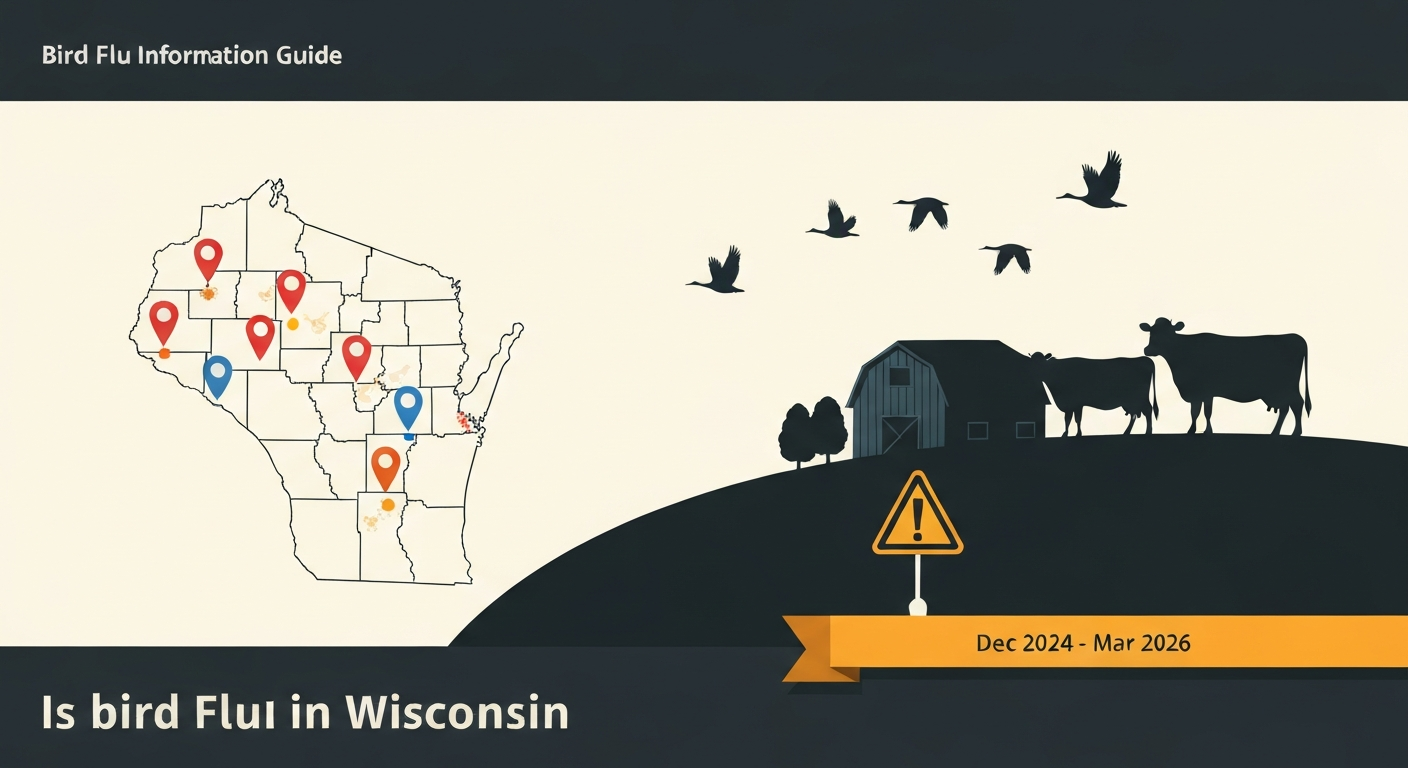
Is bird flu in Wisconsin? Latest confirmed human and poultry cases, locations, risks, safety steps & official links.
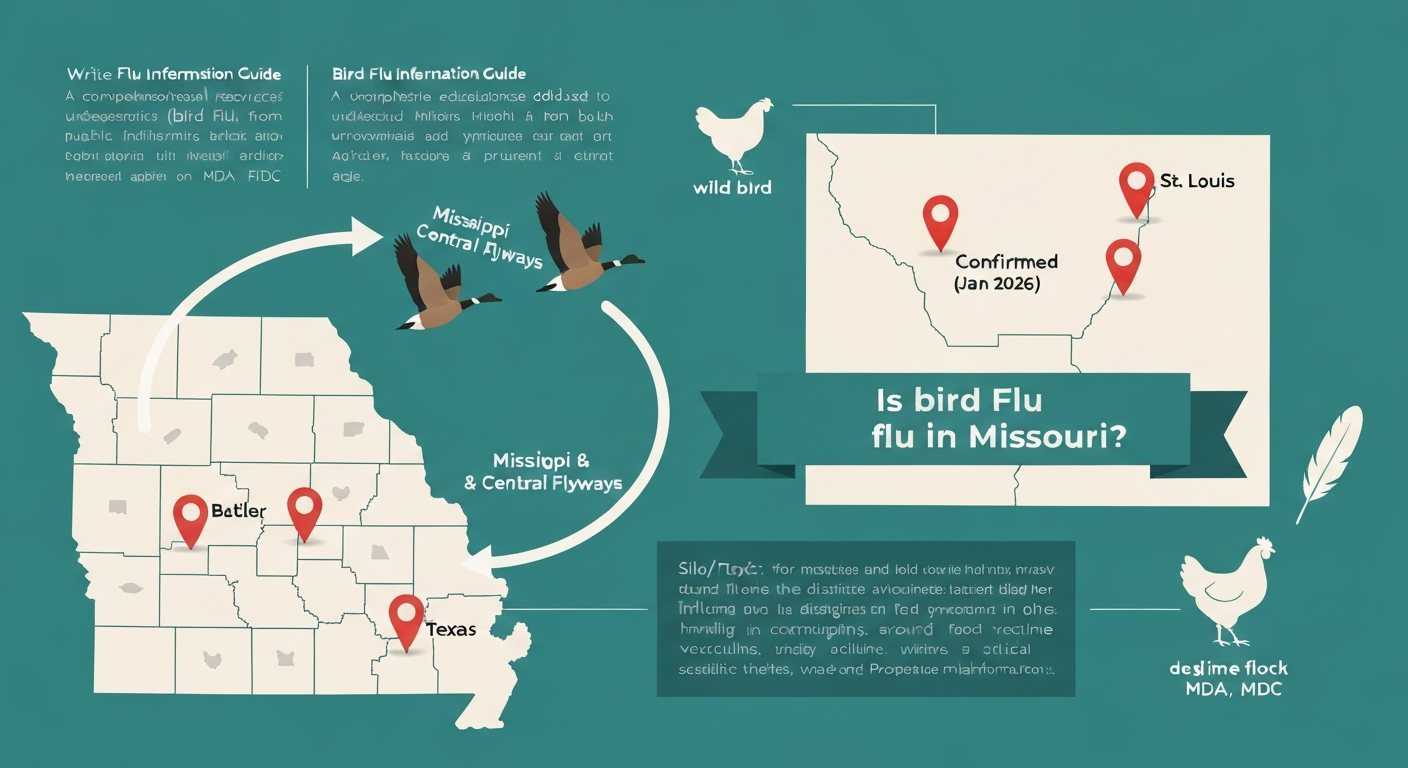
Is bird flu in Missouri? Latest outbreak map, risk, reporting steps, biosecurity & what to do for sick birds.
Find out if bird flu is in Europe now, current risk, symptoms, food safety, and exact steps for handling exposure safely