
Yes, bird flu has been confirmed in Washington State, and the numbers are significant. If you are looking for the latest updates, you can check current case reporting for bird flu in West Virginia as well. Washington was one of the first states to report human cases of H5N1 avian influenza, with the initial cluster appearing in October 2024. By November 2025, the CDC had documented 14 human H5N1 cases previously identified in Washington, and the state made international headlines when it recorded the world's first confirmed human case of a related strain, influenza A(H5N5), in a backyard flock owner who died from the infection. On the animal side, there have been multiple poultry farm detections and wild bird findings across the state. Washington is not a bystander in this outbreak; it has been one of the more active states.
Is Bird Flu in Washington State Today? Cases and Updates

Where Washington stands right now
Washington's history with this outbreak starts in October 2024, when four people in the state tested presumptive positive for avian influenza A(H5) on October 20, 2024. Those cases triggered a statewide health alert from the Washington State Department of Health (WA DOH). The cases were linked to exposures on dairy farms and poultry operations, consistent with what was happening nationally at the time. By the time CDC published its November 2025 MMWR report, Washington had logged 14 confirmed human H5N1 cases in total. Then came the H5N5 case, a backyard flock owner in Washington who died, marking the first time that particular H5N5 strain had ever been confirmed in a human anywhere in the world. That is where Washington's case record stands as of the current date.
It is worth knowing that Washington is not alone in the Pacific Northwest and Mountain West. Oregon, Montana, and Colorado have also had detections, and the outbreak has touched states across the country. If you are wondering is bird flu in Montana, the latest situation depends on current state and federal reporting of confirmed detections Oregon, Montana, and Colorado have also had detections. If you are wondering about Colorado specifically, reports have also noted detections there as the outbreak spreads through the region. If you are wondering whether bird flu has reached Oregon, recent detections show the outbreak is not limited to Washington bird flu in Oregon. But Washington's combination of commercial poultry operations, dairy farms, and wild bird migration corridors puts it in a higher-exposure category than many other states.
How to find today's confirmed case counts

Numbers change. What I have here reflects what was publicly documented through the research available, but avian influenza case counts are updated regularly as investigations are completed and test results are finalized. Here is exactly where to check for the most current Washington State numbers:
- WA DOH Avian Influenza page (doh.wa.gov): This is the primary source for Washington-specific human case counts and public health guidance. It is updated as investigations are completed.
- CDC's H5N1 Bird Flu: Current Situation page (cdc.gov): Shows cumulative human case counts by state, updated frequently. Look for the data table that breaks out Washington specifically.
- USDA APHIS (aphis.usda.gov): For poultry flock detections and farm-level outbreak data, including the county-level maps showing confirmed HPAI (Highly Pathogenic Avian Influenza) detections in commercial and backyard flocks.
- WHO Disease Outbreak News (who.int): For significant global firsts like the H5N5 case, WHO publishes detailed situation reports.
- Washington State Department of Agriculture (WSDA): For state-specific farm and flock detections beyond what USDA publishes.
One practical tip: WA DOH and CDC both note that a case is not counted as confirmed until a public health case investigation is complete, including exposure history, confirmatory laboratory testing, and symptom review. WA DOH also says the first human cases of H5 avian influenza were reported in Washington state in October 2024, and that whether a case is counted as confirmed depends on completion of the public health case investigation, including exposure history, confirmatory testing, and symptoms. That means the number of presumptive positives at any given moment may be higher than the confirmed case count you see published. Do not assume the confirmed number is the whole picture on any given day.
What 'cases' actually means: breaking down the numbers
This is where a lot of confusion happens, so it is worth being precise. When you see bird flu numbers, you are usually looking at three different categories of data that get lumped together.
| Category | What it means | Washington relevance |
|---|---|---|
| Human cases (confirmed) | A person with lab-confirmed influenza A(H5) or H5N1/H5N5, with completed public health investigation | 14 confirmed H5N1 cases as of Nov 2025 MMWR, plus the fatal H5N5 case |
| Poultry flock detections | HPAI confirmed in a commercial or backyard flock; triggers depopulation and quarantine protocols | Multiple detections across WA, particularly in western WA poultry-dense counties |
| Wild bird detections | HPAI found in wild birds (often waterfowl or raptors); monitored by USGS and USDA but does not automatically mean farm or human risk | Ongoing; WA's Pacific Flyway location means regular detections in migratory species |
| Dairy herd detections | HPAI confirmed in cattle; relevant because farmworker exposure risk increased | WA had dairy-linked human cases in the early outbreak phase (Oct 2024) |
When someone says 'there are X cases of bird flu in Washington,' they might mean any one of these. Human cases are the most medically relevant number for your personal risk. Poultry and dairy detections matter more if you work on farms or keep birds. Wild bird detections are the least immediately actionable for most people but are worth knowing about if you handle wild birds.
Where detections come from in Washington
Washington's geography is a major factor here. The state sits along the Pacific Flyway, one of the main North American migratory bird routes. That means wild waterfowl carrying HPAI pass through regularly, creating ongoing exposure pressure on both commercial poultry operations and backyard flocks. Western Washington has some of the highest concentrations of commercial poultry farms in the country, and those operations are under active surveillance.
Human cases in Washington have come primarily from two exposure settings: farmworkers in close contact with infected poultry or dairy cattle, and backyard flock owners who handle birds directly without adequate protective equipment. The fatal H5N5 case in November 2025 was a backyard flock owner, which underscores that this is not only a commercial agriculture issue. Wild bird detections, by contrast, are found through a combination of USGS surveillance, voluntary reporting from the public (dead bird hotlines), and targeted testing by WDFW (Washington Department of Fish and Wildlife).
Your actual risk as a person in Washington
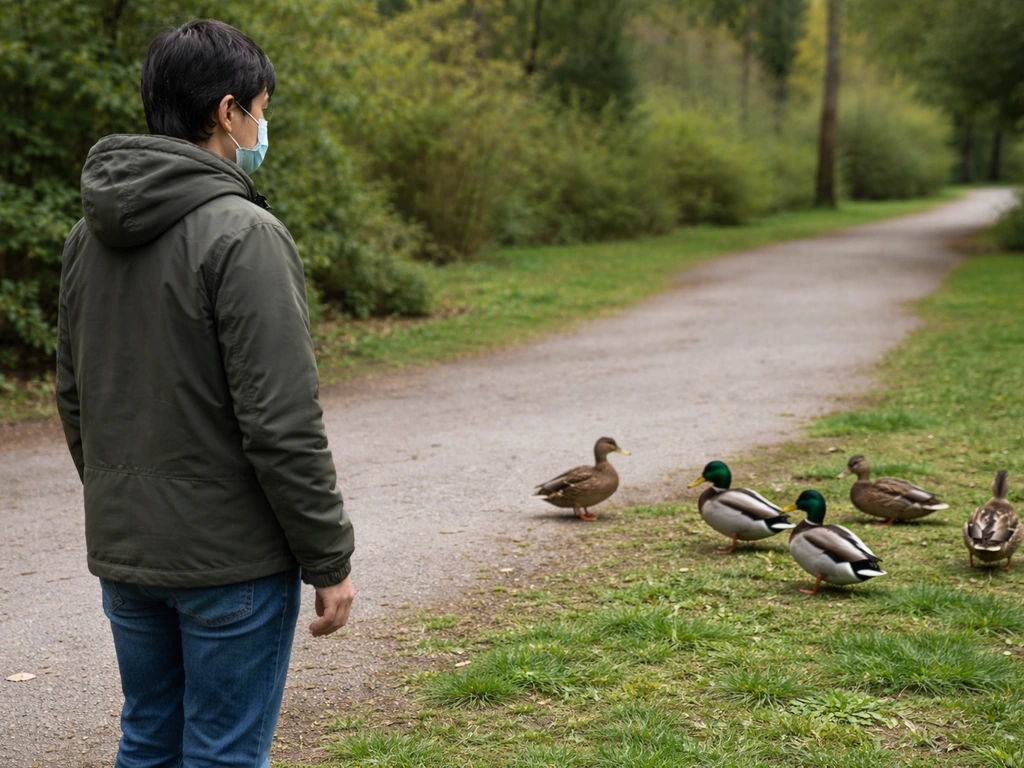
For most residents of Washington State, the personal risk from bird flu remains low. The virus does not spread easily from birds to people, and there is no confirmed sustained human-to-human transmission. Because bird flu status varies by location, check the latest guidance for Hawaii in addition to Washington bird flu in Hawaii. But 'low risk' is not 'zero risk,' especially if you fall into a higher-exposure group. WA DOH is clear that the people at higher risk are those with close or prolonged contact with infected birds or animals or their environments, particularly without proper protective equipment (PPE).
Symptoms to watch for
If you have had recent contact with birds (wild or domestic) or livestock and develop any of the following within 10 days, take it seriously and call your healthcare provider before showing up in person:
- Fever (often above 100.4°F / 38°C) or feeling feverish
- Cough, sore throat, or shortness of breath
- Eye redness or discharge (conjunctivitis), which has been a notable finding in some H5N1 cases
- Muscle aches, headache, fatigue
- In severe cases: pneumonia, difficulty breathing, or rapid deterioration
What to do if you think you were exposed

- Call your doctor or WA DOH (1-800-525-0127) and tell them specifically about your bird or livestock exposure before your visit. This lets them prepare appropriate precautions.
- Do not just walk into an urgent care or ER without calling ahead. Alert them so they can triage you appropriately.
- Antiviral treatment with oseltamivir (Tamiflu) works best when started early, ideally within 48 hours of symptom onset. This is why calling quickly matters.
- If you were exposed but have no symptoms yet, still report the exposure to WA DOH. They may recommend monitoring or prophylactic antivirals depending on the nature of your contact.
- Wear a mask if you must go out while symptomatic and awaiting test results.
Are eggs and poultry safe to eat in Washington?
Yes, and this is an area where the actual science is reassuring. The USDA, FDA, and CDC consistently state that properly cooked poultry and eggs are safe to eat, even during active HPAI outbreaks. The key word is 'properly cooked.' Heat destroys the influenza virus reliably. Cook poultry to an internal temperature of 165°F (74°C) and cook eggs until both the yolk and white are firm. Do not eat raw or undercooked eggs, and avoid runny yolks if you are immunocompromised.
Birds and eggs from flocks with confirmed HPAI do not enter the commercial food supply. The regulatory system requires depopulation and quarantine of affected flocks, so what reaches grocery stores and restaurants has not come from a detected outbreak flock. If you have a backyard flock that you suspect may be infected, do not consume eggs or meat from those birds until you have spoken with a veterinarian or WSDA.
Basic food handling practices apply as always: wash your hands after handling raw poultry or eggs, use separate cutting boards for raw meat, and clean surfaces that contact raw poultry with hot soapy water. These habits protect against avian influenza as well as more common foodborne pathogens like Salmonella.
What households and flock keepers in WA should do right now
For general households
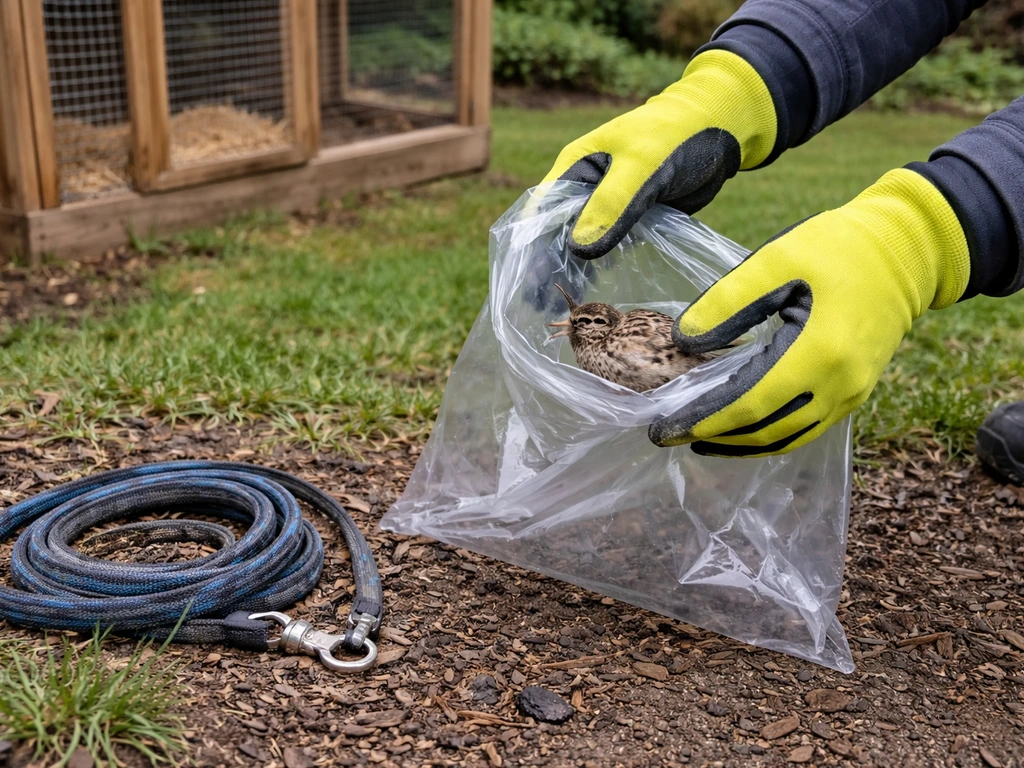
- Do not handle sick or dead wild birds with bare hands. Use gloves or a bag over your hand, and report dead wild birds to WDFW (wdfw.wa.gov) or the USDA wildlife hotline.
- Keep pets (especially cats) away from wild birds and bird carcasses. Cats have been confirmed infected with H5N1 through consuming infected birds.
- Wash hands thoroughly after outdoor activities in areas with significant bird activity.
- Stay current with WA DOH updates if you live near a commercial poultry operation or in a county with recent detections.
For backyard flock keepers
The fatal H5N5 case in Washington was a backyard flock owner. That is a stark reminder that backyard flock keepers carry meaningful risk and need to take biosecurity seriously. Here is what WA DOH and USDA recommend:
- Wear PPE (gloves, eye protection, and a well-fitting mask at minimum) every time you handle birds or clean their enclosures, especially if birds are showing signs of illness.
- Keep wild birds out of your flock's area by covering runs and enclosures with netting or solid roofing.
- Do not let your birds share water sources with wild birds.
- Report sudden unexplained death or illness in your flock immediately to WSDA (1-800-606-3056) or your veterinarian. Early reporting protects neighboring flocks.
- If you visit other farms or flock owners, change clothes and footwear or disinfect before returning to your own birds.
- Register your flock with WSDA's voluntary flock registry so you can be quickly notified of detections in your area.
For commercial poultry and dairy operations
- Follow USDA APHIS enhanced biosecurity protocols, including strict visitor controls and vehicle disinfection.
- Ensure all workers who handle birds or animal products are trained in PPE use and have access to appropriate equipment.
- Have a response plan ready: know your WSDA contact, your veterinarian, and the USDA APHIS emergency line before you need them.
- Monitor flocks daily for behavioral changes, sudden drops in egg production, or unexplained mortality.
- Participate in available surveillance programs, as early detection protects your operation and limits spread.
Bird flu in Washington State is a real and ongoing situation, not a theoretical concern. But it is also one where practical steps make a genuine difference. Knowing the actual numbers, understanding what they mean, following food safety basics, and using protective equipment when handling birds are the concrete actions that reduce risk. Panic does not help; preparation does.
FAQ
If I live in Washington, how do I tell whether the current update refers to human cases, bird detections, or farm detections?
Look for the label in the update itself. Human cases are typically described as confirmed H5N1 (or another influenza subtype) in a person. Animal detections are reported separately as findings in poultry or dairy herds, and wild bird results are listed as surveillance detections. Mixing these categories is a common reason headlines overstate your personal risk.
Are there any signs of bird flu I should watch for in myself after being around birds or livestock in Washington?
The guidance is usually symptom focused, not behavior focused. If you had close contact with potentially infected birds or animal environments, watch for new fever, cough or sore throat, and trouble breathing, and contact a healthcare provider promptly (especially if symptoms start within about 10 days of exposure). Avoid waiting for symptoms to worsen before calling.
Can bird flu be spread between people in Washington?
As of the current public framing in the article, there is no confirmed sustained human-to-human transmission. However, if you have confirmed or suspected bird-to-human exposure and develop respiratory symptoms, treat it as medically relevant and seek evaluation, because individual clinical cases still require medical assessment.
I have backyard birds in Washington. What should I do immediately if I notice sick or dead birds?
Do not handle the birds with bare hands and avoid cleaning as if it were normal yard debris. Contact your veterinarian and your state resources (WA DOH and WSDA/WDFW pathways) for instructions. Until you get guidance, isolate the flock, keep people and pets away, and do not share eggs or birds.
Is it safe to eat eggs and poultry in Washington during this outbreak?
Yes, properly cooked eggs and poultry are considered safe. The practical test is temperature and doneness, not “freshness.” Cook poultry to 165°F (74°C) internally, and cook eggs so both yolk and white are firm. Avoid raw or undercooked eggs, especially if you are immunocompromised.
If a grocery store sells eggs or poultry sourced from a farm near me, does that change my risk?
It should not, based on the article’s description of how detected flocks are removed from the food chain through quarantine and depopulation. The bigger risk tends to be direct contact with infected animals or their immediate environments, not supermarket supply.
What counts as “close or prolonged contact” that puts someone in a higher-risk group?
Higher-risk exposure typically includes unprotected handling of sick or potentially infected birds, working in barns or dairies with infected animals, cleaning areas contaminated with bird droppings or secretions, or helping with animal transport or carcass disposal. Brief incidental contact is generally less concerning, but direct contact without PPE is the key issue.
If I find a dead wild bird in Washington, what is the safest way to handle it?
Avoid touching it with bare hands. Use gloves or tools, bag it, and report it through the appropriate dead bird hotline or agency instructions so it can be handled and tested correctly. The reason is that wild bird findings are part of surveillance and may involve infectious material.
Why might the number of “confirmed cases” in Washington be lower than what I hear on social media?
Published counts usually reflect confirmed cases after completed investigation steps, such as exposure history review and confirmatory lab testing. Presumptive positives can exist earlier, and those may not be counted as confirmed yet. Social posts often use preliminary figures or mix human and animal data.
If I had exposure and then went to a clinic, what should I tell the clinician to help them evaluate me?
Provide a clear timeline (when exposure happened), what you were exposed to (wild birds, backyard flock, poultry, dairy setting), and whether you used PPE. Mention any symptoms and when they started. This helps clinicians decide whether influenza testing and infection control precautions are needed.