
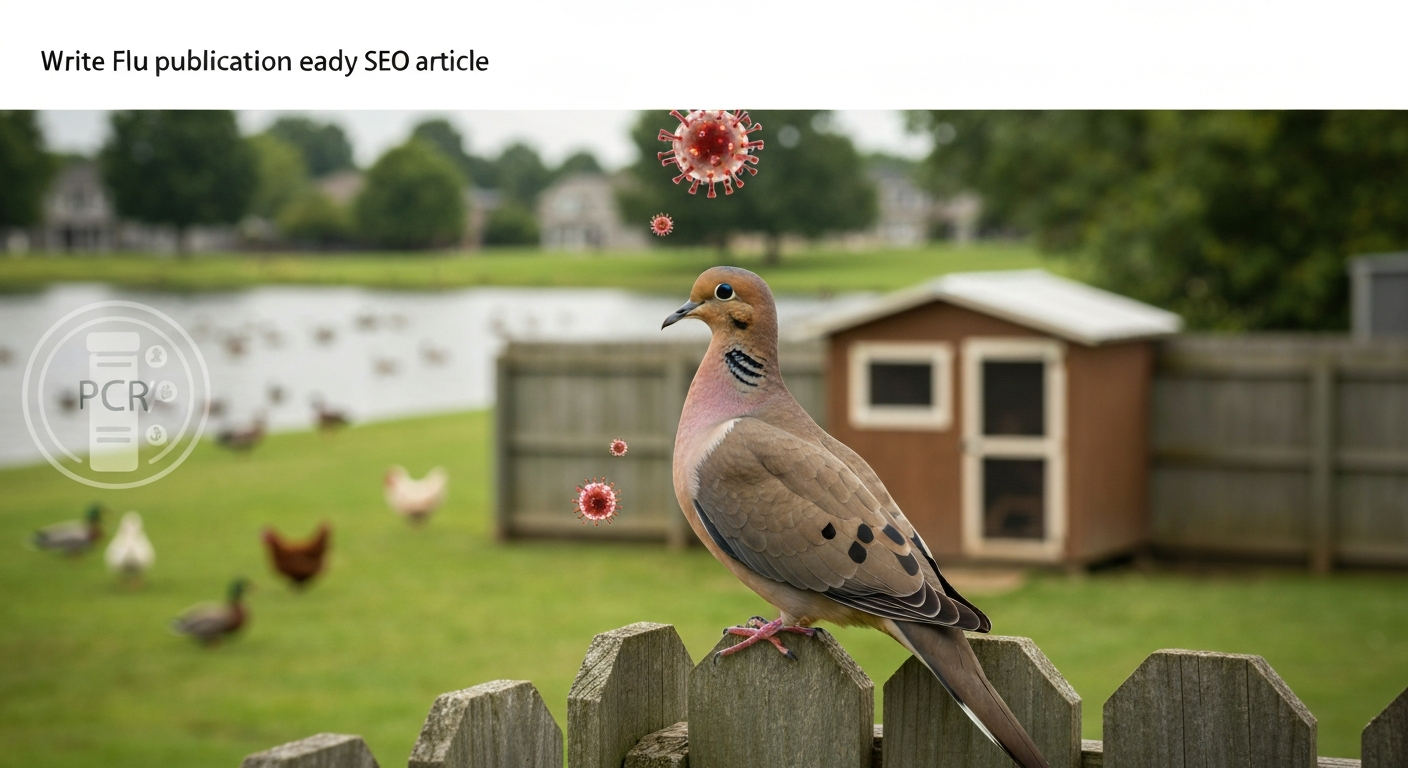
Mourning doves can become infected with avian influenza (bird flu), and surveillance has detected H5N1 RNA in mourning dove samples collected near outbreak sites, but the scientific evidence consistently shows they are low-susceptibility, low-transmission hosts. They are not a primary reservoir of the virus, they rarely show clinical illness when infected, they shed the virus at lower levels and for shorter periods than waterfowl do, and there are no documented cases of a human contracting H5N1 directly from a mourning dove. The practical risk they pose to backyard flocks, commercial poultry, and people is real but considerably lower than the risk posed by wild waterfowl and shorebirds.
Do Mourning Doves Carry Bird Flu? Risks, Evidence & Advice

Sarah Chen
18 Jul 2026
What is avian influenza (bird flu)?
Avian influenza is a respiratory and systemic illness caused by Type A influenza viruses that circulate primarily in birds. These viruses are classified by two surface proteins: hemagglutinin (H) and neuraminidase (N), which is why you see designations like H5N1 or H7N9. They are also split into low pathogenicity avian influenza (LPAI), which usually causes mild or no symptoms in poultry, and high pathogenicity avian influenza (HPAI), which can cause severe disease and mass mortality in domestic birds. The current globally dominant strain is HPAI H5N1 clade 2.3.4.4b, which has been spreading through wild bird populations and commercial poultry operations worldwide since it first emerged in this form around 2020 to 2021. While most human infections have come from direct, heavy exposure to infected poultry, public health agencies continue to monitor the virus closely because influenza A viruses can evolve quickly.
Infected vs. mechanical carrier: what the difference means for mourning doves
These two terms get used interchangeably, but they mean very different things in disease science, and that distinction matters a lot when talking about mourning doves. Biological infection means the virus enters the bird, replicates inside cells, produces more virus particles, and generates an immune response. Mechanical carriage means a bird physically transports virus on its feathers, feet, or beak without the virus actually replicating inside the animal, essentially acting as a living fomite (a contaminated surface).
Mourning doves are capable of biological infection. Experimental studies and field surveillance confirm that influenza A virus can replicate in columbids (the family that includes doves and pigeons), producing detectable viral RNA in tissues including the lungs, trachea, brain, and intestinal tissue. However, the virus can also attach to the outside of a dove's body if the bird walks through or near contaminated material, poultry litter, or standing water, and that bird could then carry viral particles into a new area without being truly infected. Research on airborne particles near infected poultry houses has detected influenza A RNA in feathers and dust at distances of tens of meters, so a bird moving through that environment could pick up viral particles without any replication happening at all. Both routes can theoretically introduce virus to a new location, but true biological infection, with active replication and shedding, is what drives sustained transmission chains.
What the science actually says about mourning doves and bird flu
The published evidence on columbids and avian influenza has been building for decades, and the picture is fairly consistent: mourning doves are susceptible but inefficient hosts.
Experimental infection studies
A systematic review covering 22 experimental infection studies in Columbidae, including pigeons and doves, found only 26 deaths among 715 experimentally infected birds, a mortality rate of roughly 3.6%. That is dramatically lower than what happens in highly susceptible species like chickens or certain waterfowl. Many of the surviving birds seroconverted (meaning they developed antibodies, proving infection occurred) or had detectable viral RNA, but they showed few or no clinical signs. One study specifically focused on the current dominant strain, HPAI H5N1 clade 2.3.4.4b, in rock pigeons and found low viral shedding even at high inoculation doses, limited spread of virus through the bird's tissues, and poor transmission to cage-mate contact birds. The estimated infectious dose for pigeons in some studies was around 10^5 EID50 (egg infectious dose units), which is considerably higher than for many waterfowl, meaning you need a larger quantity of virus to reliably infect a dove than you do to infect, say, a mallard. Experimental infectious-dose measurements indicate columbids require relatively high H5N1 inoculum to become infected; one pigeon study estimated a MID50 of approximately 10^5 EID50 estimated MID50 ≈ 10^5 EID50 in pigeons. These studies consistently describe columbids as 'dead-end' or ineffective propagating hosts for H5N1.
Field surveillance findings
Real-world surveillance data is more nuanced. USDA Wildlife Services conducted targeted sampling of synanthropic birds (species that live in close proximity to humans and human structures) near affected turkey farms during an HPAI H5N1 outbreak. In that dataset, mourning doves and rock doves together made up 76% of the Columbidae samples, and mourning doves had an observed influenza A prevalence of about 2.17%, higher than rock doves in the same study. Importantly, this sampling happened at outbreak sites, so these birds were being exposed to heavily contaminated environments. Separate multi-species surveillance studies conducted away from active outbreak foci have reported influenza A PCR detection rates of under 1% in terrestrial birds overall, which is consistent with very low prevalence in mourning doves under normal conditions. The FAO and USGS WHISPers surveillance databases do list Zenaida macroura (the mourning dove's scientific name) among bird species from which H5Nx has been detected globally, which confirms these are not theoretical infections. But the episodic, low-prevalence nature of those detections tells you this is not a species that sustains transmission.
Which birds are the real drivers of avian influenza spread
Understanding the mourning dove's role requires some context about which species actually drive the global spread of avian influenza. Ducks, geese, and swans (the order Anseriformes) and certain shorebirds and gulls (the order Charadriiformes) are the primary natural reservoirs of influenza A viruses. These birds can carry the virus while showing little illness, shed it abundantly in feces, and migrate thousands of miles, seeding new locations as they go. See what birds carry bird flu for a concise list of species that commonly harbor and spread avian influenza. It is waterfowl, not doves, that wildlife biologists watch most closely during outbreak seasons.
| Bird Group | Reservoir Status | Typical Shedding Route | Relative HPAI Risk |
|---|---|---|---|
| Wild waterfowl (ducks, geese, swans) | Primary natural reservoir | Fecal (cloacal), high volume | High — major driver of spread |
| Shorebirds and gulls | Secondary reservoir / amplifying hosts | Fecal and respiratory | Moderate to high |
| Raptors (hawks, eagles, owls) | Spillover hosts, not reservoirs | Respiratory and fecal | Moderate (via prey consumption) |
| Mourning doves / Columbidae | Incidental / dead-end hosts | Both cloacal and respiratory, low titre | Low — ineffective propagators |
| Songbirds (passerines) | Incidental / rarely infected | Variable, usually low or absent | Very low |
| Domestic poultry (chickens, turkeys) | Highly susceptible, not reservoir birds | Respiratory and fecal, high volume | High once introduced — amplify rapidly |
This context matters because it shapes how you should think about mourning doves visiting your yard or land. A flock of Canada geese resting on a pond near your chicken coop is a meaningfully different biosecurity concern than a mourning dove landing at your seed feeder.
How avian influenza spreads between birds and to people
Avian influenza spreads through several overlapping routes, and knowing which ones actually matter in practice helps you make sensible decisions rather than reacting to every wild bird you see.
- Fecal-oral and waterborne: Infected waterfowl shed enormous quantities of virus in feces, contaminating water sources, soil, and shared feeding areas. Other birds and poultry that come into contact with that contaminated environment can ingest or inhale the virus.
- Respiratory: Close-contact respiratory exposure in dense poultry flocks is a major amplification route once virus is introduced into a barn. Aerosol and droplet transmission drives rapid spread through commercial operations.
- Fomites (contaminated objects): Boots, clothing, equipment, vehicles, and even feathers or feather dust can carry viral particles from one location to another. This is why biosecurity protocols focus so heavily on disinfection and farm-entry controls.
- Direct contact: Handling sick or dead birds without protection is the primary route of human exposure. Infected bird saliva, feces, blood, and respiratory secretions all contain virus.
- Predation and scavenging: Raptors and scavenging mammals can become infected by consuming infected carcasses, though this is less relevant for mourning doves specifically.
- Human-to-human transmission: Sustained human-to-human spread of current H5N1 strains has not been documented. Human cases remain closely linked to direct animal exposure.
For mourning doves specifically, both tracheal (respiratory) and cloacal (fecal) shedding have been documented in experimentally infected columbids, but the viral titres (concentrations) were generally lower than in waterfowl and shedding periods were shorter. This means an infected mourning dove can deposit some virus into the environment, but it is likely depositing less than an infected duck would over the same time period.
Real-world risk: how to think about doves, poultry, and people
Risk is not binary, and it shifts depending on who you are and what your exposure looks like. Here is how the picture breaks down across the groups most likely to be reading this.
Backyard flock owners
Mourning doves are common feeder visitors, and they will absolutely land in or near chicken runs if food is available. The risk they pose is real but low. The USDA surveillance data showing mourning doves with influenza A RNA came specifically from farms during active outbreaks, where those birds were moving through heavily contaminated environments. Under normal conditions and away from active outbreaks, the likelihood that a mourning dove visiting your yard is carrying HPAI is very low. That said, any wild bird entering a poultry space brings some risk. Standard biosecurity, keeping wild birds out of the coop and feed storage, is worthwhile not just because of avian influenza but because of other pathogens as well.
Commercial poultry producers
At commercial scale, any synanthropic bird gaining access to a poultry house is a biosecurity concern. The USDA targeted surveillance work specifically focused on farms because peridomestic birds like mourning doves congregate around grain storage and feeding infrastructure. For producers, the relevant guidance is the same regardless of the specific wild bird species: robust exclusion of all wild birds from housing and feed areas, rigorous fomite controls, and early reporting of mortality events to USDA APHIS (1-866-536-7593).
Hunters
Mourning dove hunting is extremely popular across the U.S., with harvest numbers in the tens of millions annually. The risk to hunters from doves is low but not zero. Standard field-dressing hygiene applies: wear gloves when handling harvested birds, wash hands thoroughly afterward, and do not harvest birds that appeared sick or were found dead. The CDC advises cooking all wild game poultry to an internal temperature of 165°F (74°C), which inactivates influenza viruses. There are no documented human H5N1 cases linked to mourning dove exposure in any published epidemiological literature.
Wildlife rehabilitators
Rehabilitators who handle injured or ill wild doves face the most direct exposure risk of any group dealing with this species. If you are handling a dove that is displaying neurological signs, severe lethargy, or was found near a known HPAI outbreak area, treat it as potentially infected. Use appropriate personal protective equipment (PPE): gloves, eye protection, and an N95 respirator or better. Report unusual mortality clusters to your state wildlife agency, which feeds data into the USGS WHISPers system.
General public
If you watch mourning doves from your window, feed them in your yard, or occasionally find one that has struck a window, your risk from bird flu is negligible. The key advice is consistent with general wildlife hygiene: do not handle sick or dead birds with bare hands. Use a bag or gloves to dispose of a dead bird, wash your hands afterward, and that is genuinely sufficient for most people in most situations.
Signs of infection to watch for in wild birds and poultry
One of the complicating factors with mourning doves is that, based on experimental evidence, infected individuals often show no obvious illness at all. You may never know a dove is carrying the virus by looking at it. That said, there are signs that should prompt you to take action.
Signs in wild birds (including doves)
- Sudden death with no apparent cause, especially when multiple birds are affected in a short window
- Loss of coordination, stumbling, circling, or inability to fly or walk normally (neurological signs)
- Extreme lethargy or unresponsiveness to approach (wild birds that allow you to walk up to them are almost always seriously ill)
- Labored or open-mouth breathing
- Swelling around the head, eyes, or neck
- Discharge from the eyes or nostrils
- Seizure-like tremors or head twisting
Signs in domestic poultry
HPAI in chickens, turkeys, and other domestic birds can move extremely fast, sometimes killing large numbers of birds within 24 to 48 hours of the first signs appearing. Poultry producers and backyard flock keepers should treat any of the following as a potential emergency requiring immediate reporting:
- Sudden, unexplained death in multiple birds in a short period
- Dramatic drop in egg production (sometimes the first observable sign)
- Severe respiratory distress: gasping, rattling, labored breathing
- Swelling of the head, eyelids, comb, wattles, or hocks
- Dark purple or blue discoloration of the comb and wattles (cyanosis from poor circulation)
- Neurological signs: incoordination, inability to stand, twisted neck, tremors
- Sudden loss of appetite or marked reduction in feed and water consumption
- Watery or bloody diarrhea
If you see any of these signs in your flock, isolate affected birds from the rest of the flock immediately if you can do so safely, avoid moving birds off your property, and call the USDA APHIS Veterinary Services emergency hotline at 1-866-536-7593. Do not wait to see if the flock recovers on its own. The speed of HPAI progression in poultry means early reporting is critical for containing an outbreak.
Testing, reporting, and movement restrictions explained
Understanding how the official response system works helps you know when and how to engage with it. In the U.S., the diagnostic pathway for suspected HPAI in both wild and domestic birds runs through the National Animal Health Laboratory Network (NAHLN). Laboratory screening uses a real-time RT-PCR test targeting the influenza A matrix gene; any positive sample is then tested for H5 and H7 subtypes and forwarded to the USDA's National Veterinary Services Laboratories (NVSL) for confirmation and genetic sequencing to identify the specific clade. Validated sample types include oropharyngeal and cloacal swabs from live birds, and lung, trachea, and pooled organ samples from carcasses.
For wild birds, unusual mortality events (typically defined as five or more birds of the same species found dead in the same area within a short time) should be reported to your state fish and wildlife agency or to USDA APHIS Wildlife Services. These reports feed into the USGS WHISPers database, which functions as the national repository for wild bird health events in the U.S. When a confirmed HPAI detection is made on a commercial or backyard poultry premises, state and federal authorities typically impose quarantine and movement restrictions on that property and surrounding control zones. When HPAI is confirmed, affected properties are quarantined to prevent the spread of bird flu birds are quarantine to prevent the spread of bird flu. For details on current regulatory measures and movement restrictions, see what are the rules for bird flu. For current quarantine zones and movement rules, check the guidance on whether are bird flu restrictions still in place. Current rules and the geographic extent of active restrictions vary, and they change as outbreaks evolve.
The WHO also issues guidance on H5N1 risk assessments and reporting requirements for human cases, and CDC maintains a current situation summary for domestic audiences. If you are a wildlife rehabilitator, farm worker, or anyone who has had unprotected exposure to a bird confirmed positive for HPAI H5, you should contact your local or state public health department for guidance on monitoring and, if available, antiviral prophylaxis. The World Health Organization's bird flu guidelines describe recommended precautions and monitoring after unprotected exposure WHO bird flu guidelines.
Practical biosecurity and safe handling steps
At backyard feeders
Routine feeder use does not need to be suspended in most situations, but good feeder hygiene matters year-round. Clean feeders with a 10% bleach solution (roughly 1 part bleach to 9 parts water) at least monthly. Remove and discard any spilled seed that has accumulated on the ground, since that draws birds into tight congregations and increases contact with feces. During confirmed HPAI activity in your area, your state wildlife or agriculture agency may recommend temporarily removing feeders to reduce congregation of wild birds near homes and poultry. Follow those recommendations when they apply.
Handling dead wild birds
If you find a dead mourning dove or other wild bird, use disposable gloves or two plastic bags (one turned inside out over your hand) to pick it up. Double-bag the carcass and place it in your regular garbage. Wash your hands with soap and water for at least 20 seconds afterward. Do not allow pets, especially outdoor cats, to come into contact with sick or dead wild birds. If you find multiple dead birds of the same species in the same area, report the event to your state wildlife agency rather than disposing of them yourself, as carcasses may be needed for surveillance testing.
Hunters field-dressing doves
- Wear disposable gloves during field dressing and cleaning
- Do not harvest birds that appeared sick, were acting abnormally, or were found dead
- Wash hands and all equipment thoroughly with soap and water after handling
- Keep raw game separate from other foods during transport and storage
- Cook dove meat to an internal temperature of 165°F (74°C) — this fully inactivates influenza viruses
- Report any unusual concentrations of sick or dead birds to your state wildlife agency
Protecting backyard and commercial flocks
- Physically exclude wild birds from poultry housing using hardware cloth, netting, or solid barriers
- Store feed in sealed, bird-proof containers to avoid attracting wild birds into poultry areas
- Keep water sources that poultry use separate from sources accessible to wild birds
- Use dedicated footwear and clothing for poultry areas; change and disinfect before entering
- Limit visitors to poultry areas and establish a clean-dirty line at coop entry points
- Monitor your flock daily and respond immediately to any unexplained illness or death
- Know the USDA APHIS emergency number: 1-866-536-7593
Common myths worth clearing up
Myth: Mourning doves are a major source of bird flu for poultry. Reality: The scientific literature does not support this. Waterfowl are the primary reservoir, and the one surveillance study that found mourning doves with influenza A RNA was specifically sampling birds at farms during active outbreaks. Normal mourning dove populations away from outbreak foci have very low prevalence.
Myth: If a dove looks healthy, it is safe to handle bare-handed. Reality: Because columbids often show no clinical signs when infected, appearance tells you very little. Basic hygiene (gloves, handwashing) applies regardless of whether the bird looks sick.
Myth: You should remove all bird feeders permanently to protect against bird flu. Reality: Feeders are not typically considered a significant HPAI transmission vector in most situations. State agencies may recommend temporary removal during localized outbreaks or if you keep poultry, but blanket permanent removal is not recommended by CDC or USDA as a standard public health measure.
Myth: Eating dove meat can give you bird flu. Reality: There are no documented cases of human H5N1 infection from consuming properly cooked dove or any other properly cooked poultry. Cooking meat to 165°F (74°C) destroys influenza viruses. The risk comes from unprotected direct contact with infected birds, not from eating well-cooked meat.
When to call for help and who to contact
Most people who see mourning doves in their yard will never need to make an official report. But there are situations where reaching out to the right agency is the right call.
| Situation | Who to Contact |
|---|---|
| Multiple dead wild birds of the same species in the same location | State fish and wildlife agency or USDA APHIS Wildlife Services |
| Unexplained illness or death in your backyard or commercial flock | USDA APHIS Veterinary Services: 1-866-536-7593 |
| Unprotected exposure to a bird confirmed or suspected HPAI positive | State or local public health department |
| Injured wild bird needing rehabilitation (outside of outbreak area) | State-licensed wildlife rehabilitator |
| Questions about current outbreak status and restrictions in your area | USDA APHIS website or state department of agriculture |
| Questions about human health risk after bird exposure | CDC or state health department |
The broader picture on mourning doves and bird flu is genuinely reassuring without being dismissive of the real science. These birds can carry the virus, and surveillance near outbreak sites has found it in them, but every line of experimental and epidemiological evidence points to them being inefficient propagators who rarely sustain transmission chains. They are not the species that wildlife biologists lose sleep over during HPAI season. Understanding which birds actually drive outbreaks, how the virus moves, and what basic precautions actually accomplish is far more useful than treating every mourning dove as a hazard. Good hygiene, sensible biosecurity, and timely reporting when something looks wrong are the tools that actually matter.
FAQ
Short answer: Do mourning doves carry or become infected with avian influenza (bird flu)?
Short, evidence‑based answer: Mourning doves (Zenaida macroura) can occasionally be infected with avian influenza A (including H5Nx) and have appeared in surveillance and sequence records, but they are generally much less susceptible than waterfowl and typically show low levels of virus, little or no clinical disease, and poor onward transmission. In practice, detections in mourning doves are sporadic and low‑prevalence; they are not considered primary reservoirs driving outbreaks in poultry or people.
What’s the difference between mechanical carriage and true infection?
Mechanical carriage means a bird can carry viral particles on feathers, feet, or beaks after contact with contaminated environments without the virus multiplying inside it. True infection means the virus invades tissues, replicates and may be shed in respiratory or fecal secretions. For mourning doves, both have been documented: they can mechanically transfer viral material, and surveillance/experimental studies also show they can become infected and shed virus, but typically at lower amounts and for shorter periods than typical reservoir species (ducks, gulls).
How susceptible are mourning doves compared with ducks, gulls, or poultry?
Relative susceptibility: Ducks, geese and some shorebirds (Anseriformes, Charadriiformes) are primary reservoirs with high prevalence and efficient viral shedding. Columbids (pigeons and doves) including mourning doves are less susceptible: experimental work shows they often require higher infectious doses, usually show minimal clinical disease, shed lower viral loads, and transmit poorly to contacts. Surveillance likewise finds low, sporadic detection rates in columbids compared with waterfowl or infected poultry.
Have mourning doves tested positive for HPAI in real outbreaks?
Yes — mourning doves and other columbids have been detected in field surveillance and appear on global lists of H5Nx detections (FAO). Targeted surveillance near infected poultry farms in the U.S. has detected influenza A RNA in mourning doves, and genome sequences from columbids have been deposited in outbreak investigations. However, detections are relatively uncommon and often represent single or isolated positives rather than sustained transmission chains.
Can mourning doves infect my backyard chickens or people?
Real‑world risk: Direct evidence implicating mourning doves as the source of human H5N1 cases is lacking. Most human infections have been linked to close contact with infected poultry or contaminated poultry environments. Mourning doves could theoretically transmit virus to poultry by contaminating feed, water, or housing (mechanical or by shedding), but because their shedding tends to be low and sporadic they are less likely to drive outbreaks than waterfowl, wild birds that mingle with poultry, or contaminated fomites. The risk to people from casual contact with healthy mourning doves is very low; avoid handling sick or dead wild birds and use protective measures where recommended.
What are the usual transmission routes for avian influenza involving wild birds and poultry?
Common routes: Waterfowl often shed virus in feces leading to fecal‑oral and waterborne spread. Poultry outbreaks occur through direct contact, inhalation of respiratory droplets/aerosols in crowded houses, contaminated equipment, people, feed, and fomites (including feathers). Columbids can shed via respiratory (tracheal/oropharyngeal) and cloacal routes in experimental infections, so both respiratory and environmental/fomite pathways are plausible, though generally less efficient than in waterfowl or infected poultry.
Next Articles
What Birds Carry Bird Flu? Wild and Poultry Guide
Which wild and poultry birds can carry or spread avian flu, how transmission happens, and what to do if you find sick bi
Is Bird Flu in Europe Now? Risk, Symptoms, Safety Steps
Find out if bird flu is in Europe now, current risk, symptoms, food safety, and exact steps for handling exposure safely
What Is Being Done About Bird Flu: Response, Vaccines, Safety
How agencies detect, contain and treat bird flu, plus biosecurity, vaccines, human steps, and safe egg and poultry guida