
Bird flu (avian influenza) primarily affects birds, especially wild aquatic birds and domestic poultry like chickens, turkeys, and ducks. It can also spill over into mammals, including pigs, dairy cattle, marine mammals, and occasionally humans, though sustained human-to-human transmission has not been established. Most people have no realistic exposure risk, but poultry workers, farmers, cullers, and live-bird market workers face a low-to-moderate risk and need specific precautions.
Who Does Bird Flu Affect: Species, Risks, Food Safety

Sarah Chen
6 Aug 2026
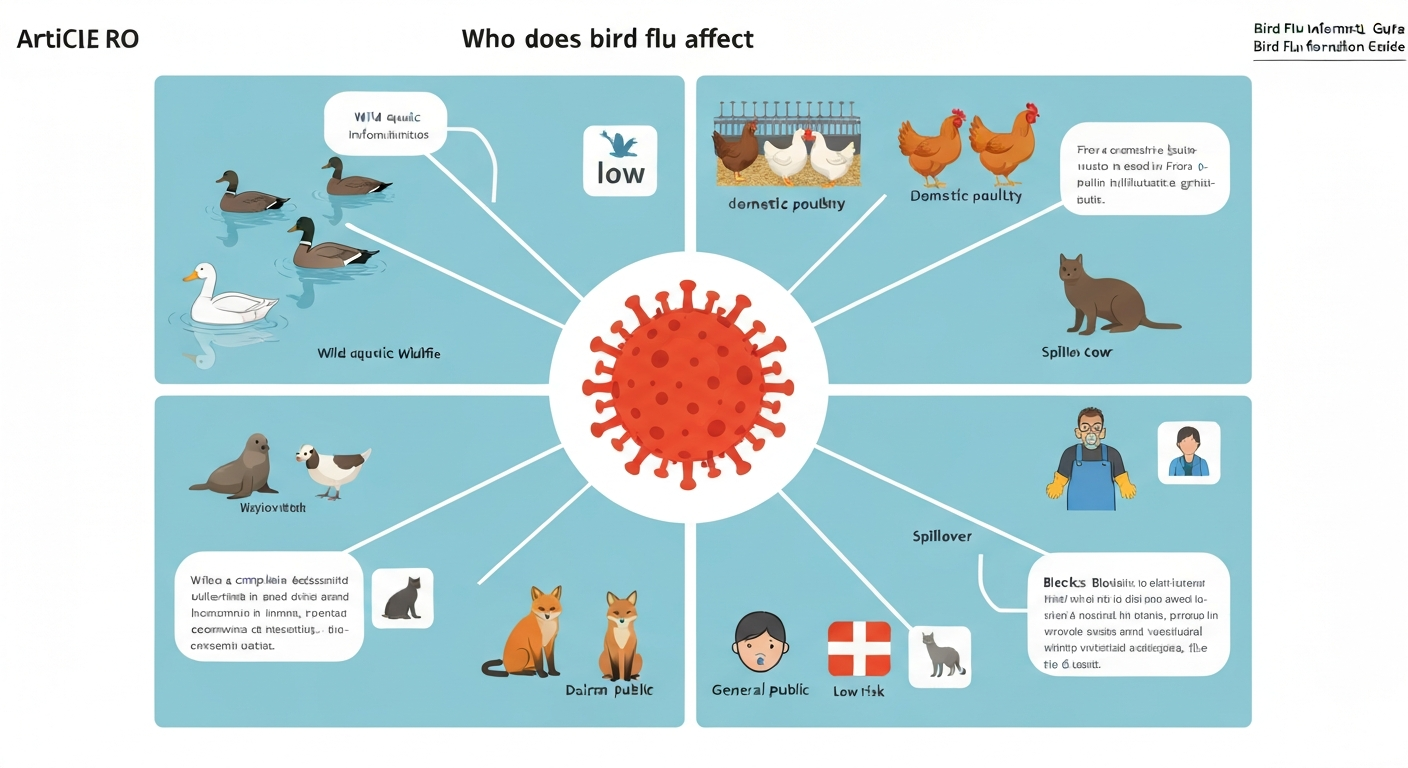
Quick summary: who does bird flu affect and what it means for you
If you are a concerned member of the public wondering whether bird flu is something you need to worry about personally, the reassuring but honest answer is: probably not directly. The WHO, FAO, and WOAH jointly assessed the global public-health risk from current highly pathogenic H5 viruses as 'low' overall as of May 2026, rising to low-to-moderate for people with occupational exposure. The picture is more serious for birds, particularly domestic poultry flocks, and for wild animal populations. Here is a fast breakdown by group.
| Who or What | Level of Affect | Key Risk Factor |
|---|---|---|
| Wild aquatic birds | High (natural reservoir) | Carry virus without always showing symptoms |
| Domestic poultry (chickens, turkeys, ducks) | High (severe disease, mass mortality) | Close contact with infected birds or contaminated environments |
| Other wild birds (raptors, gulls, shorebirds) | Moderate to high | Predation or scavenging of infected carcasses |
| Mammals (foxes, seals, dairy cattle) | Moderate (expanding) | Spillover from infected birds; some mammal-to-mammal spread documented |
| Poultry/farm workers, cullers | Low to moderate (occupational) | Direct handling of infected animals or contaminated materials |
| General public | Low | No direct animal exposure; properly cooked food is safe |
| Immunocompromised individuals | Low but worth monitoring | Reduced ability to fight infection if exposed |
What bird flu actually is: a concise definition
Avian influenza (AI) is a respiratory infection caused by influenza A viruses that naturally circulate in birds. These viruses are classified by two surface proteins: hemagglutinin (H) and neuraminidase (N), giving subtypes like H5N1 or H7N9. They are further divided into low pathogenicity avian influenza (LPAI), which causes mild or no symptoms, and highly pathogenic avian influenza (HPAI), which can cause rapid, severe disease and mass die-offs in birds. The strain causing most global concern right now is HPAI A(H5N1), specifically clade 2.3.4.4b, which has been driving an unprecedented global panzootic (a pandemic in animals) since around 2020.
How bird flu is different from the seasonal flu you know
Seasonal human flu is caused by influenza A and B viruses that are already well-adapted to infect and spread between people. They travel efficiently through respiratory droplets and account for hundreds of thousands of deaths worldwide every year. Avian influenza viruses, by contrast, are adapted to birds. Their hemagglutinin proteins bind most efficiently to receptors found in avian respiratory and gastrointestinal tracts, not in human upper airways. That biological mismatch is the main reason bird flu does not spread easily between people. When human infections do occur, they almost always trace back to direct, heavy exposure to infected animals or heavily contaminated environments, not casual contact with an infected person.
That said, the historical case-fatality proportion among laboratory-confirmed H5N1 human cases reported since 1997 has been roughly 50%, which sounds alarming. Public-health agencies are quick to note that unreported mild infections almost certainly mean the true infection fatality rate is considerably lower, but it is still well above seasonal flu. The key difference from pandemic flu is the lack of efficient human-to-human spread. If that changes through mutation or reassortment, the risk landscape changes dramatically, which is why global surveillance matters so much.
Which domestic poultry are affected: chickens, turkeys, and ducks
Chickens and turkeys are the most severely affected domestic species. In commercial flocks, HPAI can spread explosively, killing birds within hours to days of symptom onset. Infected chickens typically show sudden high mortality, respiratory distress, swollen heads, discolored combs and wattles (the fleshy parts around the face), neurological signs like circling and tremors, and a dramatic drop in egg production. Turkeys follow a very similar clinical pattern. Because most commercial chickens and turkeys are kept in high-density housing, a single introduction can destroy an entire flock of tens of thousands of birds within days.
Ducks present a more complicated picture. Domestic ducks and geese can carry HPAI strains and shed high volumes of virus while appearing healthy or only mildly ill, which makes them a significant transmission risk on mixed farms. This asymptomatic carriage is part of why ducks are considered a bridging species: they can acquire virus from wild birds and bring it into contact with susceptible chicken or turkey flocks. USDA APHIS has tracked hundreds of affected commercial flocks across the United States since 2022, and the pattern consistently shows chickens and turkeys bearing the brunt of mortality while waterfowl often remain ambulatory.
Does bird flu affect all birds? Susceptibility is not equal
Not all birds are equally vulnerable. For more detail, see does bird flu affect all birds. Species susceptibility varies enormously based on the specific virus strain, the species' evolutionary history with influenza A, immune characteristics, and the dose of exposure. Wild aquatic birds in the orders Anseriformes (ducks, geese, swans) and Charadriiformes (shorebirds, gulls) are the natural reservoir hosts. They have co-evolved with influenza A viruses for so long that many carry LPAI strains without ever becoming sick. HPAI is a different story: since clade 2.3.4.4b emerged and spread globally, even some previously resistant wild waterfowl species have shown mass mortality events. For more detail, see does bird flu affect wild birds.
Raptors, corvids (crows and ravens), gulls, and other scavenging birds tend to be highly susceptible to HPAI because they often acquire infection by eating infected carcasses rather than through low-dose environmental exposure. Parrots and passerines (songbirds) appear less frequently affected in outbreak reports, though they are not immune. Ostriches and emus, classified as ratites, can be severely affected. The practical takeaway here is that bird flu does not uniformly devastate every bird species it encounters, but it has a much broader host range within birds than most people realize.
Wild birds and why migratory species are central to how outbreaks spread
Wild birds, particularly migratory waterfowl, are not incidental victims of bird flu. They are the engine that keeps it circulating globally and transports it across continents. Influenza A viruses have their natural reservoir in wild aquatic birds, and because eradicating that reservoir is biologically impossible, zoonotic influenza events will continue to occur as long as domestic poultry and people interact with wildlife and their environments.
Migratory flyways act as highways for virus movement. When infected ducks or geese travel thousands of kilometers along routes connecting Asia, Europe, Africa, and the Americas, they seed the virus in wetlands, ponds, and agricultural areas along the way. Local birds and domestic poultry that share those water sources or grazing areas can then pick up the virus from contaminated feces or water. The 2021/2022 HPAI epidemic in Europe, described by EFSA as the largest ever recorded on that continent, spread in exactly this way before also driving major outbreaks in North and South America. The consequences for wild bird populations themselves have been devastating: mass mortality events in seabird colonies, pelicans, vultures, and even some raptor species have been documented across multiple continents since 2020.
Mammals that can be infected: from farm animals to marine wildlife
One of the most significant developments in the bird flu story over the past several years is the documented expansion into mammals. Since clade 2.3.4.4b H5N1 began its global spread around 2020, over 50 mammal species have been confirmed infected. This is not a theoretical concern at the edges of epidemiology: it is a well-documented pattern recorded in peer-reviewed literature and surveillance data from multiple continents.
- Marine mammals: harbor seals, grey seals, sea lions, and elephant seals along the coastlines of North America, South America, and Europe have experienced mass mortality events
- Terrestrial predators and scavengers: red foxes, mink, otters, raccoons, bears, and mountain lions have all been confirmed positive, primarily through eating infected birds
- Dairy cattle: in March 2024, HPAI H5N1 clade 2.3.4.4b was confirmed in U.S. dairy cattle for the first time, with virus detected in unpasteurized milk and two associated human cases in dairy workers confirmed
- Domestic cats: cats that consumed raw infected poultry or had contact with infected birds have tested positive, which is relevant for farm cats and backyard flock keepers
- Mink: a mink farm outbreak in Spain in 2022 raised particular concern because it suggested possible mink-to-mink transmission, which would represent a step toward mammalian adaptation
What makes the mammalian infections scientifically concerning is that genomic surveillance has detected mammalian-adaptive mutations in some of these cases. Mutations like PB2 E627K and D701N, which help influenza viruses replicate more efficiently in mammalian respiratory tracts, have been found in samples from infected seals, foxes, and other species. This does not mean a human pandemic is imminent. It does mean that ongoing genomic monitoring of these spillover events is a legitimate and important public-health activity.
How outbreaks hit the poultry industry: culling, trade, and supply
When HPAI is detected in a commercial flock, the standard response in most countries is stamping-out: the entire flock is depopulated (culled) to prevent further spread. This is not a measure taken lightly. A single large egg-laying facility can house millions of hens, and a single confirmed HPAI detection triggers the destruction of the entire flock along with mandatory movement restrictions on surrounding farms within defined control zones, typically 3 km protection zones and 10 km surveillance zones.
The cumulative effect on supply and trade is substantial. Major importing countries often suspend poultry imports from affected regions or specific states the moment an outbreak is confirmed, sometimes even before official notifications. These trade suspensions can last months, affecting export revenues and domestic pricing. Egg prices in the United States, for instance, rose sharply in 2022 and again in 2024 and 2025 partly because tens of millions of laying hens were culled in response to HPAI detections. When people ask what bird flu is affecting beyond the birds themselves, the honest answer is: grocery prices, farm livelihoods, export markets, and the long-term business viability of poultry operations that face repeated incursions.
From a farmer's perspective, the psychological and financial toll goes beyond the immediate flock loss. Biosecurity upgrades, standstill orders, disposal costs, and the uncertain timeline before restocking can put farms under severe strain even when they receive government compensation. USDA APHIS manages indemnity programs for U.S. producers, but the process takes time, and the operational disruption during that window is real.
Is chicken and eggs safe to eat during an outbreak?
Yes, and the evidence on this point is consistent and clear. EFSA, WHO, and food safety agencies in every affected country have found no convincing evidence that properly handled and cooked poultry meat or eggs transmit avian influenza to consumers. For more detail, see our guidance on whether bird flu affects chicken meat. The virus is heat-sensitive: thorough cooking to an internal temperature of 74°C (165°F) inactivates influenza viruses. Pasteurized eggs and commercially processed poultry products carry no meaningful risk.
The food-safety concerns that do exist are specific and practical. Raw or undercooked poultry, unpasteurized eggs, and raw (unpasteurized) milk from infected dairy cattle carry a higher theoretical risk, though the actual documented cases linked to food consumption remain extremely rare compared to direct animal exposure. The 2024 U.S. dairy cattle outbreak underscored this when H5N1 was detected in raw milk samples, prompting clear public-health guidance: do not drink unpasteurized milk during active HPAI outbreaks in cattle. Standard pasteurization eliminates the risk.
- Cook all poultry to an internal temperature of at least 74°C (165°F)
- Cook eggs until both the yolk and white are firm
- Avoid raw (unpasteurized) milk and dairy products during active HPAI outbreaks in cattle
- Wash hands thoroughly with soap and water after handling raw poultry
- Use separate cutting boards and utensils for raw poultry and other foods
- Do not purchase or consume poultry or eggs from visibly sick birds
Human risk: who is actually at risk and what the numbers say
Human infections with avian influenza remain rare events almost always linked to direct, heavy exposure to infected animals or contaminated environments. The WHO maintains a cumulative table of laboratory-confirmed human H5N1 cases going back to 2003, and the numbers, while serious in proportion to exposure events, are small in absolute terms given the scale of global poultry outbreaks. CDC identifies the highest-risk occupational groups clearly. For a clear summary of which people and occupational groups face the highest risk, see who is most at risk for bird flu.
- Poultry farm workers, especially those involved in daily bird handling without adequate PPE
- Workers involved in culling operations during outbreak responses
- Live-bird market workers who handle birds, equipment, and contaminated surfaces daily
- Veterinarians and animal health personnel conducting post-mortem examinations or sampling
- Dairy farm workers in areas with confirmed HPAI in cattle herds
- Wildlife biologists and rehabilitators who handle sick or dead wild birds
For these groups, the WHO provides specific interim guidance: wear appropriate PPE (including N95 or equivalent respirators, eye protection, gloves, and protective clothing), minimize direct contact with sick or dead birds, follow hand hygiene protocols, and monitor for symptoms for at least 10 days after any significant exposure. Anyone in these groups who develops respiratory illness, conjunctivitis (eye inflammation), or fever after exposure should seek testing promptly, as early antiviral treatment with oseltamivir (Tamiflu) significantly improves outcomes.
Symptoms of bird flu in humans
Human H5N1 infections typically begin 2 to 5 days after exposure (incubation period can extend to 7 to 10 days) and often present more severely than seasonal flu from the start. Early symptoms include high fever (often above 38°C/100.4°F), cough, sore throat, and muscle aches. Many reported cases have progressed rapidly to severe lower respiratory disease, including viral pneumonia and acute respiratory distress syndrome (ARDS). Neurological symptoms, diarrhea, and conjunctivitis have also been reported. The key clinical distinguishing factor compared to seasonal flu is the speed and severity of progression in serious cases, and the strong epidemiological link to animal exposure.
Vaccines, antivirals, and what protection exists right now
There is currently no approved H5N1 vaccine in routine use for the general public. Several candidate vaccines have been developed and are held in national stockpiles in some countries, and there are active clinical trials and preparedness programs, particularly following the U.S. dairy cattle outbreak of 2024. Antiviral drugs, primarily oseltamivir (Tamiflu) and zanamivir (Relenza), are effective against H5N1 when used early and are recommended for treatment of confirmed or probable cases, as well as for post-exposure prophylaxis in high-risk exposed individuals per CDC guidance. Annual seasonal flu vaccines do not protect against H5N1, though vaccination against seasonal flu is still recommended for workers with animal exposure because it reduces the risk of co-infection that could theoretically allow genetic reassortment between human and avian strains.
How outbreaks are monitored and what to watch
Global bird flu surveillance runs through several interconnected systems. WOAH (the World Organisation for Animal Health) operates WAHIS, the World Animal Health Information System, which publishes real-time outbreak notifications submitted by member countries covering both domestic and wild animal cases. FAO operates the EMPRES-i avian influenza dashboard, which maps outbreak locations, affected species, and circulating subtypes. WHO publishes periodic situation updates and maintains the cumulative human case table. In the United States, USDA APHIS maintains the primary tracker for poultry and livestock outbreaks, while CDC provides human-case monitoring and public-health guidance.
For farmers and veterinarians, knowing when and how to report a suspected HPAI detection is critical. Most countries have mandatory reporting obligations: suspected HPAI in domestic poultry must be reported to national animal health authorities immediately. Early detection and rapid response (quarantine, movement controls, culling, disinfection) are the primary tools for containing outbreaks and preventing further spread to neighboring farms and wildlife.
Prevention steps for different groups
For poultry farmers and farm workers
- Implement strict biosecurity: limit farm access, use dedicated footwear and clothing for the poultry house, and disinfect vehicles and equipment entering the farm
- Prevent contact between domestic poultry and wild birds by using covered housing, netting, and managing water sources to discourage wild waterfowl
- Monitor flocks daily for clinical signs: sudden mortality, respiratory distress, drops in egg production, or neurological symptoms
- Report any suspected HPAI to your national or state animal health authority immediately
- Use appropriate PPE when handling sick birds or during any culling operation
- Follow recommended biosecurity protocols for purchasing new birds: quarantine new stock before introducing them to existing flocks
For backyard flock keepers
- Keep backyard chickens and ducks separated from areas frequented by wild birds
- Do not allow pets (especially cats) unsupervised access to poultry, as cats can both acquire and potentially transmit the virus
- Avoid bringing wild birds or obviously sick birds home for rehabilitation without proper protective equipment and guidance
- Register your flock with your local or national animal health authority so you can be notified during local outbreak events
For the general public
- Do not handle or approach sick or dead wild birds; report them to your local wildlife or animal health authority
- Wash hands thoroughly after any contact with live birds, bird feces, or bird habitats
- Avoid touching your face after any animal contact before washing hands
- Cook poultry and eggs thoroughly; avoid raw or undercooked poultry products
- Avoid raw (unpasteurized) milk during periods of active HPAI in cattle in your region
- If you develop fever or respiratory illness after contact with birds or livestock, inform your healthcare provider about the exposure
The bigger picture: why bird flu is everyone's concern even if most people face little direct risk
The reason public-health agencies invest so heavily in tracking bird flu is not primarily about the current human case count, which remains low. It is about pandemic preparedness. Influenza A viruses have caused four human pandemics in the past century (1918, 1957, 1968, and 2009), and in each case the pandemic strain had animal origins. The ongoing global circulation of HPAI H5N1, its documented spillover into an expanding range of mammal species, and the detection of mammalian-adaptive mutations in some of those animals all represent the kind of evolutionary pressure that public-health scientists monitor closely.
Understanding who bird flu affects today, from wild ducks in Arctic breeding grounds to dairy cattle in the American Midwest to coastal seal populations in South America, gives you the full picture of a virus that is actively evolving and expanding its reach. That does not mean panic is warranted. It means staying informed, following established precautions, and supporting the surveillance and biosecurity systems that serve as the first line of defense for both animal and human health.
FAQ
Who does bird flu (avian influenza) affect?
Avian influenza primarily infects birds—wild waterfowl and shorebirds act as the natural reservoir, and domestic poultry (chickens, turkeys, ducks, geese) are commonly affected. Some strains, especially highly pathogenic H5 viruses (e.g., clade 2.3.4.4b), can spill over to other animals (mammals such as wild carnivores, marine mammals, and occasionally livestock like dairy cattle). Human infections are uncommon but occur after close contact with infected animals or contaminated environments; certain occupational groups (poultry workers, cullers, live‑bird market workers, veterinarians, and others with frequent animal exposure) have higher risk.
Are all birds susceptible to bird flu?
No—susceptibility varies by species and by virus strain. Wild aquatic birds (Anseriformes, Charadriiformes) commonly carry influenza A viruses and may show little disease, while some domestic poultry species (especially chickens and turkeys) can develop severe disease with highly pathogenic strains. Different virus clades have different host ranges and pathogenicity; ongoing surveillance shows both low‑pathogenic and highly pathogenic infections in multiple bird species.
How do outbreaks affect chicken meat and the poultry industry?
Outbreaks can cause flock illness and death, leading to culling, farm movement restrictions, and market disruptions. Affected farms may face trade restrictions, supply shortages, and economic losses. From a food‑safety standpoint, properly handled and fully cooked poultry meat and eggs are not known to transmit avian influenza to people; safe cooking (internal temperature of 165°F/74°C) inactivates influenza viruses. However, outbreaks can reduce available supply and prompt recalls or temporary market changes.
Who is at risk of getting bird flu (human risk groups)?
People with frequent or close contact with infected birds or contaminated environments—poultry farm workers, cullers, slaughterhouse workers, live‑bird market workers, wildlife rehabilitators, and veterinarians—are at higher occupational risk. Household members of exposed workers may have lower but potential risk if exposed to contaminated clothing/equipment. General community risk is low when there is no sustained human‑to‑human transmission.
What are signs and symptoms in birds and how does disease progress?
In wild waterfowl infected with low‑pathogenic strains, signs may be mild or absent. Highly pathogenic avian influenza (HPAI) in poultry often causes sudden high mortality, reduced egg production, respiratory signs (coughing, sneezing, nasal discharge), swelling of head/comb, lethargy, lack of appetite, diarrhea and neurological signs. Disease progression with HPAI can be rapid (hours to days) and affect entire flocks.
What are signs and symptoms in people and how does human disease progress?
Human illness from avian influenza ranges from mild conjunctivitis or flu‑like respiratory illness to severe pneumonia, acute respiratory distress, multi‑organ failure and death in reported cases. Incubation periods vary (commonly a few days), and early antiviral treatment improves outcomes. Historically reported case‑fatality among confirmed A(H5N1) cases has been high, though unreported mild infections mean the true infection fatality rate is likely lower. Any person with recent exposure to infected animals who develops fever or respiratory symptoms should seek evaluation and testing.