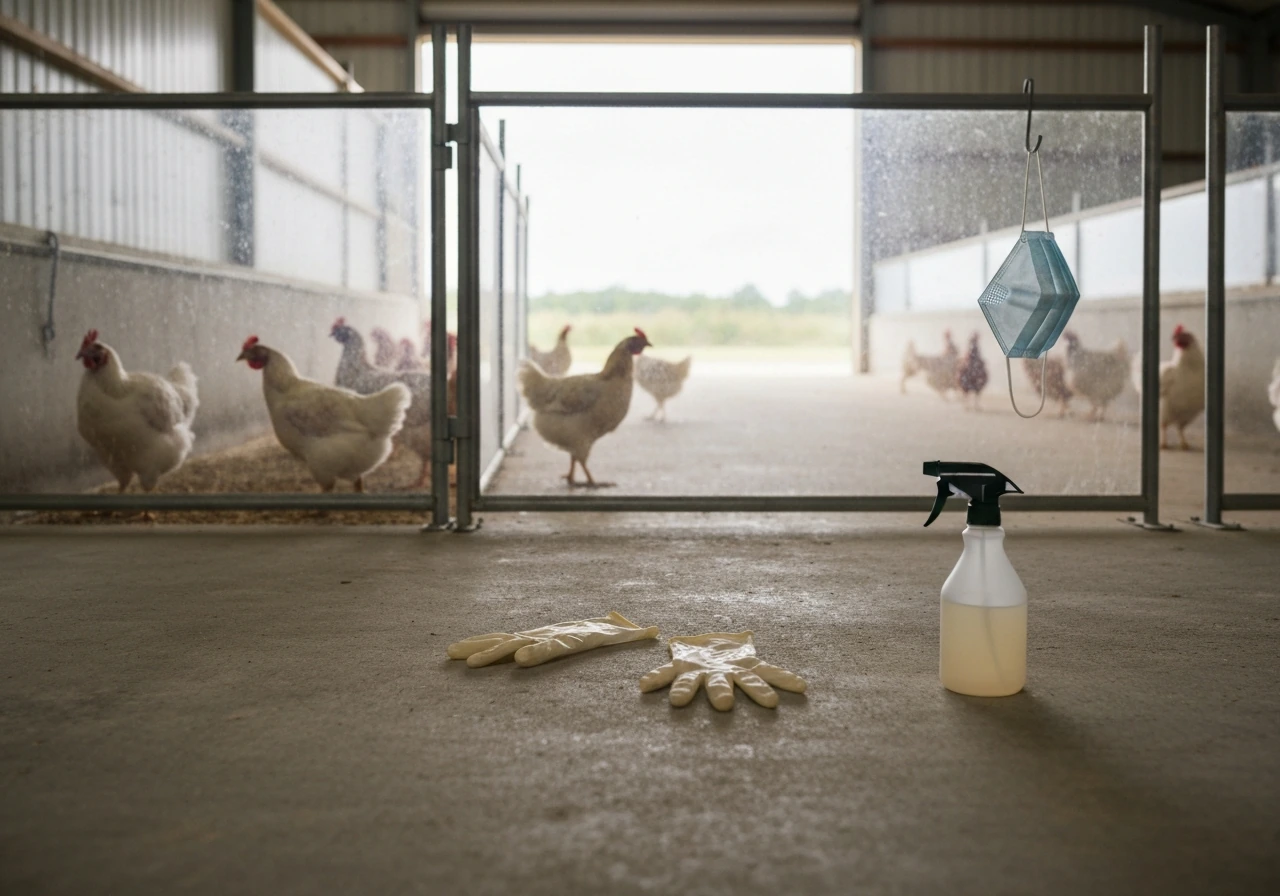
Bird flu is not airborne in the way that measles or COVID-19 (at its most transmissible) is airborne. The virus does not drift through indoor air and infect people who walk into a room hours later. However, it is not purely a 'touch it and get sick' disease either. The honest answer sits somewhere in between: bird flu spreads mainly through direct contact with infected birds, their droppings, saliva, and mucus, but short-range respiratory droplets and, in specific high-risk situations like live poultry slaughter or defeathering, fine aerosols can also carry the virus. Understanding that distinction matters, because it changes what you actually need to do to stay safe. Whether bird flu is airborne or droplet depends on the strain and the setting, especially whether it involves close exposure during poultry handling or processing.
Is Bird Flu Airborne? Transmission, Risk, and Prevention

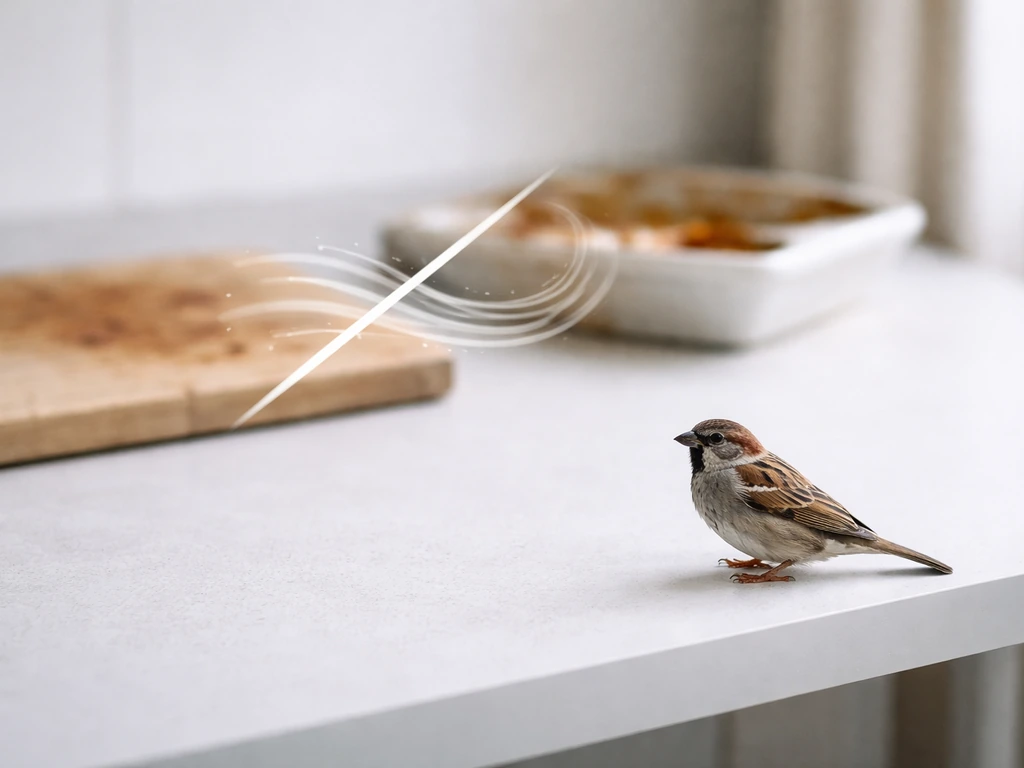
How bird flu actually spreads
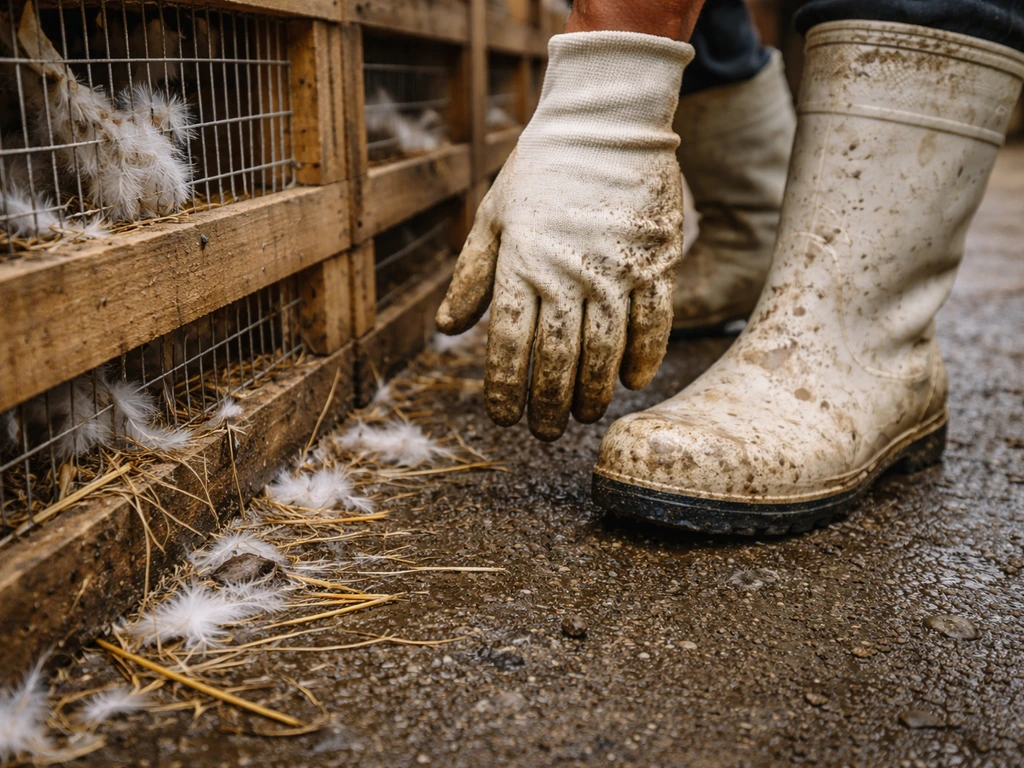
The CDC is pretty clear on this: avian influenza A viruses 'usually spread between birds, not people,' and when humans do get infected, it almost always comes from contact with virus-contaminated environments. That means touching surfaces, droppings, mucus, or saliva from infected birds and then touching your eyes, mouth, or nose. The ECDC (Europe's equivalent of the CDC) adds that the eyes and upper respiratory tract are the main entry points, which is why conjunctivitis (eye redness and discharge) has been one of the most commonly reported symptoms in recent U.S. cases.
Sustained human-to-human transmission has not been identified to date, according to the WHO. There have been rare, limited clusters where the virus appeared to pass between very close household contacts, but these have been sporadic and have not led to community spread. That's a crucial distinction from seasonal flu, which spreads freely from person to person through normal social contact.
When airborne transmission is possible: the evidence and the conditions
Here is where people need to pay close attention, especially if they work around poultry. Researchers simulating commercial poultry processing in a laboratory setting detected infectious droplets and aerosols generated during the handling of infected chickens, and concluded that airborne or droplet-nuclei transmission can occur in slaughter and processing contexts. OSHA similarly lists 'inhaling infectious dusts or droplets' alongside direct contact as a recognized exposure route for poultry workers. OSHA describes direct exposure as happening when virus particles in aerosolized droplets or dust are inhaled or when they contact a person’s mucous membranes, such as the eyes, nose, or mouth Direct exposure happens when virus particles in aerosolized droplets or dust are inhaled or contact a person’s mucous membranes.
The key word there is 'context.' When you are up close with sick or dead birds, defeathering them, cleaning contaminated equipment, or working in a poorly ventilated barn with high bird density, you are generating the conditions where short-range aerosols and larger respiratory droplets become a real risk. That is very different from walking past a park with wild ducks or buying chicken at a grocery store.
It also depends heavily on the specific strain of the virus. Laboratory studies using ferret models (ferrets are the standard animal for influenza transmission research because their respiratory systems respond similarly to humans) have shown that some strains, like a Dutch H5N6 virus studied in one experiment, were 'not transmissible via air' in the ferret model at all, while still causing severe disease. In CDC ferret experiments of a North American highly pathogenic H5N1 virus, the virus did not transmit through air between separate-cage ferret pairs and did not transmit in direct-contact co-housing either blank" rel="noopener noreferrer">not transmissible via air. H5N2 and H5N8 viruses showed replication in ferret respiratory tracts but no evidence of systemic spread. In other words, airborne transmissibility is not a fixed property of 'bird flu' as a category: it varies by subtype, viral genetics, and context.
Bird flu vs. human flu vs. other influenza types: what's actually different

This comparison trips a lot of people up. Seasonal human flu (influenza A and B viruses adapted to humans) spreads efficiently from person to person via respiratory droplets during normal activities like talking, coughing, or being in a shared indoor space. That efficiency is why flu season reliably affects millions of people every year with no special exposure needed.
| Feature | Seasonal Human Flu | Avian Influenza (Bird Flu) |
|---|---|---|
| Primary hosts | Humans | Birds (poultry and wild birds) |
| Main transmission to humans | Person-to-person droplets | Contact with infected birds or contaminated material |
| Sustained human-to-human spread | Yes, efficient and ongoing | No, not identified to date |
| Airborne spread risk (general public) | Moderate to high | Very low |
| Airborne/droplet risk (poultry workers) | Low-moderate | Moderate in high-exposure settings |
| Incubation period (humans) | 1 to 4 days | 2 to 7 days (up to 10 for H7N9) |
| Vaccine availability for humans | Annual seasonal vaccine | Limited; experimental/stockpile only |
| Severity range | Mild to severe | Often severe in confirmed human cases |
The big practical takeaway: if you have not been around infected birds or contaminated environments, your risk of getting bird flu from community air exposure is essentially negligible. That is fundamentally different from seasonal flu, where simply being in the same room as someone who is sick is enough.
Symptoms and timeline: what to watch for after exposure
If you have been exposed to infected birds or a contaminated environment and start feeling unwell, bird flu symptoms in humans can appear anywhere from two to seven days after last exposure for H5N1 (the most well-documented strain), with the ECDC estimating up to seven days and the WHO noting most patients develop symptoms within that window. For H7N9, the median incubation period is around six days, with a range of one to ten days. The bottom line: if you had a significant bird exposure, monitor yourself for up to ten days.
In recent U.S. cases, eye redness and discharge (conjunctivitis) has been the most commonly reported early symptom. Other symptoms can include fever, cough, sore throat, runny nose, muscle aches, and headache, which do overlap considerably with seasonal flu. That overlap is exactly why healthcare providers need to know about any bird exposure: it changes the clinical picture entirely. Severe cases can progress to pneumonia, acute respiratory distress syndrome (ARDS), and other life-threatening complications, particularly with H5N1, which has historically carried a high case fatality rate in confirmed human infections.
- Eye redness, discharge, or irritation (conjunctivitis)
- Fever (may be high)
- Cough, sore throat, or runny nose
- Shortness of breath or difficulty breathing (a warning sign for progression)
- Muscle aches, fatigue, and headache
- In severe cases: pneumonia, respiratory failure
If you develop any of these symptoms after contact with birds, call your doctor or public health authority before going in person to a clinic. Let them know about your exposure upfront so they can take appropriate precautions and arrange testing if needed.
Your actual risk depends on where you are and what you're doing
Poultry farms and agricultural settings
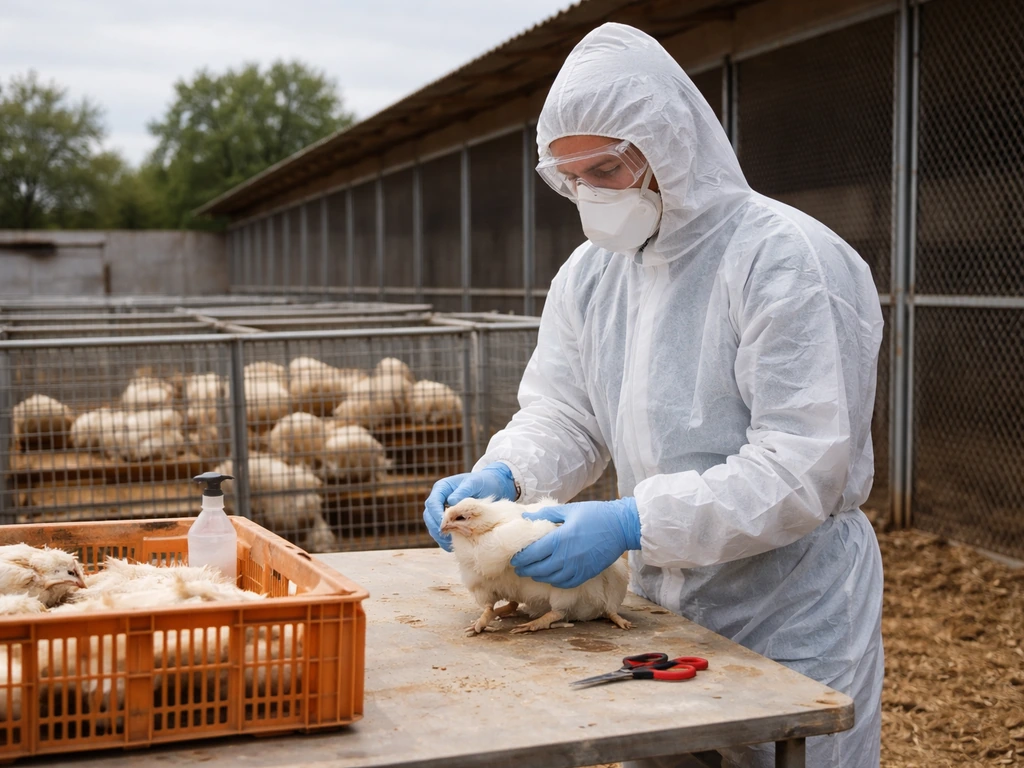
This is the highest-risk setting for humans. Farmers, poultry workers, cullers, veterinarians, and anyone else with direct, unprotected contact with infected flocks face the most meaningful exposure risk. The combination of large numbers of infected birds, confined spaces, and activities that generate feather dust and respiratory secretions (like culling, cleaning, defeathering, or moving carcasses) creates the conditions where both direct contact and aerosol routes are genuinely relevant. Occupationally exposed people are explicitly classified as higher risk by the ECDC.
Wild birds
The risk from casual contact with wild birds (feeding ducks, birdwatching, passing a bird on the street) is very low. The risk increases if you are handling sick or dead wild birds without protection. Avoid touching dead wild birds with bare hands. If you find a dead bird or a cluster of dead birds, do not pick them up, and report them through the appropriate channel.
Household exposure
For the general public without occupational bird exposure, the risk is very low. If you keep backyard chickens or ducks, monitor them closely for signs of illness (sudden death, dropped egg production, respiratory distress, swelling of the head). If your birds look sick and you suspect bird flu, limit your contact, use gloves and a mask as a precaution, and report immediately rather than waiting. The risk rises the more direct and prolonged your unprotected contact with sick birds is.
Healthcare settings
Healthcare workers caring for confirmed or suspected bird flu patients should follow droplet and contact precautions as a baseline, with airborne precautions applied during aerosol-generating procedures (like intubation). Given that sustained human-to-human transmission has not been demonstrated, the risk to healthcare workers using standard precautions is considered low, but not zero, especially when caring for severely ill patients with high viral loads in the lower respiratory tract.
Preventing spread: what to do today
For poultry farmers and workers
PPE is non-negotiable when you are working with birds during an active outbreak or suspected infection. The CDC recommends at minimum an N95 respirator (or better), goggles or a face shield, gloves, coveralls or an apron, and a hair cover. The ECDC specifies an FFP2 (the European equivalent of N95) as the minimum respiratory protection for cullers, farmers, and veterinarians in contact with infected animals. This protection matters both for direct contact and for the aerosol risk generated during high-intensity bird handling activities.
- Wear a properly fitted N95/FFP2 respirator when entering areas with sick or dead poultry
- Use goggles or a full face shield to protect eyes (a major entry point for the virus)
- Wear gloves and change or disinfect them between different areas of the farm
- Use coveralls or a dedicated work apron that you remove and clean before leaving the farm
- Wash hands thoroughly with soap and water after any bird contact, before touching your face
- Shower and change clothes after working in high-risk areas before going home
- Disinfect equipment, vehicles, and footwear before leaving the farm premises
- Report any unusual bird illness or deaths to your state veterinarian or USDA APHIS immediately
For the general public
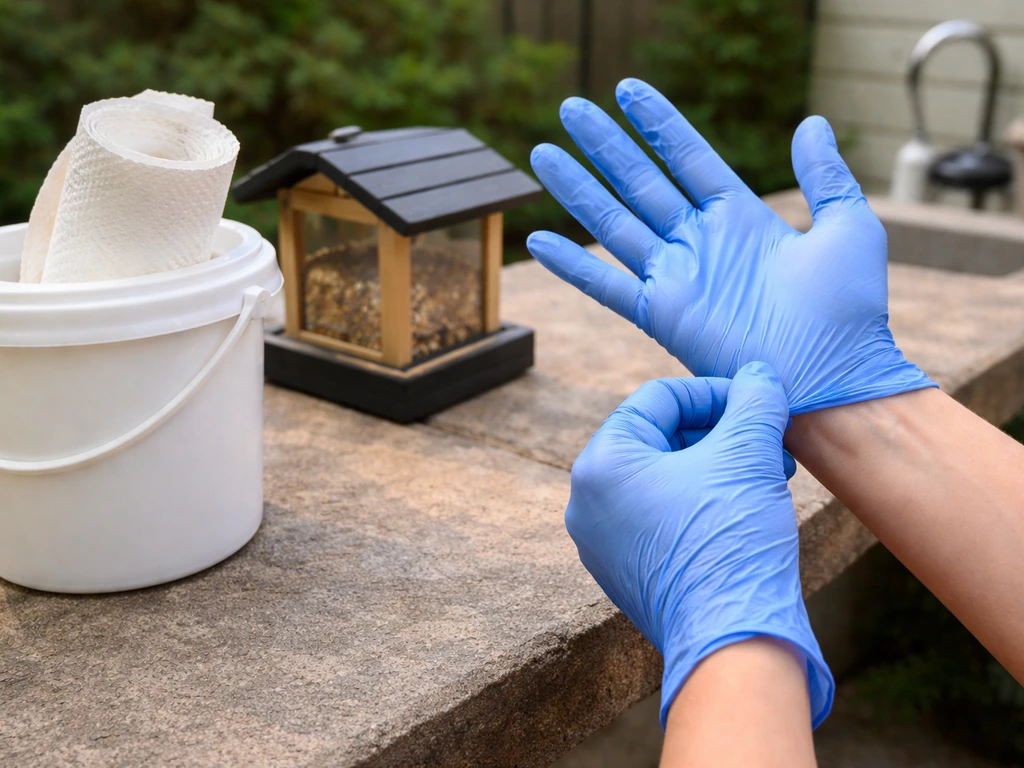
- Avoid touching sick or dead birds with bare hands
- Do not let children handle wild birds
- Wash hands after any contact with birds, bird droppings, or bird environments
- If you keep backyard poultry, keep them separated from wild bird contact where possible
- Monitor your flock for unusual illness and report concerns promptly
Reporting sick or dead birds
In the U.S., report sick or dead poultry to USDA APHIS at 1-866-536-7593. For wild bird die-offs, contact your state wildlife management agency or the U.S. Fish and Wildlife Service. In the UK, any suspicion of bird flu in poultry or captive birds must be reported to the Animal and Plant Health Agency (APHA) immediately, even if signs are mild, and dead wild birds can be reported by calling 03459 33 55 77. Early reporting is not overreacting: it is what allows authorities to contain outbreaks before they spread further.
Is it safe to eat chicken and eggs right now?
Yes, with proper handling and cooking. Both the CDC and OSHA are direct on this point: there is no evidence of transmission through properly handled and prepared poultry or eggs. The commercially inspected poultry and eggs in grocery stores go through regulatory oversight processes, and the USDA actively monitors and removes infected flocks from the food supply.
The practical rule is simple: cook poultry and eggs to an internal temperature of 165°F (74°C). That temperature kills avian influenza A viruses along with bacteria like Salmonella. A food thermometer is the most reliable way to verify this, not color or texture alone. Beyond cooking temperature, the standard food-safety rules around cross-contamination apply: use separate cutting boards for raw poultry, wash hands after handling raw meat, and do not rinse raw poultry in the sink (which spreads pathogens around the kitchen rather than removing them).
For eggs specifically: avoid consuming raw or undercooked eggs during active HPAI (highly pathogenic avian influenza) outbreaks. Runny yolks and lightly cooked egg dishes may not reach the temperatures needed to inactivate the virus. Commercial egg pasteurization processes do add a layer of protection for liquid egg products, but home cooking to proper temperatures remains the most straightforward safeguard.
If you are a backyard flock keeper and one or more of your birds has died from suspected bird flu, do not process or consume the meat or eggs from that flock until you have guidance from your state veterinarian. This is one situation where the usual 'cook it thoroughly' advice is secondary to getting the right official guidance first.
The bottom line: calibrate your concern to your actual exposure
Bird flu is not spreading through the air in any way that puts the average person at meaningful risk from everyday activities. In most cases, bird flu is considered communicable, but its transmission is mainly linked to contact with infected birds or contaminated environments rather than person-to-person spread is bird flu a communicable disease. The transmission pattern right now looks much more like a disease that requires you to get close to infected birds or contaminated material than one that floats freely through communities like seasonal flu does. That said, the aerosol risk in specific occupational settings (farms, processing facilities, culling operations) is real, documented, and worth taking seriously with proper PPE. The related questions of whether bird flu is truly respiratory, how it compares to other communicable influenza diseases, and whether it qualifies as a droplet versus airborne pathogen all depend heavily on strain, setting, and how you define those terms, which is exactly why the nuanced answer matters more than a simple yes or no. That’s why the question “is bird flu respiratory” depends on the strain and on the setting where exposure happens.
If you are a member of the general public with no bird exposure: relax, eat your cooked chicken, wash your hands, and stay informed. If you work with poultry or have had direct contact with sick or dead birds and you are now feeling unwell: call your doctor today, mention the exposure, and let them take it from there. That is the most useful thing you can do right now.
FAQ
If bird flu is not airborne, can it still spread through indoor air in places like barns or poultry houses?
Airborne risk is mainly a concern when you are very close to infected birds or contaminated material and a task creates respiratory particles (for example, defeathering, high-pressure cleaning, moving carcasses, or working in a poorly ventilated barn). If you are not near these exposures, you generally should not worry about “walking into a room later” as a transmission route.
When it comes to bird flu, what does “short-range” mean in real life?
Yes, but it is short-range and situational. Protective guidance for exposure around infected flocks focuses on respiratory protection plus eye protection, because droplets and aerosols generated during handling can be inhaled at close distances, not because the virus can linger and travel far through air.
Since symptoms can look like seasonal flu, how do I know whether to treat it as possible bird flu?
The most useful trigger is not symptoms alone, it is combining symptoms with exposure history. Because early signs can look like seasonal flu (fever, cough, sore throat), clinicians treat symptoms differently if you had recent contact with sick or dead birds, droppings, or contaminated surfaces. Tell them about the exposure before you arrive.
Does a brief or accidental contact with birds or droppings count as a meaningful exposure?
Do not self-triage by assuming “I only touched something once.” Even brief contact can matter if it involved virus-contaminated saliva, mucus, or droppings and then you touched your eyes, nose, or mouth. If the exposure was significant, contact a clinician and mention the exact type of contact (live birds, dead birds, cleanup, slaughter, feathers).
Is it safe to eat grocery-store chicken, even if I’m worried about bird flu getting into the kitchen?
Chicken at a grocery store is generally considered safe when it is properly handled and cooked, but kitchen contamination is still a concern for bacteria and for influenza-like viruses on raw meat surfaces. Use a food thermometer to reach 165°F (74°C), keep raw poultry juices away from ready-to-eat foods, and wash hands and utensils after handling raw items.
What should I do if one of my backyard chickens dies and I suspect bird flu?
If a backyard bird dies from suspected bird flu, you should not eat eggs or process carcasses until you get guidance from your state veterinarian. Follow local instructions for disposal and cleaning, because handling sick birds and contaminated bedding can generate respiratory particles.
How conservative do I need to be with eggs during a nearby avian influenza outbreak?
Cooking guidance is straightforward, but don’t rely on “visual readiness.” Raw or undercooked eggs may not reach temperatures needed to inactivate the virus. If there is an active outbreak affecting poultry in your area, avoid raw or lightly cooked egg dishes until you have updated local advice.
What’s a common PPE mistake among poultry workers, and how should PPE match the job?
If you are an occupationally exposed worker, do not base PPE decisions on whether you feel “too far away.” Tasks that generate particles increase exposure, and protection should match the activity. In practice, that means using respirators and eye protection during culling or defeathering, and ensuring fit and seal for the respirator.
Should healthcare workers treat all suspected bird flu cases the same way in terms of infection control?
If you work in healthcare, the risk is generally low with standard droplet and contact precautions, but airborne precautions apply during aerosol-generating procedures (like intubation). The key point is procedure-based risk, not just the patient diagnosis.
What should I tell the clinic when calling about possible bird flu, and should I mention it before showing up?
Because confirmation can take time, guidance usually depends on exposure details and clinical severity. If you had significant bird exposure, call ahead and mention it, so the clinic can plan testing and infection-control measures before you enter common areas.
Why is early reporting emphasized, and what should I do if I find a dead wild bird cluster?
Reporting matters because it enables outbreak detection early, especially for localized die-offs or mild-looking illness in captive birds. If you see sick or dead birds beyond your immediate flock, report through the appropriate animal or wildlife authority rather than trying to handle carcasses yourself.
Is the Bird Flu Contagious? How It Spreads and Risk
Answer if bird flu is contagious, how it spreads from birds to people and poultry, and real-life exposure risk steps.