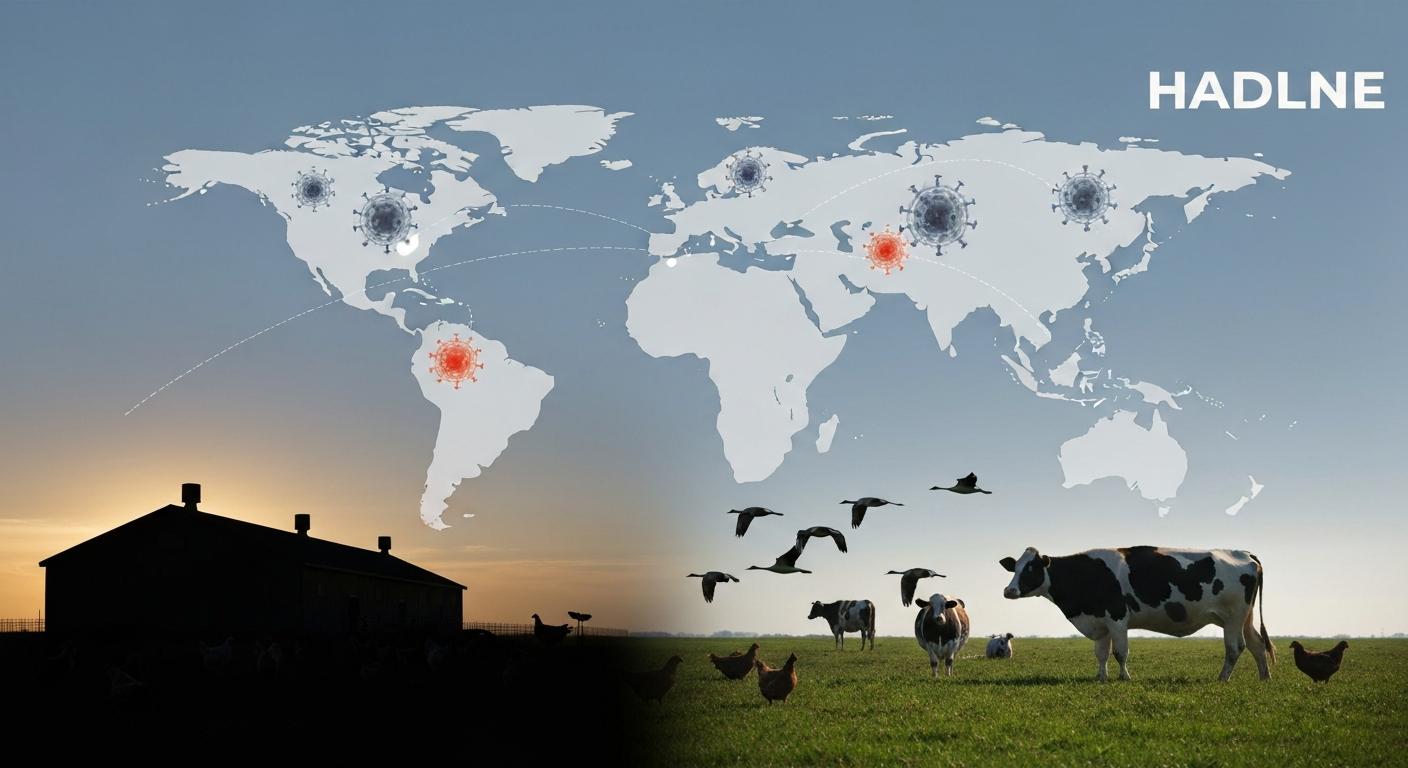
Yes, bird flu is happening right now. As of mid-2026, highly pathogenic avian influenza (HPAI) H5N1 viruses are circulating in wild birds and poultry across multiple continents, U.S. dairy cattle herds are still affected following detections first confirmed in March 2024, and sporadic human infections continue to be reported in several countries. The FAO EMPRES-i global dashboard shows ongoing, geographically widespread detections, and WOAH's situation reports (including HPAI Situation Report No. 81 from March 2026) confirm active events across dozens of countries. This is not a sudden flare-up or a new emergency, it is a prolonged panzootic (a pandemic in animals spanning multiple continents) that has been unfolding since at least 2021. The risk to most people remains low, but it is real and worth understanding. If you want a concise answer, see our focused update titled "Is bird flu bad this year?". If you’re asking “is bird flu real,” the answer is yes, ongoing surveillance and reports show active HPAI H5N1 circulation globally.
Is bird flu happening now: current outbreaks, risks & steps

Current outbreak status: what the data actually tells you
The word 'outbreak' gets used loosely, so it helps to know what surveillance agencies actually mean. In official disease-reporting language, an outbreak is a detection of HPAI in a single flock, herd, wild-bird cluster, or individual animal (or person) that is confirmed by a national laboratory and then notified to international bodies. WOAH collects these notifications through its WAHIS (World Animal Health Information System) platform. FAO's EMPRES-i dashboard maps them in near-real-time. Neither source shows a quiet map right now. Clade 2.3.4.4b H5N1 viruses, the dominant lineage responsible for the current panzootic, have been detected in wild birds and domestic poultry on every inhabited continent except Australia and, so far, Antarctica. Mammal spillovers, including to U.S. dairy cattle, sea lions, foxes, and bears, underscore how broadly this virus has moved through ecosystems.
One important caveat: dashboards represent validated, reported events, not every infection that has occurred. WOAH's own documentation notes that notifications require national submission and WOAH verification, which introduces lag. Countries with active surveillance programmes and well-resourced veterinary labs report faster and more completely than those without. That means the maps almost certainly undercount true global activity. When you see a country with zero reports, it may genuinely have no cases, or it may simply lack the testing infrastructure to detect and report them. Keep that in mind when interpreting any map or dashboard.
For human cases, WHO publishes cumulative case tables for H5N1 and other zoonotic influenza subtypes. As of data included through May 2026, sporadic human infections continue to be documented. The ECDC's avian influenza overview for March through May 2026 reported 19 public health human avian-influenza infections, including three fatal cases, notified across six countries and territories: Bangladesh, Cambodia, India, Italy (an imported H9N2 case), China, and Taiwan. In the United States, poultry workers and dairy farm workers have been the main affected group since 2024. A fatal H5N5 case in a backyard flock owner in Washington State in November 2025 was documented in an MMWR report, reinforcing that close animal contact remains the primary exposure route. CDC MMWR, Fatal human case of HPAI A(H5N5) in a backyard flock owner, Washington, Nov 2025 documents the fatal case and details clinical outcomes and exposures CDC MMWR — Fatal human case of HPAI A(H5N5) in a backyard flock owner — Washington, Nov 2025.
How to check local risk: your 'is bird flu near me?' guide
Knowing what is happening globally is useful context, but what most people really want is localised information. Here is a practical step-by-step approach to finding out what is happening in your area. In Canada, the CFIA maintains live HPAI dashboards and issues Primary Control Zone (PCZ) notices that are updated as events occur (CFIA, Detections of avian influenza in Canada / HPAI dashboards) CFIA — Detections of avian influenza in Canada / HPAI dashboards.
- Start with your national animal health agency. In the U.S., USDA APHIS publishes state-by-state HPAI detection maps for commercial poultry, backyard flocks, and dairy cattle — updated frequently. In Canada, CFIA maintains live HPAI dashboards and publishes Primary Control Zone (PCZ) notices when a detection triggers a geographic response zone. In the UK, DEFRA and APHA report confirmed cases by region (Great Britain self-declared freedom from HPAI on 18 May 2026 for the 2025-26 season, a useful example of how national status can change). For other countries, check your national veterinary or food safety authority's website.
- Check FAO EMPRES-i for a global picture. Navigate to the interactive map, filter by species (poultry, wild birds, mammals) and by date range, and zoom into your region. This tool is publicly accessible and does not require registration.
- For human case data, go to WHO's weekly zoonotic influenza update or the relevant regional body (ECDC for Europe, CDC for the U.S.). These pages report confirmed human cases by country and provide risk assessments.
- Search for state or provincial health department advisories. In the U.S., state veterinarians and state public health departments often issue press releases when a detection occurs locally — these can appear before federal databases are updated.
- If you work on a farm, contact your veterinarian or local extension office. USDA's state veterinarians and Animal Health Officials maintain direct communication channels with producers and can provide current PCZ or control-zone information relevant to your operation.
- Set up alerts. Both the USDA APHIS and CDC websites allow you to subscribe to email or RSS updates for bird flu news. WHO's Disease Outbreak News (DON) service is another useful alert source for international developments.
Bear in mind that a detection anywhere in your state or province does not automatically mean your flock or household is at elevated risk. Local risk depends on proximity to affected premises, whether migratory waterfowl move through your area, the biosecurity of your operation, and your degree of direct contact with birds. The 'is bird flu near me?' question is genuinely one of the most practical ones to ask, local data always trumps national averages when it comes to taking action.
Reading outbreak maps and risk levels: what the colours and categories actually mean
Most official outbreak maps use colour-coding and tiered language that can feel opaque at first. Here is how to interpret what you are looking at.
On WOAH WAHIS and FAO EMPRES-i, map markers typically represent individual notified events, not the number of animals or the severity of the event. A single dot can represent a detection in one wild bird or in a flock of millions. Click on individual events to read the actual notification: it will show species, number of animals affected and dead, and the date the event started versus when it was reported. Pay attention to that gap, because a dot that appeared on the map today may describe an event that happened weeks ago.
USDA APHIS uses a tiered zone system around confirmed detections. A Control Area is typically a 10-kilometre radius around a confirmed premises, within which additional testing and movement restrictions apply. A Surveillance Zone extends further out. If you are inside a Control Area, you are subject to specific regulatory requirements. If you are in a Surveillance Zone, heightened monitoring is expected. These zones are tied to specific PCZ or control-zone notices published on the APHIS website.
WHO's risk assessments use language like 'low risk to the general population' and 'low to moderate risk for exposed individuals.' These are not dismissive phrases, they reflect genuine epidemiological probability. 'Low' for the general population means casual human-to-human transmission is not occurring. 'Low to moderate' for exposed individuals (such as farm workers with unprotected contact with sick birds or cattle) means infections do happen but are still uncommon relative to total exposures. The absence of documented sustained human-to-human transmission is the core reason current assessments do not use high-risk language for most people. That assessment can change, and WHO, FAO, and WOAH publish joint updates whenever the evidence shifts.
| Risk label | What it means | Who it typically applies to |
|---|---|---|
| Low (general population) | No sustained human-to-human transmission; limited exposure opportunity | People with no direct contact with infected birds or animals |
| Low to moderate (exposed individuals) | Sporadic infections documented; risk tied to direct contact with infected animals or their secretions | Farm workers, veterinarians, hunters, backyard flock owners |
| Moderate to high (occupational) | Repeated or prolonged contact without PPE; in active outbreak zone | Poultry depopulation workers, dairy workers in affected herds without respiratory protection |
| High (hypothetical) | Efficient human-to-human transmission — not currently observed for H5 viruses | Would apply to general public if pandemic-level spread emerged |
Who is actually at risk and how the virus spreads
HPAI H5N1 spreads primarily through direct contact with infected birds or their droppings, respiratory secretions, blood, or other body fluids. Wild waterfowl, especially ducks and geese, are natural reservoir hosts: they often carry and shed the virus without showing severe symptoms, which is part of why it spreads so efficiently through flyways. If you're asking whether bird flu is natural, see the explainer page 'is bird flu natural' for discussion of wild-bird reservoirs, spillover events, and how human activities influence spread. Domestic poultry, especially chickens and turkeys, are much more susceptible to severe disease. The virus can also persist briefly in the environment, in water, feed, or on contaminated equipment, fomites, and clothing.
The spillover to U.S. dairy cattle, first confirmed in March 2024, was unexpected and has added a new transmission dimension. USDA's bulk-milk surveillance and dairy herd status programme revealed widespread subclinical and clinical infections across multiple states. Cattle appear to shed the virus primarily in milk and nasal secretions rather than through respiratory aerosols at the scale seen in poultry. Several human infections in U.S. dairy workers were linked to exposure to infected cattle or raw milk, not to poultry. This is a reminder that the risk picture for H5N1 is not static.
Beyond cattle, peer-reviewed studies and genomic surveillance (including analyses published in Nature Communications and on Nextstrain) have documented spillovers to foxes, sea lions, bears, mink, and other mammals. Some mammalian isolates carry polymerase mutations (such as PB2 E627K or D701N) associated with enhanced replication in mammalian respiratory tracts. These mutations are monitored closely because they are markers for potential adaptation. The key point from current joint WHO/FAO/WOAH assessments (data as of March and May 2026) is that none of these mutations have yet produced a virus capable of sustained human-to-human transmission, but the situation is being watched with appropriate urgency.
In terms of human risk groups, the clearest risk factor across all documented human cases is direct, unprotected contact with infected animals or heavily contaminated environments. Poultry workers during culling operations, dairy farm workers, backyard flock owners, and hunters who handle wild birds are the groups most commonly affected. Children and immunocompromised individuals may face higher severity if infected, but to date, most human cases globally have occurred in adults with occupational or recreational exposure to birds.
What sick birds look like: signs for backyard owners and farmers
Recognising disease early in your flock is one of the most important things you can do, both for your birds and for public health. HPAI can kill poultry extremely fast, sometimes within 24 to 48 hours of symptom onset, so early reporting matters.
- Sudden, unexpected death in multiple birds with no prior signs of illness — this is often the first thing owners notice
- Severe respiratory distress: gasping, rattling breath, nasal discharge, coughing, or sneezing
- Neurological signs: twisted neck (torticollis), loss of coordination, tremors, paralysis of limbs or wings
- Swelling of the head, neck, and eyes; combs and wattles turning blue or purple due to haemorrhage and oedema
- Diarrhoea, often greenish or watery
- Sudden, severe drop in egg production, or production of misshapen, soft-shelled, or discoloured eggs
- Huddling, extreme lethargy, or birds that are unwilling to move or stand
- Any combination of the above in multiple birds in a short time window
Wild birds found dead near your property, particularly waterfowl, raptors, or corvids (crows, ravens), should also raise alertness. A single dead wild bird is not necessarily cause for alarm, but clusters of dead wild birds, especially near water or in the same small area, should be reported to your state or local wildlife agency. Do not handle dead wild birds with bare hands.
Symptoms in people: what to watch for and when to get tested
Human avian influenza infections span a wide clinical range, from mild conjunctivitis (pink eye) and upper-respiratory symptoms to severe pneumonia and multi-organ failure. In U.S. dairy-worker cases, mild presentations (eye irritation, mild respiratory symptoms) were common. In historically documented H5N1 cases from Asia, mortality rates have been much higher, likely reflecting differences in the specific virus strain, viral load at exposure, and access to early medical care.
The incubation period for avian influenza in humans is generally 2 to 5 days, though it can be up to 10 days. If you have had direct contact with sick or dead poultry, wild birds, dairy cattle, or their environments, watch for the following symptoms for up to 10 days after exposure.
- Fever of 38°C (100.4°F) or higher, or feeling feverish/chills
- Cough, sore throat, or shortness of breath
- Conjunctivitis (red, watery, or irritated eyes) — sometimes the only symptom in mild cases
- Muscle aches, headache, or fatigue
- In more severe cases: difficulty breathing, chest pain, or altered mental status
- Gastrointestinal symptoms such as nausea, vomiting, or diarrhoea have also been reported
If you develop any of these symptoms after a relevant exposure, call ahead before going to a clinic or emergency room. Tell the healthcare provider about your exposure to birds or livestock before you arrive. This allows them to take appropriate infection-control precautions and order the right diagnostic tests. Standard rapid influenza antigen tests are less sensitive for avian influenza subtypes and a negative rapid test does not rule out H5N1, confirmatory RT-PCR testing at a public health laboratory is the reference standard, as CDC and WHO diagnostic guidance makes clear. Antiviral treatment with oseltamivir (Tamiflu) is recommended and is most effective when started within 48 hours of symptom onset, so early contact with a healthcare provider matters.
Immediate actions: reporting sick birds, farm response, and what to tell authorities
If you suspect HPAI in your flock, the single most important thing is to stop the spread before reporting anything else. That means do not move birds, equipment, or vehicles off your premises until you have contacted your vet or animal health authority. Here is a practical emergency sequence.
- Isolate yourself from the affected area. Limit access to the barn or pen where sick or dead birds are found. Put on gloves, a respirator or N95 mask, and eye protection before re-entering.
- Do not cull, bury, compost, or move dead or sick birds on your own initiative before reporting. Doing so can destroy diagnostic evidence and may complicate official response.
- Call your veterinarian immediately. In many countries, a private veterinarian is the first point of contact and can collect samples for diagnostic testing. In the U.S., USDA APHIS has a 24/7 hotline: 1-866-536-7593. In Canada, contact your CFIA district office or the CFIA emergency number. In the UK, contact APHA on 03000 200 301.
- Contact your state or provincial veterinarian or animal health official. They will initiate the official investigation and can activate emergency response resources including testing, disposal assistance, and compensation programmes.
- Restrict movement of people, vehicles, vehicles, and equipment onto and off the premises. Do not let visitors enter the poultry area until you have guidance from officials.
- Keep records of when you first noticed clinical signs, how many birds are affected, and any recent animal or equipment movements. Authorities will ask for this information.
- If you or any farm workers develop symptoms (fever, eye irritation, cough) within 10 days of exposure to sick birds, contact your local or state health department and a healthcare provider. Mention the bird-flu exposure explicitly when you call.
- Follow official depopulation and disposal guidance if HPAI is confirmed. Do not attempt disposal without official authorisation — this is a regulatory requirement in most jurisdictions and affects eligibility for indemnity or compensation payments.
For members of the public who find sick or dead wild birds, the process is simpler but still important. Do not handle the birds with bare hands. Report clusters of dead wild birds to your state wildlife agency or local animal control. In the U.S., the USDA Wildlife Services programme coordinates wild-bird surveillance and can be contacted through local APHIS offices.
Prevention for households, backyard flocks, and farm operations
Prevention looks different depending on whether you are a member of the general public, a backyard flock owner, or a commercial operator. The underlying principle is the same: reduce the chance that wild birds (the primary reservoir) interact with your birds or contaminate your environment.
For the general public
- Avoid handling wild birds, especially waterfowl, raptors, or any bird that appears sick or is dead
- Do not visit live bird markets or poultry farms unless necessary, and if you do, follow posted biosecurity guidance
- Wash hands thoroughly with soap and water after any contact with birds or bird environments
- Properly cooked poultry and eggs are safe: cooking to an internal temperature of 74°C (165°F) inactivates influenza viruses
- Do not consume raw or undercooked poultry or eggs, and avoid raw milk from cattle in areas with active HPAI detections
For backyard flock owners
- House birds indoors or under covered runs during periods of high wild-bird activity, especially during waterfowl migration seasons
- Prevent wild birds from accessing feed, water, and housing areas
- Use separate footwear and clothing for your poultry area and change or clean before leaving
- Do not share equipment with other flock owners without cleaning and disinfecting first
- Register your flock with your state or national animal health authority so you can receive outbreak alerts for your area
- Know your veterinarian's emergency number before you need it
For commercial farms and workers
- Implement and audit a written biosecurity plan aligned with USDA APHIS or equivalent national standards
- Establish and enforce a controlled access zone (CAZ) and line of separation between clean and dirty areas
- Require all visitors, vehicles, and equipment to follow entry and cleaning protocols
- Provide workers with appropriate PPE: N95 respirators (or better), goggles, gloves, waterproof coveralls, and dedicated footwear for each barn
- Train all workers to recognise early clinical signs and to report concerns immediately to supervisors
- Participate in any voluntary or mandatory surveillance programmes (e.g., USDA bulk-milk testing for dairy operations)
- Consult your veterinarian about whether H5 vaccination programmes are available and applicable for your operation in your jurisdiction — vaccine development and regulatory approval status varies by country and species
Food safety, vaccines, and treatment: what you need to know
Properly cooked poultry and eggs are safe to eat. There is no documented case of anyone acquiring avian influenza from eating thoroughly cooked poultry products. The concern with food is confined to raw or undercooked items and to raw milk. USDA and CDC have both advised against consuming raw milk from cattle in regions with active H5N1 dairy detections, as live virus has been detected in raw milk from infected herds.
For human vaccines, no commercially approved H5-specific vaccine exists for the general public as of mid-2026. The U.S. and several other governments maintain prepandemic H5N1 vaccine stockpiles that could be deployed if sustained human-to-human transmission emerged. Seasonal influenza vaccines do not protect against H5N1. Workers at high occupational risk may be offered seasonal flu vaccination to reduce the chance of co-infection, which matters because co-infection with seasonal and avian strains in the same person creates conditions where genetic reassortment (mixing) could theoretically occur.
Antiviral treatment with neuraminidase inhibitors, primarily oseltamivir (Tamiflu), is the standard of care for suspected or confirmed avian influenza in humans. It must be started as early as possible, ideally within 48 hours of symptom onset, to be most effective. In severe cases, intravenous zanamivir may be used. If you report a potential exposure to a healthcare provider, they may recommend starting antivirals prophylactically, even before test results are available.
Separating fact from fear: a few things worth clarifying
A lot of anxiety around bird flu is shaped by misinformation or incomplete context. A few points worth addressing directly. The current HPAI H5N1 virus is a naturally occurring influenza A subtype that evolved through normal influenza reassortment and mutation processes over decades, there is no credible scientific evidence that it is engineered or man-made. It has circulated in birds since at least the 1990s, and the current panzootic clade (2.3.4.4b) has been spreading since around 2020-2021, so it is not a brand-new threat.
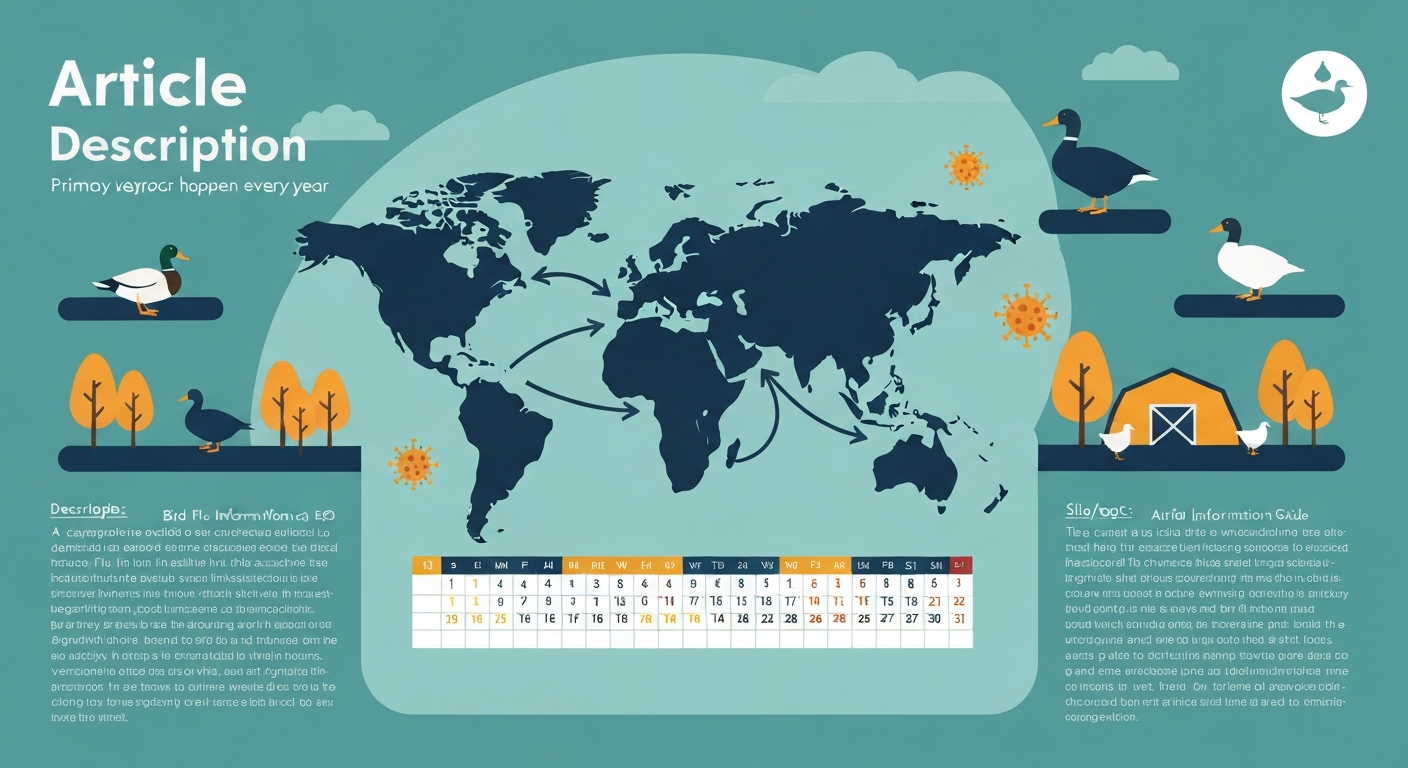
Bird flu does happen every year in the sense that HPAI circulates persistently in wild bird populations globally, and poultry outbreaks occur annually in many countries. What has changed in recent years is the geographic scale, the breadth of mammalian species affected, and the entry into U.S. dairy cattle. Whether it is 'worse this year' than in previous years depends on how you measure it: the 2021-2026 panzootic has been the most geographically extensive in recorded history by many measures, but the risk to individual humans who are not in direct animal contact has remained low throughout.
The question of whether bird flu could trigger a human pandemic is legitimate and taken seriously by every major public health body. The honest answer is: not yet, and not on current evidence, but the virus continues to evolve, and surveillance, research, and preparedness are genuinely important. Staying informed through credible sources (WHO, CDC, WOAH, FAO, and your national health and agriculture agencies) is both prudent and empowering. If you’re asking 'is bird flu coming back', see the detailed explainer. Panic is not warranted; attention is.
FAQ
Is bird flu happening now?
Yes. Globally, highly pathogenic avian influenza (HPAI) H5 viruses remain active in wild birds, poultry and, in some places, other mammals. International dashboards and situation reports (FAO EMPRES‑i, WOAH WAHIS, WHO cumulative human case tables, CDC situation pages) show ongoing, geographically widespread detections in 2024–2026 and continuing into 2026. Joint FAO/WOAH/WHO assessments describe an ongoing panzootic of clade 2.3.4.4b‑derived H5 viruses, with sporadic human spillovers but no confirmed sustained human‑to‑human transmission (see FAO, WOAH, WHO, CDC links).
How can I check whether bird flu is near me right now?
Check national and international dashboards and local animal‑health notices: FAO EMPRES‑i (global animal events), WOAH WAHIS (validated country event reports), national agencies (USDA APHIS, CFIA, GOV.UK/DEFRA, state/provincial animal health offices) and local public‑health advisories. Many countries publish interactive maps, Primary Control Zones (PCZs) or outbreak lists. Remember publication lags: WAHIS/FAO lists show verified reports and may trail local detection and press releases.
How do I interpret outbreak maps and risk levels?
Outbreak maps show reported detection locations and dates. Key points: (1) Look at most recent update time and whether events are confirmed or suspected; (2) Distinguish wild‑bird detections from domestic poultry or mammal cases; (3) Check local control measures (control zones, movement restrictions); (4) Understand that maps undercount true circulation because of surveillance differences and reporting lags. For technical updates and interpretation see WOAH/FAO guidance and national agency pages (WOAH disease‑data collection explanation).
Who is at risk of bird‑flu infection?
Highest risk: people with close contact to infected birds or contaminated environments (poultry farmers, backyard flock owners, cull teams, veterinarians, laboratory staff) and exposed dairy/farm workers where spillover to mammals has occurred. General public risk remains low when there is no close contact with infected animals. Health agencies (WHO/CDC/ECDC) advise extra precautions for animal‑exposed workers and monitoring of symptomatic people after exposure.
How does the virus spread between animals and to people?
Transmission in birds occurs via direct contact, contaminated feces, secretions, feed, equipment and shared water. Wild migratory birds can introduce viruses to poultry. Mammal and occasional human infections typically follow close contact with infected animals or contaminated material. Sustained human‑to‑human transmission has not been demonstrated for current H5 clade viruses (joint FAO/WOAH/WHO assessments).
What are clinical signs of bird flu in birds and in people?
In birds: sudden death, drop in egg production, respiratory signs, swollen wattles/comb, diarrhea, lethargy and neurologic signs in some species. In people: symptoms range from mild respiratory illness (fever, cough, sore throat) to severe pneumonia and systemic illness; presentation overlaps seasonal influenza. Any fever or respiratory symptoms after direct contact with sick/dead birds or exposed livestock should prompt medical evaluation and testing (RT‑PCR is the diagnostic standard).
Does Bird Flu Happen Every Year? Seasonal Patterns & Risks
Does bird flu happen every year? Clear yes/no, why seasons vary, risks, prevention & where to check outbreaks.