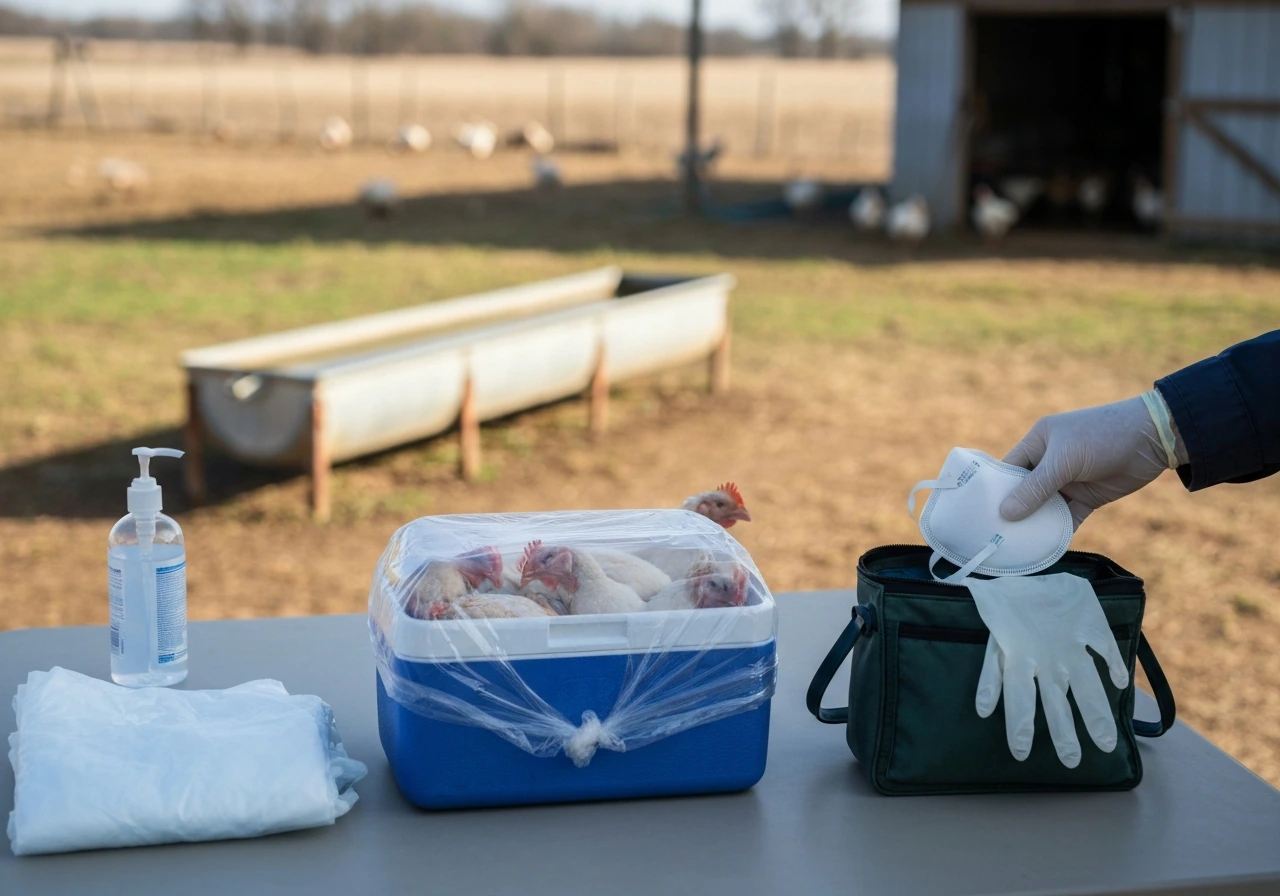
Several organizations track bird flu simultaneously, each covering a different piece of the picture. To report bird flu concerns, use your local public health or veterinary authority and share any relevant dates, locations, and lab results when available tracking bird flu. At the global level, the World Health Organization (WHO), the World Organisation for Animal Health (WOAH), and the Food and Agriculture Organization (FAO) are the three you need to know. At the national level, agencies like the CDC and USDA in the US, ECDC in Europe, and GOV.UK in England publish their own dashboards and situation updates. No single tracker shows everything, so knowing what each one covers, and where to find it, is the whole game.
Who Tracks Bird Flu: Official Dashboards and Updates

Sarah Chen
22 Mar 2026

Global agencies that monitor bird flu

The three core global bodies divide the work by their mandates: WHO tracks human cases, WOAH tracks animal outbreaks, and FAO bridges both with field-level data and zoonotic risk assessments (zoonotic means the virus can jump from animals to people).
WOAH runs the World Animal Health Information System (WAHIS), which is the global database where countries submit reports of animal disease events including highly pathogenic avian influenza (HPAI) outbreaks in poultry, wild birds, and other animals. WOAH publishes regular global HPAI situation reports based on these submissions. If you want to understand where bird flu is circulating in animal populations worldwide, WOAH's avian influenza update portal is the starting point.
WOAH runs the World Animal Health Information System (WAHIS), which is the global database where countries submit reports of animal disease events including highly pathogenic avian influenza (HPAI) outbreaks in poultry, wild birds, and other animals. WOAH publishes regular global HPAI situation reports based on these submissions. If you want to understand where bird flu is circulating in animal populations worldwide, WOAH's avian influenza update portal is the starting point.
FAO's 'Global AIV with Zoonotic Potential' page pulls from both WOAH and national authorities to produce cross-agency situation updates. It explicitly includes signals for human case events, such as reporting the number of human cases officially recorded since the last update. FAO also co-produces joint risk assessments with WOAH and WHO, and those joint documents tell you the intended reading order: start with the animal situation (WOAH), layer in the zoonotic assessment (FAO/WHO joint), then check the human case count (WHO).
For the Americas specifically, PAHO (the Pan American Health Organization, which is WHO's regional office for the Americas) launched an interactive regional dashboard that maps human cases alongside detections in domestic birds, wild birds, and mammals. The animal data in the PAHO dashboard is sourced from WOAH, so it's a useful single view for the Western Hemisphere.
National public health vs veterinary surveillance roles

This distinction trips a lot of people up. In almost every country, bird flu surveillance is split between a public health agency (which monitors humans and sometimes conducts human exposure investigations) and a veterinary or agricultural agency (which monitors animals). These two systems use different definitions, different testing labs, and different reporting cadences. They don't always update in sync.
In the US, the CDC handles the human side. Its 'A(H5) Bird Flu: Current Situation' page separates confirmed from probable human cases: a case is 'probable' if a public health lab tests positive for A(H5) but CDC cannot independently confirm the infection. The CDC also tracks how many people are being monitored and tested due to animal exposures, reported monthly in a dedicated 'Surveillance and Human Monitoring' section.
The USDA's Animal and Plant Health Inspection Service (APHIS) handles the animal side. APHIS maintains a public '[HPAI Confirmed Cases in Livestock](https://direct. aphis. usda.
gov/livestock-poultry-disease/avian/avian-influenza/hpai-detections/hpai-confirmed-cases-livestock)' dashboard with maps and tables of confirmed livestock detections, and it also issues formal confirmation notices for individual flock events, including details on virus strain and public-health risk assessment. For example, APHIS issued a confirmation for HPAI H7N9 detected in a broiler chicken breeder flock in Mississippi, noting that CDC was simultaneously assessing public-health risk.
In Europe, the European Centre for Disease Prevention and Control (ECDC) produces periodic avian influenza overviews covering reported human infections in EU and EEA countries, along with risk framing for the general public. Its December 2024 to March 2025 overview is a good example of the format: new human case counts by country for a defined reporting window, plus contextual risk assessment. ECDC’s “Avian influenza overview” reports cover defined multi-month windows, such as December 2024 to March 2025.
In the UK, GOV.UK publishes a single hub called 'Bird flu (avian influenza): latest situation in England' that includes confirmed case counts and disease control actions such as culling decisions and updates to control zones. Northern Ireland has its own tool: the DAERA Avian Influenza Map Viewer, which shows active Protection and Surveillance Zones on an interactive map.
The general pattern holds globally: look for your country's health ministry or CDC equivalent for the human side, and your agriculture or food safety ministry for the animal side. Both matter if you're trying to understand transmission risk.
Where to find current outbreak dashboards and updates
Here are the specific pages worth bookmarking, organized by what they track:
| Source | What it tracks | Update frequency | Direct focus |
|---|---|---|---|
| WHO DON page | Lab-confirmed human H5N1 cases by country | As outbreaks occur | Human cases globally |
| WHO Influenza webpage (cumulative count) | Running total of confirmed human H5N1 cases | Monthly | Human cases globally |
| WOAH avian influenza portal | Animal outbreaks (HPAI in poultry, wild birds, mammals) | Ongoing via WAHIS | Animal outbreaks globally |
| FAO Global AIV with Zoonotic Potential | Cross-agency signals: animal + zoonotic human events | Periodic | Human and animal, global |
| PAHO interactive dashboard | Human cases + animal detections in the Americas | Ongoing | Americas, both human and animal |
| CDC Current Situation page | US human cases (confirmed + probable) + animal detections | Ongoing / monthly for human monitoring | US, human + animal |
| USDA APHIS Livestock dashboard | Confirmed HPAI in US livestock | Ongoing | US, animal only |
| ECDC avian influenza overview | Human infections in EU/EEA + risk framing | Periodic (quarterly-ish) | Europe, human focus |
| GOV.UK England hub | Confirmed cases + control zone decisions in England | Ongoing | England, animal focus + policy |
| DAERA Map Viewer | Active disease control zones in Northern Ireland | Ongoing | Northern Ireland, animal focus |
One practical tip: the USDA APHIS livestock dashboard sometimes requires a manual page refresh to load the most current map and table data. If it looks stale, refresh before concluding nothing new has happened.
How to interpret what trackers report
Not all numbers mean the same thing across trackers, and misreading them is the most common way people either over-panic or miss something real. Here are the key distinctions to keep in mind.
Lab-confirmed vs probable vs alert

A lab-confirmed case means a specific diagnostic test, typically PCR or sequencing, has verified the presence of the virus in a sample. WHO only includes lab-confirmed cases in its cumulative human count. A probable case, as the CDC uses the term, means a state public health lab found A(H5) but CDC's own confirmation process hasn't completed. An alert or signal is looser still: it might mean a country has flagged a cluster worth investigating but no test results are back yet. When you see a number on a tracker, check which category it falls into.
Bird cases vs human cases
Animal detection numbers are almost always much larger than human case numbers, and that's expected. A single infected flock can trigger an HPAI confirmed detection, but that doesn't mean there are associated human infections. The CDC HPAI wild bird map, for example, shows detections in wild birds across the US using an interactive hover or tap interface. These detections reflect viral circulation in animal populations, which is important context for risk, but they are not human cases. Always check which species a tracker is counting.
Cumulative totals vs active outbreaks
WHO's cumulative human H5N1 count goes back decades and includes cases from countries where active transmission has since stopped. A high cumulative number doesn't tell you what's happening right now. For current activity, look at the date range on the data, and focus on situation reports that specify a reporting window, like ECDC's overview covering December 2024 through March 2025, rather than all-time totals.
HPAI vs LPAI, and which strains matter
HPAI stands for highly pathogenic avian influenza, which causes severe disease in poultry. LPAI is low pathogenicity. Most of the current global concern centers on HPAI H5N1 (the clade 2.3.4.4b strain now circulating in the US and elsewhere) and H5 subtypes more broadly. H7 strains like H7N9 also appear in some trackers, including USDA notifications. When you see a tracker listing numbers, check whether it's HPAI only, all avian influenza strains, or a specific subtype, because the scope varies by agency.
How to set up alerts and track changes over time
Most of the official dashboards don't have built-in email or push alert systems, so you need to build your own monitoring routine. Here's what actually works.
- Bookmark the WHO DON page and check it weekly. New DON posts appear when a country officially notifies WHO of a confirmed human case event. You can also subscribe to WHO alerts via their website's alert service, which sends email notifications when new DON items are published.
- Follow CDC's Current Situation page directly. The page header typically shows when it was last updated. For human monitoring numbers specifically, expect updates monthly. For animal detections, check more frequently during active outbreak periods.
- Set up a Google Alert for terms like 'HPAI confirmed' or 'H5N1 human case' combined with your country name. This catches press releases and news items that often appear before official dashboards are refreshed.
- For the US, bookmark both the CDC situation page and the USDA APHIS livestock dashboard separately. They update on different schedules and from different agencies. Checking only one will give you half the picture.
- Follow ECDC's avian influenza overview page if you're in Europe. New overviews are published periodically and cover a defined reporting window, so you can track trends across quarters.
- Check WOAH's HPAI situation reports when you want a global animal outbreak summary. These are typically published as PDFs linked from the WOAH avian influenza portal.
- For the Americas, bookmark the PAHO interactive dashboard. It combines human and animal data in one view and is more current than waiting for PDF situation reports.
If you work in agriculture, veterinary medicine, or public health, signing up for USDA APHIS email updates and your state or regional health department's disease alerts is worth doing separately. Those channels carry confirmations and guidance documents faster than national dashboards sometimes reflect.
How to verify credibility and avoid misinformation
Bird flu generates a lot of noise online, particularly during active outbreaks in dairy herds or poultry operations. Here's how to filter the signal from the noise.
Check the primary source, not the headline
News articles reporting on bird flu cases often cite WHO or CDC data but don't always link to the actual underlying page. When you see a claim about a new human case or a new country affected, go directly to the WHO DON page or the relevant national tracker and verify the data yourself. Headline numbers and primary-source numbers sometimes differ because journalists are working from different update cycles.
Look for the reporting standard
Credible trackers are transparent about what they're counting. WHO specifies 'laboratory-confirmed' and cites IHR reporting obligations. CDC distinguishes 'confirmed' from 'probable' and explains the difference. WOAH cites WAHIS as the data source. If a tracker or news source doesn't explain its data standard (how cases were confirmed, what testing method was used, what time period is covered), treat the number with caution.
Cross-check across the agency chain
The FAO/WOAH/WHO joint assessment documents intentionally point readers to all three agencies' tracking pages in a specific order: animal situation, then zoonotic risk, then human case count. If a claim about elevated risk appears, verify that all three levels are showing consistent signals. A spike in WOAH animal detections without any corresponding WHO human case reports or CDC monitoring increases is a different situation than spikes appearing at all three levels simultaneously.
Be skeptical of social media case claims
Unverified human case claims circulate on social media before official confirmation routinely, and many never get confirmed. The WHO DON and CDC situation page are the authoritative endpoints. Until a case appears on those pages (or on your country's equivalent), it hasn't cleared the verification bar that matters. That doesn't mean early signals are always wrong, but it does mean you should hold them loosely until official confirmation lands.
Know what legitimate trackers don't do
Official trackers don't make pandemic predictions or assign risk ratings like 'imminent threat.' They report what has been confirmed, with dates and data standards. If a source is framing bird flu data in apocalyptic or urgency-manufacturing terms while citing official numbers, that's a sign the interpretation has gone beyond what the data supports. The risk framing in legitimate sources, like ECDC's overviews or WHO's risk assessments, is deliberate and hedged, not alarming.
If you're concerned about your own potential exposure to birds or animals, the pages covering how bird flu is transmitted and what to do if you think you've been exposed are separate practical guides worth reading alongside this one. If you think you may have bird flu, follow the guidance on what to do if you think you have bird flu and contact the right public health or veterinary authority for local instructions. If you are wondering how do you catch bird flu, focus on the typical ways people get exposed and how to reduce that risk what to do if you think you've been exposed. Tracking the outbreak is one part of staying informed; understanding your personal risk is another.
FAQ
When I see a number on a bird flu dashboard, how do I know what type of “case” it actually means?
Use the tracker category labels, not just the headline number. For human counts, prioritize “lab-confirmed” (WHO) or “confirmed” versus “probable” (CDC). For animal detections, make sure the dashboard says it is counting HPAI only, all avian influenza, or a specific subtype (for example H5 versus H7).
Why do some trackers show a big number, but it doesn’t match what news says is happening right now?
Check the “reporting window” or “last updated” date on the dashboard, then compare across agencies using the same time horizon. All-time or cumulative totals can look alarming, even when recent activity is low or stopped.
Why don’t animal and human updates show up at the same time on official sites?
Different agencies confirm on different timelines, so numbers can lag. A practical approach is to compare signals in tiers: animal detections (WOAH or national vet dashboards), then zoonotic risk assessments (FAO/WHO joint documents), and only then human case updates (WHO or national public health).
Is there a single place that combines global animal detections and human cases into one view?
There is often no single “merged” map. If you want one view, start with WOAH for global animal events, then layer your region’s human situation page on top. For the Western Hemisphere specifically, PAHO’s interactive map can help you view human and animal signals together, but confirm it is using WOAH-sourced animal data.
Do bird flu detection maps include all species, or only poultry and wild birds?
Trackers may include wild birds, poultry, and mammals, but not all dashboards cover every species. Before drawing conclusions, locate the species filter or the description of what the map/table counts.
What if there are exposure investigations, but no confirmed human cases yet?
Yes. For example, CDC’s A(H5) page separates confirmed from probable, and it also lists people being monitored and tested after exposures. If you only look at case counts, you may miss the broader surveillance picture shown in the monitoring section.
How can I quickly tell whether a dashboard’s bird flu numbers are reliable or may be mixing definitions?
When possible, base your trust on the dashboard’s stated data standard and source system. If a site does not explain definitions (lab method, confirmed versus probable, and the time period), treat its numbers as less reliable than WHO, CDC, or WOAH-derived figures.
What should I do if a US APHIS bird flu map looks like it hasn’t updated?
Yes, at least in the US. APHIS livestreams or map views can look stale due to loading behavior, so refresh the page (or check a “last updated” timestamp, if shown) before concluding nothing changed.
If I see a human case and an animal outbreak around the same time, are they automatically connected?
Don’t assume a human case is linked to the most recent animal detection you saw online. Use the official human case page first, then read the accompanying situation or risk details to see whether there is an identified exposure pathway or investigation context.
How should I respond to social media claims about new bird flu cases before official confirmation?
Follow the official verification endpoint, not social media claims. Until a case appears on WHO’s DON or your country’s national public health situation page (or equivalent), it has not met the formal confirmation bar that those pages require.
Next Article
How Do You Catch Bird Flu: Transmission and Prevention
Learn how people get bird flu from infected birds or contaminated areas, and how to prevent exposure and seek care.