
Bird flu (avian influenza) causes two very different pictures depending on who is infected. In poultry, highly pathogenic strains like H5N1 can kill entire flocks within days, with mortality rates approaching 100% in susceptible gallinaceous birds like chickens. In people, most documented infections have followed direct, heavy exposure to infected birds and range from mild conjunctivitis or a brief fever all the way to severe pneumonia and acute respiratory distress syndrome. The three subtypes of greatest public-health concern right now are H5 (especially H5N1 clade 2.3.4.4b), H7 (especially H7N9), and H9 (especially H9N2). Sustained human-to-human spread remains rare, which is why we are not currently in a bird-flu pandemic, but the virus's ability to mutate and reassort its genes means the situation stays under active global surveillance.
What Are the Effects of Bird Flu: Health, Poultry Risks

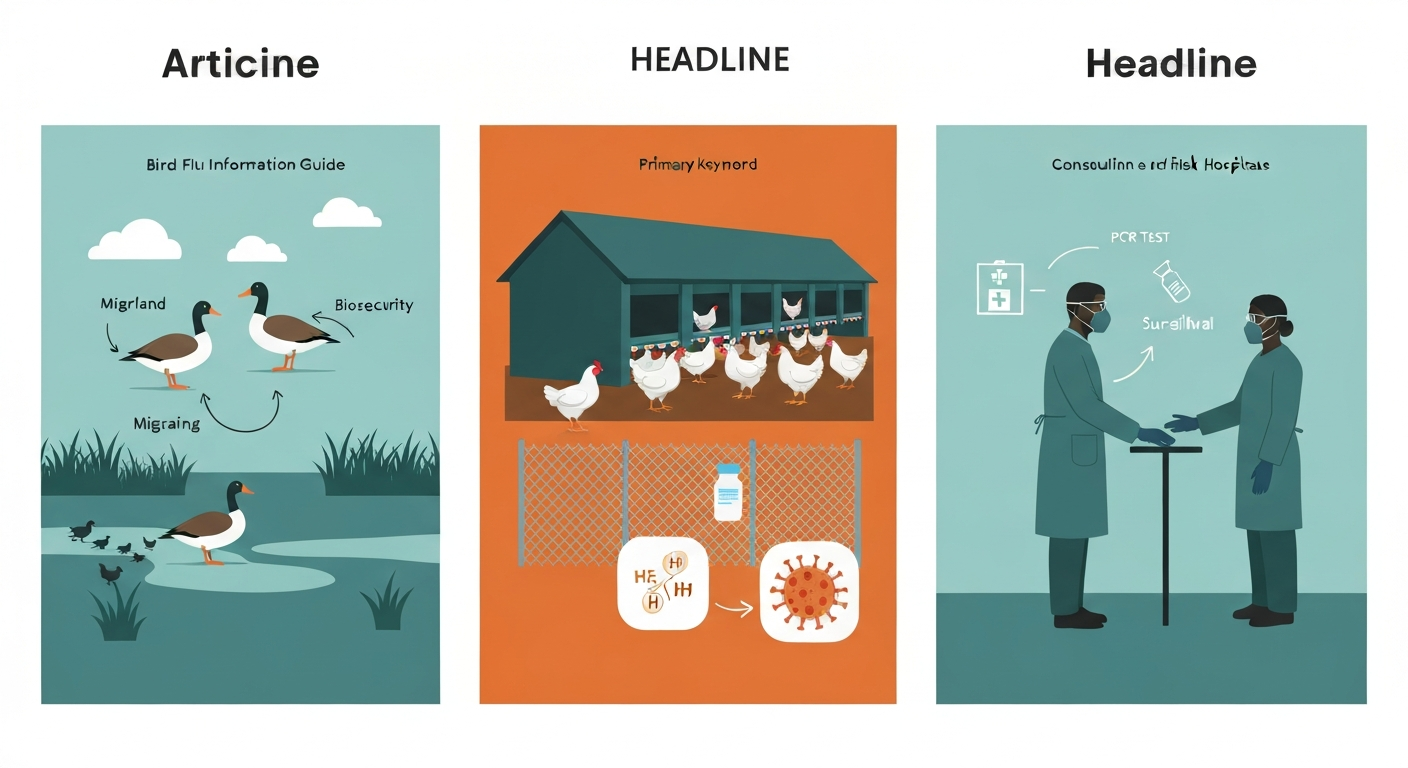
What is bird (avian) influenza?
Avian influenza refers to infections caused by influenza A viruses that naturally circulate in wild birds, particularly waterfowl and shorebirds. These viruses are named using two surface proteins: hemagglutinin (abbreviated H or HA, types H1 through H18) and neuraminidase (abbreviated N or NA, types N1 through N11). WOAH (formerly OIE) and the World Health Organization (WHO) maintain the official subtype and clade nomenclature for surveillance and reporting, using HA (H1–H18) and NA (N1–N11) designations blank" rel="noopener noreferrer">WOAH and WHO maintain the subtype and clade nomenclature for surveillance and reporting.. The combination gives each strain its familiar shorthand, so H5N1 means hemagglutinin type 5 paired with neuraminidase type 1. For a plain-language definition, see what does bird flu mean. Subtype names are maintained by the World Organisation for Animal Health (WOAH, formerly OIE) and the World Health Organization (WHO) for surveillance and reporting purposes. For a concise overview, see the article titled "what is bird flu and how do you get it.".
Not all avian influenza viruses are equally dangerous. Virologists classify field strains as either low-pathogenic avian influenza (LPAI) or highly pathogenic avian influenza (HPAI) based on how severely they affect chickens in laboratory tests. HPAI strains, which are almost always H5 or H7 subtypes carrying a polybasic cleavage site on the HA protein, are the ones responsible for mass poultry die-offs and the human cases that attract international headlines. H9N2, by contrast, is typically LPAI but matters enormously because it donates internal gene segments to other zoonotic viruses, effectively acting as a genetic mixing pot.
How avian influenza viruses actually work
Understanding why some bird flu strains jump to people starts with cell-entry biology. See also a concise explainer on how does bird flu work for a plain-language overview of the mechanisms described here. Influenza viruses latch onto sialic acid receptors on the surface of host cells. Avian strains prefer sialic acids with an α2,3 linkage, which are abundant in bird intestinal tissue and in the deep lung of mammals. Human seasonal flu viruses prefer α2,6 linkages, which dominate the human upper respiratory tract (nose, throat, trachea). Because most bird flu strains are tuned to α2,3 receptors, they do not spread efficiently from person to person via respiratory droplets in the upper airway. This receptor mismatch is one of the main biological barriers keeping bird flu from becoming a human pandemic.
That barrier is not a wall, though. Specific mutations in the HA gene (for example, Q226L and G228S in H2/H3 numbering) can shift receptor preference toward human-type α2,6 linkages. Separately, mutations in the polymerase gene PB2 (notably E627K and D701N) are repeatedly associated with enhanced viral replication and virulence in mammalian cells. Mammalian Adaptation in the PB2 Gene of Avian H5N1 Influenza Virus, Journal of Virology documents PB2 substitutions E627K and D701N as key changes linked to increased replication and virulence in mammals Mammalian Adaptation in the PB2 Gene of Avian H5N1 Influenza Virus — Journal of Virology. Ferret experiments published in 2012 demonstrated that a specific set of mutations can enable airborne respiratory droplet transmission between mammals in the laboratory, which is not the same as saying it will inevitably happen in nature, but it does confirm the plausibility of pandemic emergence. That is why virologists track these molecular markers in every new outbreak sequence.
Two evolutionary mechanisms drive the emergence of new dangerous variants. Antigenic drift is the gradual accumulation of point mutations over time, a slow process that gradually changes the virus's shape so existing immunity becomes less effective. Antigenic shift is more dramatic: it happens when two different influenza A viruses simultaneously infect the same host and swap entire gene segments (reassortment). Because influenza A has eight separate RNA gene segments, a cell co-infected with, say, an H5N1 bird strain and an H1N1 human strain can package the segments in new combinations, potentially producing a novel subtype. Reassortment is the main mechanism that has generated new H5Nx genotypes in the ongoing wave of clade 2.3.4.4b outbreaks around the world, and it is also how the 1957 and 1968 human pandemic strains arose.
How bird flu spreads: the full transmission map
Wild migratory waterfowl are the primary natural reservoir. They typically carry avian influenza viruses in their intestines without becoming visibly ill, then shed virus in their droppings along migration flyways. Poultry in outdoor or semi-open housing can be exposed through contaminated water, soil, or direct contact with wild birds. From there, the virus can spread rapidly within a commercial flock. Live-bird markets, where multiple species mix together, provide an ideal environment for amplification and reassortment. For a concise overview of what is bird flu and how is it transmitted, see what is bird flu and how is it transmitted.
Avian influenza viruses can persist in the environment for days to months depending on temperature and moisture. Cold water dramatically prolongs survival, sometimes for weeks, which is why outbreaks often intensify along wetland migration corridors in autumn and winter. Contaminated equipment, clothing, vehicles, and feed can carry infectious material from one farm to another, making movement controls during an outbreak critically important.
Human infections have consistently been linked to direct, prolonged exposure to infected birds or heavily contaminated environments, most commonly on farms, in live poultry markets, or during backyard slaughter. The foodborne risk from properly handled and cooked poultry or eggs is considered negligible: avian influenza viruses are heat-sensitive and are inactivated when food reaches an internal temperature of 70°C (158°F) throughout. There is no documented evidence of infection from eating fully cooked poultry products. Human-to-human transmission has occurred in rare clusters, typically among household members sharing a bed with a severely ill patient, but it has not sustained itself into community spread.
What bird flu does to birds
Low-pathogenic vs highly pathogenic: a stark contrast
LPAI infections in poultry are often subtle. Farmers may notice a mild cough or nasal discharge, reduced feed and water intake, and a drop in egg production of 5% or more over several days. Mortality is typically low, and birds may recover with supportive care. The problem is that LPAI H5 and H7 strains can mutate into HPAI forms after circulating in dense poultry populations, which is why even a low-path detection triggers immediate regulatory response in most countries.
HPAI is a different disease entirely. In susceptible gallinaceous birds (chickens, turkeys, pheasants), infection causes a rapidly progressive systemic illness. Birds develop severe respiratory distress, neurological signs (twisted necks, incoordination), cyanosis (blue discoloration) of the comb and wattles, hemorrhages under the skin, and profuse watery diarrhea. Egg production can collapse within 24 to 48 hours. Mortality in an unvaccinated flock can reach 75% to 100% within days of the first deaths, and morbidity (the proportion of birds showing signs) is often close to 100%. Research on Dutch HPAI outbreaks found that a weekly on-farm mortality above 3% served as a practical alerting threshold for suspecting HPAI before laboratory confirmation.
Beyond the birds themselves, the economic and agricultural consequences are severe. Affected flocks must be depopulated (culled) to stop spread, indemnity programs compensate farmers in many jurisdictions, and export bans disrupt international trade. The clade 2.3.4.4b H5 lineage has also caused unprecedented spillover events into wild raptors, seabirds, marine mammals, and most recently dairy cattle in the United States, expanding the ecological footprint of HPAI in ways not seen in previous outbreaks.
What bird flu does to people
Human infection with avian influenza is uncommon, and when it happens it is almost always linked to a specific animal exposure. For a concise summary of how bird flu affects birds and people, see what does bird flu do. The clinical picture varies considerably by subtype. H9N2 infections in people have generally caused mild, self-limiting illness resembling seasonal flu. H7N9, which caused repeated epidemic waves in China between 2013 and 2017, produced a range of outcomes from mild to fatal, with older adults and those with underlying conditions at highest risk of severe disease. H5N1 has historically carried the highest case fatality among the three major subtypes, with WHO cumulative records from 2003 through 2026 showing fatality ratios well above 50% in confirmed cases, though this figure likely reflects significant under-detection of mild cases.
Typical symptom progression
After an incubation period of roughly two to five days (range reported up to 17 days for H5N1), most symptomatic people develop fever above 38°C (100.4°F), cough, sore throat, muscle aches, and fatigue, virtually indistinguishable from seasonal influenza. Some H7N9 and H5N1 patients present primarily with conjunctivitis (eye redness and discharge). In cases that progress to severe disease, respiratory symptoms worsen rapidly over three to five days, leading to pneumonia visible on chest X-ray, and in the most serious cases, acute respiratory distress syndrome (ARDS), multi-organ failure, septic shock, and death. Secondary bacterial pneumonia can complicate the clinical picture in severely ill patients.
The people most at risk of severe outcomes are those with occupational or close domestic exposure to infected animals, individuals over 65 or under 5 years old, pregnant women, and people with chronic respiratory, cardiac, or immune-compromising conditions. Crucially, casual contact with birds in a park or backyard setting, where birds appear healthy, carries a very different (much lower) risk profile than direct handling of sick or dead poultry.
Bird vs. human: symptoms, severity, and what to do
| Feature | Infected Birds (HPAI) | Infected Humans |
|---|---|---|
| Common signs | Sudden death, respiratory distress, neurological signs, blue comb/wattles, diarrhea, drop in egg production | Fever, cough, sore throat, muscle aches, conjunctivitis, shortness of breath |
| Incubation period | 1–3 days in gallinaceous poultry | 2–5 days (up to 17 days reported for H5N1) |
| Morbidity | Up to 100% of flock affected | Uncommon; almost always linked to animal exposure |
| Mortality without intervention | Up to 75–100% in susceptible poultry | Varies by subtype; H5N1 historic case fatality >50% in confirmed cases; H9N2 generally mild |
| Severe complications | Rapid systemic collapse, hemorrhage, death | ARDS, multi-organ failure, secondary bacterial pneumonia |
| Immediate action for birds | Isolate affected birds immediately; notify a veterinarian and report to animal health authorities within 24 hours | Not applicable |
| Immediate action for people | Not applicable | Seek medical care promptly; inform clinician of any animal exposure; do not self-medicate with antivirals |
| Testing required? | Yes — swabs and tissue samples for PCR; mandatory reporting in most countries | Yes — respiratory swabs for PCR/antigen testing; serology for contacts; notify public health authorities |
Diagnosing bird flu: what happens in the lab
Testing in poultry and wild birds
In poultry, the gold-standard diagnostic samples are oropharyngeal and cloacal swabs collected from live birds, or tissue samples (trachea, lung, brain, intestine) from freshly dead birds. These are submitted to accredited veterinary laboratories for real-time reverse transcription polymerase chain reaction (RT-PCR), which can detect avian influenza RNA and distinguish LPAI from HPAI within 24 to 48 hours of sample receipt. Virus isolation in embryonated eggs or cell culture confirms the result and provides a live isolate for further characterization. Rapid antigen tests exist for field triage but have lower sensitivity and should not be used as the sole basis for outbreak confirmation. Positive results must be reported to national animal health authorities and, for H5 and H7 strains, to WOAH within 24 hours of laboratory confirmation.
Testing in humans
In a person with suspected avian influenza exposure, the key sample is a combined nasopharyngeal and oropharyngeal swab collected as early as possible in the illness, ideally within the first four days of symptom onset. Lower respiratory samples (tracheal aspirate or bronchoalveolar lavage) are preferable in hospitalized patients because viral loads in the upper airway can be low. RT-PCR at a public health or reference laboratory is the primary method; standard rapid influenza diagnostic tests used in clinics often miss avian influenza A viruses and should not be used to rule out infection. Serological testing (measuring antibody responses) is valuable for seroprevalence surveys and for identifying mild or asymptomatic infections in contacts, but antibody levels may take two to three weeks to rise to detectable levels. Clinicians should notify public health authorities immediately when avian influenza is suspected, before laboratory confirmation, so that contact tracing and exposure investigation can begin promptly.
Treatment options and where vaccines stand
The neuraminidase inhibitor oseltamivir (Tamiflu) is the cornerstone of antiviral treatment for human avian influenza infections. WHO guidance recommends starting oseltamivir as early as possible, ideally within 48 hours of symptom onset, without waiting for laboratory confirmation when clinical suspicion is high and exposure history is suggestive. Intravenous peramivir and inhaled zanamivir are alternatives for hospitalized patients who cannot take oral medication. Antiviral resistance should be tested if clinical response is poor. Supportive care in hospital, including oxygen therapy and, in severe cases, mechanical ventilation and treatment of secondary bacterial infections, is the main determinant of survival in ARDS cases.
On the vaccine front, no licensed human H5N1 vaccine is yet in routine commercial use, but multiple candidate vaccines have been developed and stockpiled by governments including the United States, and emergency authorization frameworks exist to deploy them rapidly. Several H5N1 vaccine candidates have shown good immunogenicity in clinical trials. For poultry, inactivated and recombinant vector vaccines are widely used in countries like China, Egypt, and Vietnam to reduce disease burden in endemic settings, though they must match circulating clades to remain effective and do not fully prevent viral shedding, which complicates trade-related certification.
Preventing bird flu: practical steps for households and farms
For the general public
- Avoid direct contact with wild birds, especially sick or dead ones; do not pick them up with bare hands.
- Wash hands thoroughly with soap and water for at least 20 seconds after any contact with birds, poultry, or their environments.
- Cook all poultry products (meat and eggs) to an internal temperature of at least 70°C (158°F) throughout; this reliably inactivates avian influenza viruses.
- Do not consume raw or undercooked eggs, or dishes made with raw egg, sourced from areas experiencing active HPAI outbreaks.
- If you develop fever and respiratory symptoms within 10 days of visiting a live poultry market or handling birds in an affected region, see a doctor and disclose the exposure.
- Follow travel advisories from your national health authority when visiting regions with active H5N1 or H7N9 activity.
For poultry farmers and backyard flock owners
- Implement strict biosecurity: control access to poultry houses, use footbaths with approved disinfectant, and require visitors to change footwear and clothing.
- Prevent contact between domestic poultry and wild birds by using covered housing or nets, and eliminate open water sources that attract migratory waterfowl.
- Use dedicated equipment for each poultry house and disinfect vehicles before they enter the farm.
- Monitor flocks daily for any drop in feed intake, water intake, egg production, or an increase in mortality; a mortality rate above 3% in a week or an egg production drop above 5% over consecutive days should trigger immediate investigation.
- Source replacement birds only from certified, tested, disease-free flocks.
- Wear appropriate PPE (gloves, N95 respirator or equivalent, eye protection, protective clothing) when handling sick birds or cleaning contaminated areas.
- Report any suspicious illness pattern to your veterinarian and national animal health authority without delay; early reporting saves flocks and limits spread.
Public health response and outbreak control
When HPAI is confirmed in a poultry flock, the standard international response follows a rapid, well-rehearsed protocol. The affected premises are placed under quarantine immediately. All birds on the index farm are humanely depopulated (culled), typically within 24 hours of confirmation. A protection zone (usually a 3 km radius) and a surveillance zone (usually 10 km) are established around the index site, with movement restrictions on poultry, eggs, and related materials. All flocks in the protection zone are inspected and tested. Traced contacts (farms that received birds, eggs, or equipment from the index farm) are investigated. These measures are designed to eliminate the source and interrupt spread before the virus seeds additional sites.
On the human side, public health teams investigate every confirmed human case to identify the exposure source and enumerate close contacts. Contacts are monitored for symptoms for 10 days and offered antiviral prophylaxis with oseltamivir in some national protocols. If a cluster of cases suggests possible limited human-to-human transmission, the alert level escalates immediately. The WHO's Pandemic Influenza Preparedness Framework and International Health Regulations (IHR) require member states to notify WHO of any confirmed human infection with a novel influenza A subtype within 24 hours. Up-to-date outbreak data are published on the WHO avian influenza situation updates page and the WOAH WAHIS (World Animal Health Information System) database, both of which are updated regularly.
Who is actually at risk: putting the numbers in context
The honest risk picture is this: if you do not have direct contact with infected birds or heavily contaminated environments, your personal risk of contracting avian influenza is extremely low. The WHO's own cumulative H5N1 case tables, tracking cases globally since 2003, record hundreds of human cases over more than two decades, in a world with billions of people and billions of poultry. Most of those cases were in farm workers, live-market vendors, or people who handled sick or slaughtered birds at home. Casual tourists, urban residents, and people who eat commercially produced cooked poultry carry a risk that is, practically speaking, negligible under current circumstances.
Occupational risk is meaningfully higher and warrants proportional precautions. Poultry farm workers, veterinarians, slaughterhouse workers, wildlife biologists handling wild birds, and laboratory staff working with avian influenza isolates all fall into a higher-risk category and should follow PPE protocols, receive seasonal influenza vaccination (to reduce co-infection risk and the theoretical chance of reassortment), and be enrolled in active health monitoring programs during outbreaks.
Common myths and what the evidence actually says
- Myth: You can get bird flu from eating cooked chicken or eggs. Fact: Properly cooked poultry and eggs (internal temperature 70°C/158°F throughout) carry no risk of avian influenza infection. There is no documented case of human infection from fully cooked food.
- Myth: Bird flu is essentially the same as seasonal human flu. Fact: Avian influenza viruses are genetically and biologically distinct from seasonal human influenza A viruses. They infect humans through different receptor pathways and do not currently spread efficiently between people, unlike seasonal flu.
- Myth: Seeing dead birds in a park means you are in immediate danger. Fact: The risk from a brief, non-contact encounter with dead wild birds is very low. If you need to handle a dead wild bird, use gloves and a bag, and wash hands thoroughly afterward. Report dead bird clusters to local wildlife or animal health authorities.
- Myth: If bird flu mutates, a pandemic is inevitable. Fact: Pandemic emergence requires a virus to acquire efficient human-to-human transmissibility while retaining virulence, a high bar that past H5N1 strains have not cleared despite decades of circulation. Vigilant surveillance is specifically designed to detect concerning mutations early enough to trigger a response.
- Myth: Antiviral drugs are not available or do not work. Fact: Oseltamivir and related neuraminidase inhibitors are effective against most current avian influenza strains when started early. Stockpiles exist in most high-income countries and in WHO emergency reserves.
When to call a vet or see a doctor
For poultry keepers, do not wait for a pattern to develop if birds are dying unexpectedly. A single unexplained death in a small flock can be coincidental, but two or more unexplained deaths in the same day, any bird showing neurological signs (tremors, twisted neck, falling over), a sudden dramatic drop in egg production, or birds with blue or swollen heads should prompt an immediate call to your veterinarian and, if HPAI is suspected, to your national or state animal health authority. Early reporting is legally required in many jurisdictions and, practically, gives authorities the best chance of containing an outbreak before it reaches neighboring farms.
For people, seek medical attention promptly if you develop fever with respiratory symptoms, cough, or eye inflammation within 10 days of handling birds, visiting a live poultry market, or traveling to a region with active avian influenza outbreaks. Tell your doctor or emergency room staff about the exposure before they examine you, so they can take appropriate infection control precautions. Do not wait until symptoms are severe. The antiviral window for oseltamivir is narrow, and early treatment genuinely changes outcomes in severe avian influenza disease.
FAQ
What is bird flu (avian influenza) in plain language?
Bird flu (avian influenza) is an infection caused by influenza A viruses that normally circulate in birds. Viruses are named by two surface proteins: hemagglutinin (H) and neuraminidase (N) (for example, H5N1 means hemagglutinin type 5 and neuraminidase type 1). Most avian influenza viruses infect wild waterfowl without causing severe disease, but some H5 and H7 viruses can become highly pathogenic in poultry and occasionally infect people.
Which virus subtypes are most important to know about?
Key subtypes of public‑health concern include: H5 (notably H5N1 and descendant clades such as 2.3.4.4b), H7 (for example H7N9, which caused human cases in China), and H9 (H9N2 causes sporadic human infections and often contributes genes to other viruses). These differ in how sick they make birds and how often they spill over into mammals or humans.
How does avian influenza ‘work’ — virology summary?
Brief virology: influenza A viruses infect cells using the HA protein to bind host sialic‑acid receptors. Avian viruses prefer α2,3‑linked receptors (common in bird intestinal/avian tissues); human viruses prefer α2,6‑linked receptors (upper airway). Host range and zoonotic risk depend on receptor binding, internal gene compatibility and mutations (eg PB2 E627K) that help replication in mammals. New virus genotypes arise by point mutations (antigenic drift) and by reassortment (antigenic shift) when two different influenza A viruses co‑infect the same host and swap genome segments.
How does bird flu transmit between birds, farms, and people?
Transmission pathways: - Wild migratory waterfowl shed virus in feces and contaminate water and the environment; they are a natural reservoir. - Poultry become infected through direct contact with wild birds, contaminated water, or infected birds. - Fomites (boots, equipment, vehicles), feed, and transport can spread virus between farms. - Live‑bird markets and contaminated premises are high‑risk settings. - Humans are mainly infected by direct contact with infected birds or contaminated surfaces; foodborne risk is low if poultry and eggs are properly cooked; rare limited human‑to‑human spread has been documented but sustained transmission is unusual.
How long can avian influenza viruses survive in the environment?
Survival depends on temperature, pH, salinity and organic material. In cold water, avian influenza viruses can survive for weeks to months; in warmer conditions survival is shorter (days). Organic material (feces) and low temperatures prolong infectivity, which is why migratory bird habitats and chilled transport environments can maintain virus for longer.
What are the clinical signs of avian influenza in birds?
Signs vary by virus pathogenicity: - Low‑pathogenic avian influenza (LPAI): mild respiratory signs, sneezing, nasal discharge, reduced feed intake, and drops in egg production. - Highly pathogenic avian influenza (HPAI): sudden high mortality, severe respiratory distress, swollen heads/combs, purple discoloration, neurological signs, rapid decline in feed/water intake and sharp fall in egg production. Operational triggers for suspicion include unexplained mortality above normal thresholds (some guidance uses >3% weekly mortality) or sudden multiple birds dying.
What Is Bird Flu and How Do People Get It
Plain-English guide to bird flu, how humans get infected from birds or contaminated areas, and how to reduce risk.