
Yes, bird flu is a respiratory disease, but with an important nuance: it is not exclusively respiratory. In birds, highly pathogenic strains cause severe respiratory signs alongside systemic (whole-body) disease, while low-pathogenic strains often replicate primarily in the intestinal tract and shed through droppings rather than breath. In humans, avian influenza most often causes lower respiratory tract disease, ranging from pneumonia to acute respiratory distress syndrome (ARDS), though some subtypes also produce conjunctivitis (eye infection) or gastrointestinal symptoms. So the honest answer is: respiratory involvement is central to bird flu in both species, but the full picture depends heavily on the strain and the host.
Is Bird Flu Respiratory? How It Spreads, Risks & Prevention

Sarah Chen
16 Jul 2026
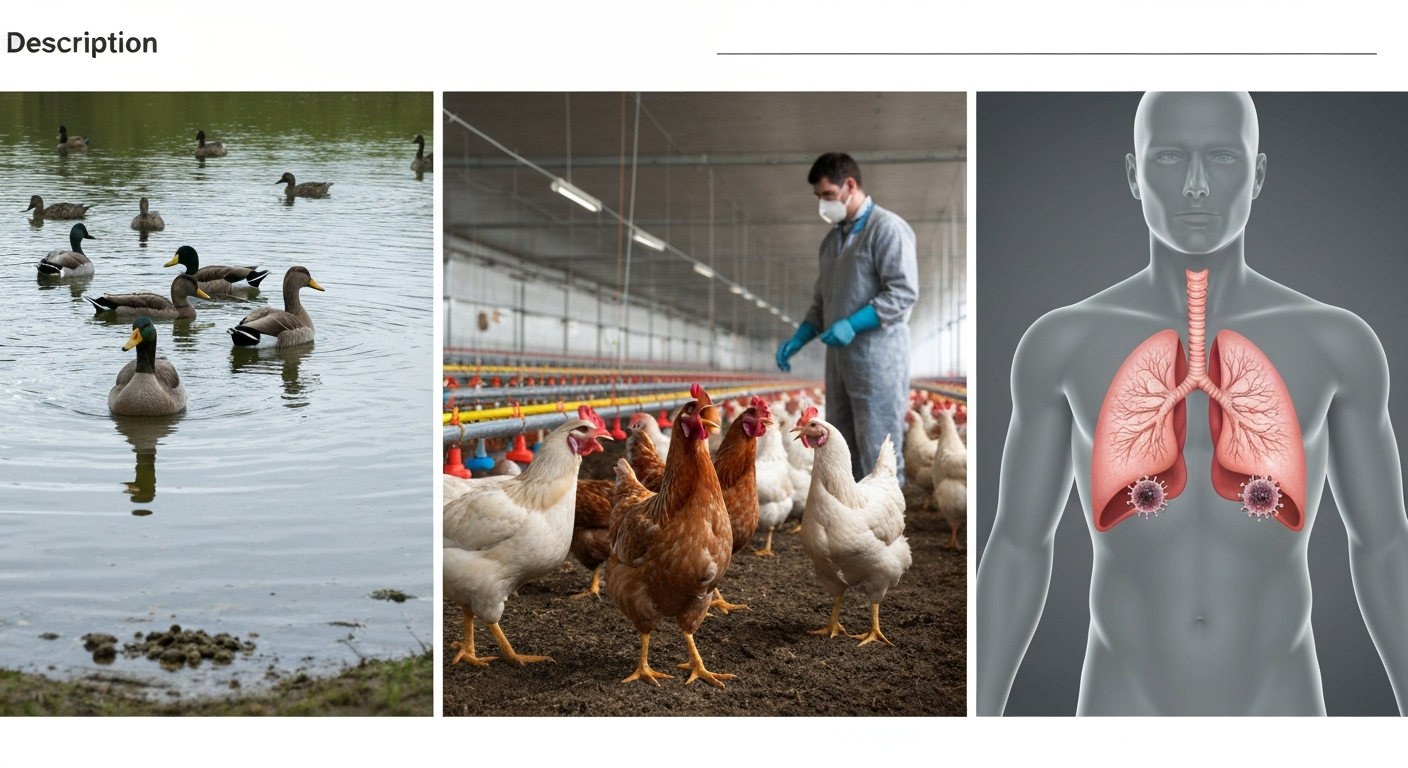
What is avian influenza and which viruses cause it?
Avian influenza, commonly called bird flu, is caused by influenza A viruses that naturally circulate in wild birds, particularly waterfowl like ducks and geese. These viruses are classified by two surface proteins: hemagglutinin (H) and neuraminidase (N). The subtypes most relevant to human health right now are H5N1, H5N6, H7N9, H9N2, and H10N3, among others. Each combination carries different risk profiles for birds, livestock, and people.
A critical distinction is between highly pathogenic avian influenza (HPAI) and low-pathogenic avian influenza (LPAI). Pathogenicity here refers specifically to how deadly the virus is in chickens under standardized testing. HPAI viruses, like H5N1, spread systemically through an infected bird's body and cause catastrophic mortality in poultry flocks, sometimes exceeding 90 percent within days. LPAI viruses, by contrast, typically cause mild or subclinical infection, often limited to the gut and upper respiratory tract, with much lower mortality. HPAI H5N1 is the subtype driving most current concern globally: as of March 31, 2026, WHO continues to report sporadic human infections but confirms there is still no evidence of sustained human-to-human transmission.
How bird flu affects birds: respiratory signs versus systemic disease
The respiratory or gastrointestinal emphasis of avian influenza in birds depends almost entirely on whether you are dealing with an HPAI or LPAI strain, and on the bird species involved.
LPAI in wild waterfowl: mostly intestinal
In wild ducks and geese, low-pathogenic strains preferentially replicate in the intestinal tract. The virus sheds abundantly in feces, which is why fecal-oral transmission through contaminated water and surfaces is the dominant spread pathway for LPAI in wild bird populations. These birds often show no visible illness at all, acting as a silent reservoir. Surveillance programs from the World Organisation for Animal Health (WOAH, formerly OIE) therefore require both oropharyngeal (throat) swabs and cloacal (vent) swabs when testing wild birds, because you genuinely cannot predict which end will yield the virus.
HPAI in poultry: respiratory and systemic involvement
With highly pathogenic strains like H5N1 or H5N8, the picture changes dramatically in gallinaceous birds (chickens, turkeys, quail). These viruses replicate efficiently in both respiratory tissues and the gastrointestinal tract, and experimental studies have found oropharyngeal shedding that is often equal to or greater than cloacal shedding in chickens and turkeys infected with recent H5Nx HPAI strains. Pathogenicity and Transmission of H5 and H7 Highly Pathogenic Avian Influenza Viruses in Mallards, Journal of Virology (peer‑reviewed) reports substantial oropharyngeal shedding in ducks and other species, often equaling or exceeding cloacal shedding Pathogenicity and Transmission of H5 and H7 Highly Pathogenic Avian Influenza Viruses in Mallards — Journal of Virology (peer‑reviewed). In the field, this means infected poultry shed virus from their mouths and breath, not just their droppings. The clinical signs in affected flocks reflect this broader tissue invasion: birds show respiratory distress (labored breathing, nasal discharge, coughing), neurological symptoms, hemorrhaging, sudden death, and a dramatic drop in egg production. The disease progresses so fast in HPAI outbreaks that many birds die before obvious respiratory signs fully develop, which is part of what makes it so alarming to farmers and veterinarians.
- Sudden death with little warning in previously healthy flocks
- Respiratory distress: open-mouth breathing, coughing, nasal discharge, and rattling sounds
- Swollen head, face, and wattles due to fluid accumulation (edema)
- Neurological signs: incoordination, tremors, twisted neck (torticollis)
- Cyanosis (blue discoloration) of the comb, wattles, and feet from poor circulation
- Sharp drop in egg production, or soft-shelled and deformed eggs
- Watery diarrhea, particularly in LPAI infections and in waterfowl
The underlying biology explains the difference. Avian influenza viruses preferentially bind to alpha-2,3-linked sialic acid receptors. These receptors are densely distributed in bird intestinal tissue, which is why intestinal replication is common across subtypes. However, HPAI H5 viruses have also evolved efficient binding and replication in respiratory tissues of gallinaceous birds. This dual tropism is a key reason why HPAI outbreaks in poultry are so devastating and difficult to contain.
How bird flu affects humans: respiratory involvement, disease progression, and severity
When avian influenza does cross into humans, it tends to behave very differently from a seasonal flu infection. Most human cases result from direct or close contact with infected birds or contaminated environments, and the disease skews toward the lower respiratory tract rather than the upper airways. This distinction matters enormously for both clinical management and transmission risk.
Why lower respiratory disease dominates in humans
Remember the receptor biology mentioned above: avian influenza viruses bind alpha-2,3-linked sialic acids. In humans, these receptors are sparse in the nose and throat (upper respiratory tract) but abundant in the deep lungs and in the conjunctiva of the eye. Human seasonal influenza strains, by contrast, prefer alpha-2,6-linked sialic acids, which are plentiful in the upper respiratory tract, making seasonal flu spread easily from person to person via coughs and sneezes. Avian strains' preference for deep lung receptors is a double-edged feature: it partly explains why human-to-human transmission of bird flu remains inefficient, but also why, when humans do get infected, the disease can progress rapidly to severe pneumonia.
Clinical presentation and progression
According to WHO and CDC guidance, human infections with avian influenza A(H5) and related subtypes can present in several ways: conjunctivitis alone (especially with some H7 subtypes), mild upper respiratory illness, gastrointestinal symptoms such as diarrhea and vomiting, encephalitis in rare cases, or, most seriously, rapidly progressive pneumonia leading to ARDS and multi-organ failure. Clinical case series of H5N1 and H7N9 in humans consistently show a pattern of fever and lower respiratory symptoms appearing within two to five days of exposure, followed by rapid deterioration in a significant proportion of patients. H5N1 carries one of the highest case-fatality ratios of any influenza virus ever documented in humans. H7N9 cases in China also showed predominantly lower respiratory tract disease, with prolonged viral RNA detection: median viral shedding lasted around 15 to 17 days, with many patients remaining positive for more than 20 days, and lower respiratory specimens like endotracheal aspirates often carried higher viral loads than upper-airway swabs in severe cases.
CDC guidance for clinicians specifically recommends considering avian influenza in any patient presenting with acute respiratory illness or conjunctivitis who has had relevant animal exposure, whether on a farm, at a live poultry market, or through contact with wild birds. Complications to watch for include pneumonia, ARDS, secondary bacterial infections, and multi-organ failure. This is not seasonal flu. The clinical urgency is real, even if the population-level risk from current circulating strains remains low.
Testing and diagnosis in humans
For suspected avian influenza cases in humans, RT-PCR (reverse transcription polymerase chain reaction) or other nucleic acid amplification tests (NAATs) are the diagnostic gold standard. CDC's interim health advisory (HAN00506) for HPAI A(H5N1) recommends clinicians collect both respiratory specimens and conjunctival swabs when ocular symptoms are present, and to notify public health authorities within 24 hours. For mild cases, nasopharyngeal and oropharyngeal swabs are the primary samples. For severe disease, lower respiratory specimens including sputum, tracheal aspirates, or bronchoalveolar lavage fluid often yield higher viral loads and are strongly recommended alongside upper airway samples.
Transmission routes: how bird flu moves from birds to people
Understanding how avian influenza spreads is essential for anyone working on farms, handling poultry, or trying to make sense of the broader public health picture. The three main transmission routes are zoonotic transfer (animal to human), droplet spread, and fomite (surface) contamination. Airborne/aerosol spread also deserves its own honest discussion.
Zoonotic transfer: the primary pathway into humans
Bird flu is a zoonotic disease, meaning it transfers from animals to humans rather than primarily spreading between people. The overwhelming majority of documented human cases have involved direct or close contact with infected live or dead poultry, their secretions, droppings, or contaminated environments such as live poultry markets. Activities that carry the highest documented risk include handling sick or dead birds without protective equipment, slaughtering or processing infected poultry, and working in environments with heavy aerosolized fecal or respiratory matter from infected flocks. As of March 2026, WHO continues to classify the overall public health risk from current avian influenza strains as low for the general population, but elevated for people with direct, unprotected exposure to infected animals.
Droplet transmission and close-range spread
Respiratory droplets generated when infected birds cough, sneeze, or breathe can carry virus directly to a human's eyes, nose, or mouth if that person is in close proximity, typically within one to two meters. This is the most plausible route for many farm-related human cases. Some H5N1 infected poultry shed virus heavily via oropharyngeal secretions, meaning simply being close to sick birds in an enclosed space creates meaningful exposure. For humans infecting other humans, there have been documented household clusters, particularly in H5N1 and H7N9 outbreaks, suggesting limited person-to-person droplet transmission is possible. However, secondary attack rates have been consistently very low and no cluster has ever led to sustained community spread.
Airborne and aerosol exposure
Whether bird flu is truly airborne in the strict sense is an important and frequently misunderstood question. For a focused explanation of whether bird flu is airborne or primarily spread by droplets, see is bird flu airborne or droplet. See Is bird flu airborne for humans for a concise, evidence-based explanation of airborne, droplet, and aerosol risks to people. For a focused discussion of airborne versus droplet transmission, see is bird flu airborne. Aerosol particles smaller than five microns can remain suspended in air for extended periods and travel further than large droplets. In environments with heavy concentrations of infected birds, such as commercial poultry houses during active outbreaks, aerosolized virus in fecal dust and respiratory secretions is a plausible exposure source. However, wild-type H5N1 strains have not demonstrated efficient aerosol transmission between mammals in experimental studies. Ferret transmission studies showed that wild-type H5N1 did not spread via airborne routes, though laboratory-adapted variants with specific mutations did achieve droplet/aerosol transmission in ferrets, demonstrating that this capacity could arise through mutation but is not a property of current circulating strains. For practical purposes, this is why high-filtration respiratory protection (N95/FFP2 respirators) is recommended for workers in high-exposure environments rather than standard surgical masks alone.
Fomite contamination
Fomites are surfaces or objects contaminated with infectious material. Avian influenza virus can survive on surfaces including feed troughs, equipment, clothing, vehicles, and even soil for varying periods depending on temperature and humidity. Touching a contaminated surface and then touching your eyes, nose, or mouth is a realistic exposure pathway, particularly for farm workers and live market workers. This is why biosecurity on farms emphasizes cleaning and disinfection of all equipment, strict separation of footwear between farm zones, and handwashing protocols as rigorously as it emphasizes personal protective equipment.
Droplet vs airborne vs fomite: how these routes compare
The table below breaks down the key differences between the three main transmission routes for avian influenza, to help you understand the relative risks and the right protective measures for each.
| Feature | Droplet | Airborne / Aerosol | Fomite (Surface) |
|---|---|---|---|
| Particle size | Large droplets: >5 microns | Small aerosol particles: <5 microns | Virus on solid/liquid surfaces, no particle size applies |
| Distance traveled | Short range: typically within 1-2 meters | Longer range: can travel >2 meters; may linger in enclosed air | Depends on contact with contaminated surface; no airborne travel |
| Duration of infectivity | Minutes (fall quickly due to gravity) | Minutes to hours in enclosed, low-ventilation spaces | Hours to days on surfaces, varies with temperature and humidity |
| Example exposure | Standing close to infected poultry that are coughing or sneezing | Entering a poorly ventilated poultry barn with heavy aerosolized fecal dust | Touching contaminated equipment, cages, or feed troughs, then touching face |
| Role in bird flu spread (birds to humans) | Significant: documented in poultry worker infections | Possible in high-density, enclosed farm environments; not confirmed for human-to-human spread | Significant: especially in live markets and farm settings |
| Key prevention measure | Maintain distance; use face/eye protection around infected birds | N95/FFP2 respirator; adequate barn ventilation; limit time in high-risk airspace | Handwashing; disinfection of surfaces and equipment; dedicated footwear per zone |
Human-to-human spread: what the evidence actually shows
One of the most anxiety-provoking questions people ask is whether bird flu can spread person to person like seasonal flu does. The honest answer is: not efficiently, and not sustainably, based on everything we know through early 2026. Is bird flu a communicable disease? Read a concise explanation of how and when avian influenza spreads between birds and people. For a concise explanation about human transmissibility and what 'contagious' means in this context, see is the bird flu contagious. Historical epidemiological investigations of H5N1 household clusters have shown occasional limited human-to-human transmission events, most likely through very close prolonged contact with a severely ill person. But secondary attack rates and basic reproduction numbers (R0, the average number of people one case infects) for H5N1 in these clusters have been consistently very low, and no cluster has ever progressed into broader community transmission. This is one of the most closely monitored questions in global public health. The moment that changes, every major health authority will respond. For now, the data are reassuring.
Prevention: practical steps for different exposure groups
For the general public
- Avoid direct contact with wild birds, especially sick or dead ones; use gloves and wash hands thoroughly if contact is unavoidable
- Do not handle sick, dying, or dead poultry without protection; report unusual bird deaths to your local agricultural or wildlife authority
- Thoroughly cook poultry and eggs to an internal temperature of at least 74°C (165°F); properly cooked poultry poses no known risk of bird flu transmission
- Follow official guidance from WHO, CDC, or your national health authority during active outbreaks in your area
- Wash hands frequently with soap and water, especially after any contact with birds or their environments
For poultry farmers and agricultural workers
- Implement strict farm biosecurity: restrict visitor access, use dedicated footwear per zone, and disinfect vehicles and equipment entering the property
- Monitor flocks daily for signs of illness, sudden mortality, or drops in egg production and report suspected HPAI immediately
- Use appropriate personal protective equipment (PPE) when handling birds: waterproof gloves, eye protection, and an N95/FFP2 respirator when working in enclosed spaces with potentially infected birds
- Separate wild bird contact points from domestic flock areas; net or cover outdoor ranges during active flyway migration periods if possible
- Follow national veterinary authority protocols for depopulation, carcass disposal, and cleaning and disinfection after any confirmed outbreak
For healthcare workers
- Take a thorough exposure history for any patient with acute respiratory illness or conjunctivitis, including recent animal contact, farm visits, or live poultry market visits
- Implement airborne and contact precautions for suspected avian influenza cases until testing rules it out
- Collect both upper respiratory specimens (nasopharyngeal/oropharyngeal swabs) and conjunctival swabs when ocular symptoms are present; collect lower respiratory specimens for severe or intubated patients
- Notify public health authorities within 24 hours of a suspected case as recommended by CDC HAN00506
- Consult current CDC and WHO guidance on antiviral treatment options, as neuraminidase inhibitors like oseltamivir (Tamiflu) are generally recommended early in suspected cases
Bird flu versus seasonal human influenza: key differences
It is worth being direct about how bird flu and seasonal human flu differ, because the two are often conflated in public conversation. Seasonal influenza viruses have adapted specifically to replicate efficiently in the human upper respiratory tract, which makes them highly contagious via respiratory droplets and aerosols during ordinary social contact. Avian influenza viruses have not made that adaptation, which is precisely why they do not spread easily between people but can cause severe lower respiratory disease when they do infect someone. Seasonal flu kills tens of thousands of people annually worldwide, largely through sheer volume of cases. H5N1 has killed a much smaller total number of people but carries a far higher case-fatality ratio and causes disproportionately severe lower respiratory disease. They are not the same virus, they do not spread the same way, and they require different risk frameworks.
Common myths and misconceptions
One persistent myth is that you can get bird flu from eating properly cooked chicken or eggs. This is not supported by evidence. Thorough cooking destroys influenza viruses. The risk from food is associated with handling raw, contaminated poultry without protective measures, not with consuming cooked products. Another common misconception is that bird flu is currently spreading between people like seasonal flu. It is not. As of early 2026, all major health agencies confirm no sustained human-to-human transmission. A third myth is that all bird flu is highly dangerous to humans: many avian influenza subtypes cause only mild or no illness in humans, and most documented human cases have involved intensive, unprotected exposure to infected birds.
Staying updated on current outbreaks
The avian influenza landscape changes regularly. New subtypes emerge, geographic spread shifts with migratory bird seasons, and the risk profile for specific regions can change quickly. WHO's influenza at the human-animal interface reports are updated regularly and are the most authoritative source for current zoonotic risk assessments. CDC's HPAI response pages and the WOAH global animal disease reporting system (WAHIS) provide real-time outbreak data for both human and poultry cases. For anyone whose work or geography puts them in higher contact with birds, checking these sources periodically is a practical, low-effort habit worth developing.
FAQ
Is bird flu (avian influenza) primarily a respiratory disease in birds and humans?
Short answer: Often yes in humans and in many poultry outbreaks, but it depends on the virus subtype and host. Some avian influenza viruses replicate mainly in bird intestines and are shed in feces (low‑pathogenic strains in waterfowl), while many highly pathogenic H5/H7 viruses replicate in respiratory tissues and are shed from the oropharynx in poultry. In humans, zoonotic avian viruses commonly cause lower respiratory disease (pneumonia, ARDS) and sometimes conjunctivitis or mild upper respiratory illness (WHO; CDC; WOAH). (WHO: https://www.who.int/en/news-room/fact-sheets/detail/influenza-(avian-and-other-zoonotic), CDC: https://www.cdc.gov/flu/avianflu/signs-symptoms.htm)
How does bird flu typically transmit from birds to people?
Zoonotic transfer usually occurs through close contact with infected birds or contaminated environments (handling, slaughtering, cleaning infected coops), exposure to respiratory secretions, feces, or contaminated surfaces (fomites). Transmission can occur via droplets/aerosols during procedures that generate spray or close face contact, and via the conjunctiva. Eating properly cooked poultry or eggs is not a reported transmission route. (WHO practical guidance: https://www.who.int/publications/i/item/B09116)
Is bird flu airborne in humans (can it spread through aerosols like measles)?
Current evidence indicates most zoonotic avian influenza viruses do not transmit efficiently via sustained airborne (long‑range aerosol) spread between humans. Limited, short chains of human‑to‑human transmission have occurred historically, but sustained community transmission has not been documented for recent zoonotic strains as of March 2026 (WHO). Experimental work shows airborne transmissibility can arise after specific mutations, so monitoring continues. (WHO summary: https://www.who.int/publications/m/item/influenza-at-the-human-animal-interface-summary-and-assessment--31-march-2026; ferret study: https://pmc.ncbi.nlm.nih.gov/articles/4810786/)
What's the difference between droplet, airborne (aerosol), and fomite transmission?
Droplet: larger respiratory droplets (>~5 µm) travel short distances (usually <1–2 m) and deposit on mucous membranes; typical for many respiratory infections. Airborne/aerosol: tiny particles (<5 µm) that can remain suspended and travel farther, causing infection when inhaled. Fomite: indirect transfer from contaminated surfaces then touching face/eyes/mouth. Relative risk depends on virus, dose, activity (e.g., coughing, slaughtering) and environment (ventilation). (WHO/CDC guidance; see table below.)
Comparison table: Droplet vs Airborne (aerosol) vs Fomite transmission
- Typical particle size: Droplet (>~5 µm); Airborne (<~5 µm); Fomite (virus on surface) - Distance traveled: Droplet short (<1–2 m); Airborne longer and may disperse indoors; Fomite indirect via hands - Environment importance: Less for droplets; high for airborne (poor ventilation increases risk); high-contact surfaces for fomites - Examples for bird flu: Droplet—close contact with infected birds; Airborne—aerosol generation during slaughter or lab procedures (potential but not primary for wild strains); Fomite—contaminated boots, clothing, equipment - Prevention emphasis: Masks + distancing for droplets; N95/respirators + ventilation for aerosols; hand hygiene + surface disinfection for fomites (Sources: WHO practical guidance; CDC specimen guidance.)
How contagious is bird flu between humans?
Contagiousness is generally low. Zoonotic avian influenza viruses have caused sporadic human infections and occasional limited secondary transmission (household clusters), but sustained human‑to‑human spread has not been documented for recent strains through March 2026. Secondary attack rates observed historically are low compared with seasonal human influenza. Continued surveillance is essential. (WHO human‑animal interface: https://www.who.int/publications/m/item/influenza-at-the-human-animal-interface-summary-and-assessment--31-march-2026; EID investigation paper.)
Next Article
Is Bird Flu Airborne for Humans? Transmission, Symptoms, and Prevention
Clear answer on whether bird flu is airborne for humans, plus symptoms, food safety, and prevention steps.