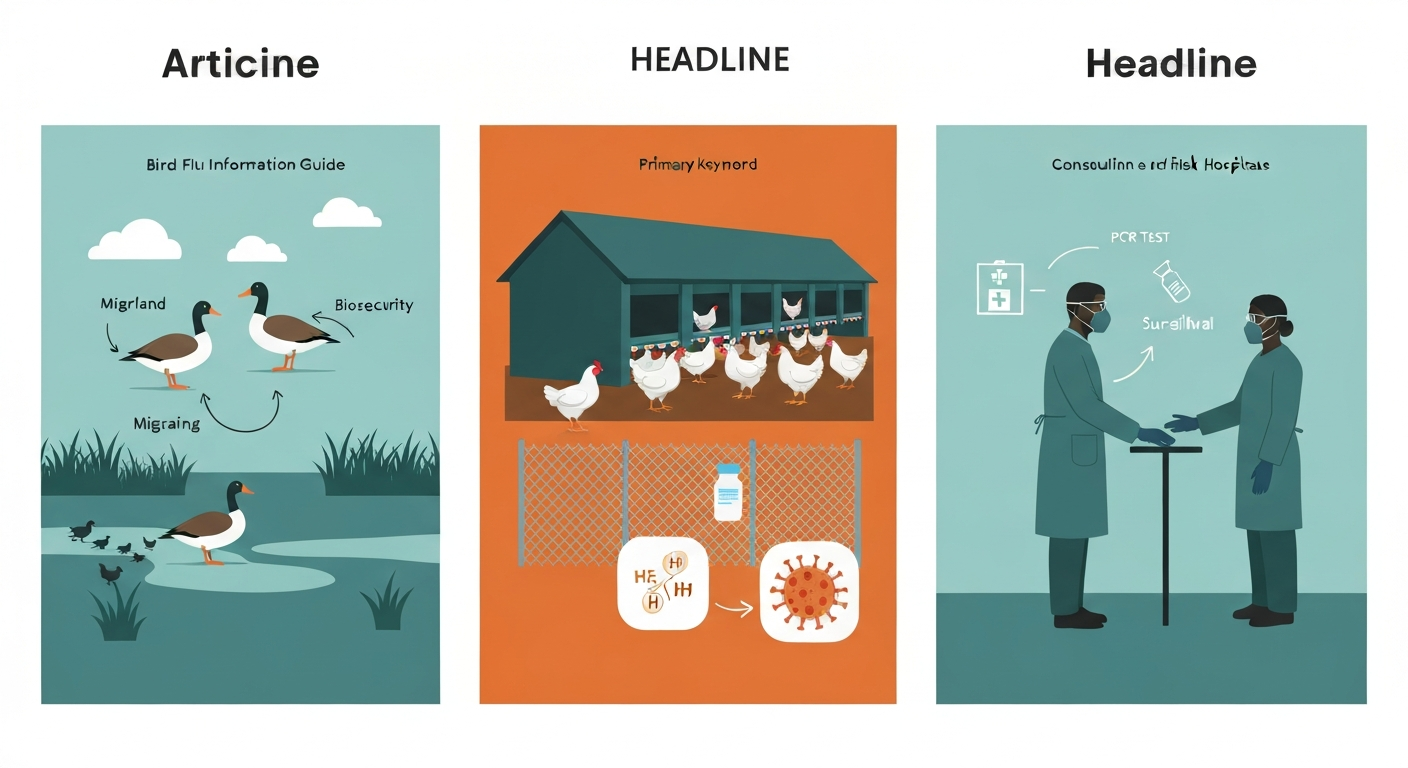
Bird flu is the common name for avian influenza, a group of infections caused by influenza A viruses that primarily circulate in birds. Wild aquatic birds such as ducks, geese, and shorebirds carry these viruses naturally, usually without getting sick. Problems arise when the virus spills into domestic poultry, where certain strains cause devastating illness, or occasionally into people who have close unprotected contact with infected animals. Most people will never be directly exposed to bird flu, but understanding what it is, how it works, and what the actual risks are helps separate genuine concern from misinformation. For a concise explanation of what is bird flu and how it is transmitted, see the section on how bird flu spreads, transmission routes, and real risk factors what is bird flu and how is it transmitted. For a clear overview of what bird flu is and how people typically become infected, see what is bird flu and how do you get it. For a clear, concise definition and overview, see our explanation of what is bird flu disease.
What Does Bird Flu Mean: Clear Guide for Families & Farmers

What 'bird flu' actually means, for the public and for farmers
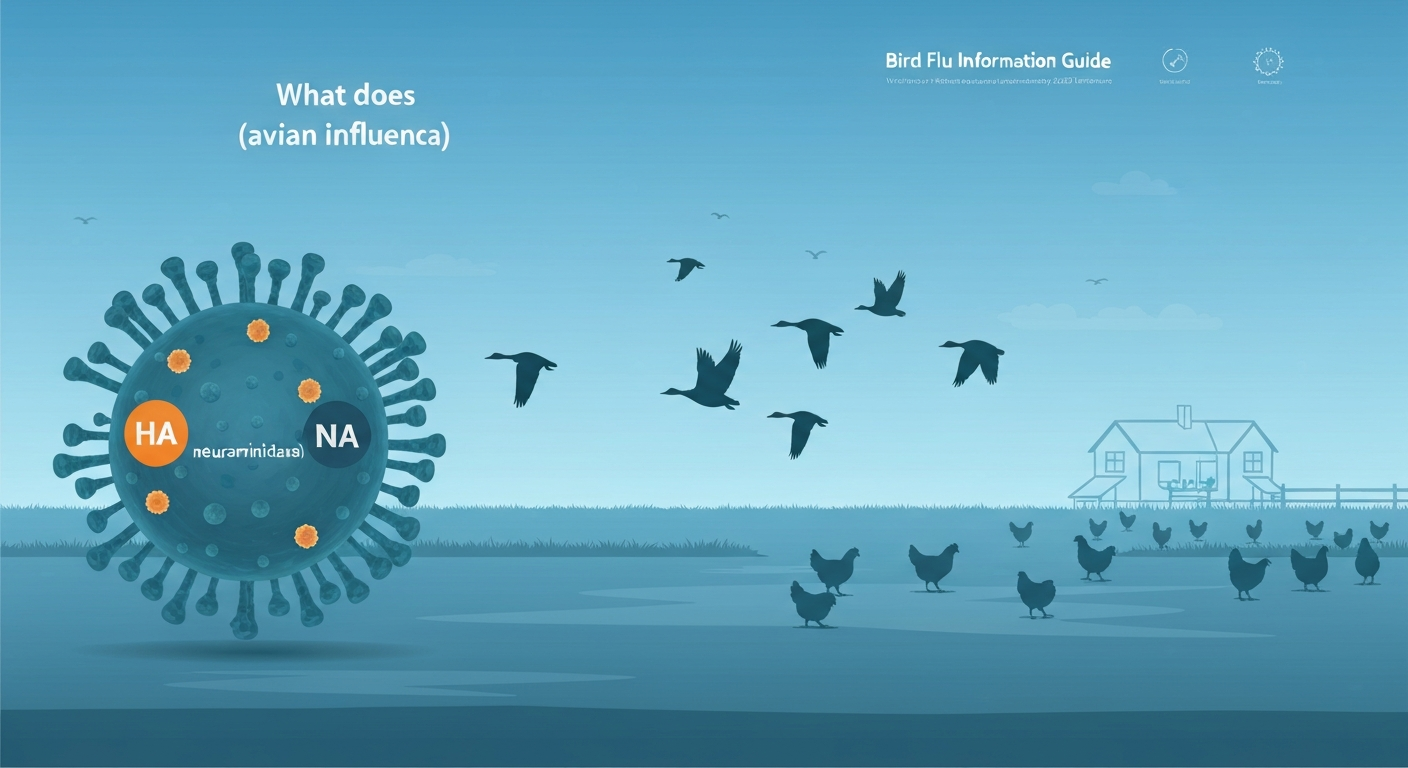
The World Health Organization defines avian influenza as infection of birds caused by influenza A viruses, with the caveat that some of those viruses can occasionally infect mammals, including humans and other animals. The phrase 'bird flu' covers a large family of viruses, not a single disease. Each strain is named by two surface proteins: haemagglutinin (HA, numbered H1 through H16) and neuraminidase (NA, numbered N1 through N9). That is why you hear names like H5N1, H7N9, or H9N2, they are essentially postal addresses describing which version of each protein the virus carries.
For the general public, the most practical distinction is between Low Pathogenicity Avian Influenza (LPAI) and Highly Pathogenic Avian Influenza (HPAI). Pathogenicity here means the severity of disease the virus causes in chickens specifically, it is a veterinary classification, not a direct measure of risk to humans. LPAI strains often cause mild or no signs in birds and may go unnoticed on a farm. HPAI strains, particularly H5 and H7 subtypes, can kill entire flocks within days.
For farmers, the LPAI/HPAI distinction is critical for legal and regulatory reasons. In most countries, HPAI is a notifiable disease, meaning a confirmed detection triggers mandatory reporting, movement restrictions, and in most cases the controlled culling of affected and exposed flocks. LPAI detections of H5 or H7 strains are also reportable internationally through WOAH (the World Organisation for Animal Health, formerly OIE) because these subtypes have the documented capacity to mutate into HPAI forms.
How avian influenza viruses work, and why they are different from your seasonal flu
All influenza A viruses share the same basic architecture: a segmented, negative-sense RNA genome wrapped in an envelope studded with HA and NA proteins. HA is the 'key' that lets the virus unlock and enter host cells, while NA is the 'exit tool' that allows newly formed virus particles to escape and infect neighboring cells. Because the genome comes in eight separate segments, two different influenza viruses infecting the same cell can shuffle their genetic material, a process called reassortment, and produce an entirely new hybrid strain. This is one reason influenza surveillance never stops. For a concise explanation of how does bird flu work, see the section on how avian influenza viruses work in this article.
The most important biological difference between avian and human flu viruses is receptor preference. Bird influenza viruses are designed to bind to a receptor called alpha-2,3-linked sialic acid, which is abundant in bird gut and respiratory tissue. Human seasonal flu viruses prefer alpha-2,6-linked sialic acid receptors, which dominate the human upper respiratory tract. This receptor mismatch is the main molecular barrier that prevents most avian strains from easily infecting people or spreading between them. It is also why, when human infections do occur, they tend to result from heavy, direct exposure rather than casual contact.
Seasonal flu, the strains circulating in human populations every winter, has already adapted to spread efficiently from person to person. Avian influenza viruses generally have not made that adaptation. That is the fundamental reason experts watch bird flu so carefully: a reassortment event or a series of mutations that shifted receptor preference could, in theory, create a strain with pandemic potential. We have seen this before, the 2009 H1N1 pandemic originated from a reassortment between avian, human, and swine influenza segments. Surveillance is the early-warning system against exactly that scenario.
How bird flu spreads, transmission routes and real risk factors
Wild aquatic birds are the primary reservoir for the full range of influenza A subtypes. They shed virus in their feces and respiratory secretions, contaminating water bodies, wetlands, and soil along migration routes. Domestic poultry most often become infected through contact with wild birds or their droppings, on shared water sources, through open ventilation in sheds, or via equipment and clothing that moves between environments.
Human infections have followed a consistent epidemiological pattern: almost all confirmed cases involve direct or close unprotected contact with infected live or dead birds, or with heavily contaminated environments such as live poultry markets. Documented routes include inhalation of virus-laden droplets or dust, contact of the eyes, nose, or mouth with contaminated hands or surfaces (fomites), and handling sick or dead birds without protective equipment. Influenza A viruses can survive in cold water for weeks and on surfaces for hours to days depending on temperature and humidity, which is why environmental contamination at live markets or flooded farms is a recognized risk.
Sustained human-to-human transmission of avian influenza viruses has been documented only rarely and in limited clusters, most often in household settings involving prolonged, close, unprotected contact with a severely ill person. It has not produced self-sustaining chains of transmission in any community to date. That boundary is precisely what distinguishes the current situation from a pandemic.
- Handling live or dead infected poultry without gloves or a face covering
- Visiting live poultry markets, particularly in areas with active HPAI circulation
- Cleaning or working in environments heavily soiled with bird droppings
- Close contact with sick poultry on farms without appropriate personal protective equipment (PPE)
- Swimming or working in water contaminated by infected wild birds (a lower but documented risk)
- Unprotected contact with an infected person in a household setting (rare)
Symptoms and disease progression in poultry
What farmers actually see depends heavily on whether they are dealing with an LPAI or HPAI strain. LPAI infections can be easy to miss: birds may show mild respiratory signs such as sneezing or nasal discharge, a moderate drop in egg production, and slightly ruffled feathers. Some flocks show no visible signs at all, which is why routine surveillance testing matters even when birds appear healthy.
HPAI is a different picture entirely. Onset is often sudden and dramatic. Farmers can see apparently healthy birds one morning and find a significant proportion dead by evening. Classic HPAI signs include severe respiratory distress, swelling of the head and face, discoloration and hemorrhaging of the comb and wattles (the fleshy parts around the head), neurological signs such as tremors or loss of coordination, watery diarrhea, and near-complete cessation of egg production. Post-mortem findings include hemorrhages in multiple organs and severe lesions in the trachea and lungs. Any unexplained rapid mortality event in a flock should be treated as a potential HPAI incident until proven otherwise.
- LPAI signs: mild nasal discharge, sneezing, reduced egg production, slight lethargy
- HPAI signs: sudden high mortality, severe respiratory distress, head and facial swelling
- Comb and wattle discoloration or blue-purple hemorrhaging
- Watery or greenish diarrhea
- Neurological signs: head tilting, loss of balance, tremors
- Complete or near-complete drop in egg production
- Sudden unexplained death with no prior clinical signs in some birds
Symptoms and clinical progression in people
Human infection with avian influenza viruses does not follow a single template. For a clear, plain-language explanation of what bird flu does in people and animals, see the guide what does bird flu do. The clinical picture varies substantially depending on which strain is involved, the level of exposure, and the individual's health status. The incubation period, the time between exposure and first symptoms, is typically two to five days but has been reported up to ten days in some H5N1 cases.
At the milder end of the spectrum, some people exposed to H9N2 or certain H7 strains develop only conjunctivitis (eye inflammation and discharge) or mild upper respiratory symptoms indistinguishable from a common cold or ordinary seasonal flu: fever, sore throat, muscle aches, and cough. These cases are sometimes only identified through active surveillance or contact tracing following a known exposure.
At the severe end, H5N1 and H7N9 infections have caused rapidly progressing lower respiratory disease. Patients typically develop high fever, cough, and shortness of breath within the first few days, then deteriorate into viral pneumonia, acute respiratory distress syndrome (ARDS), and in the worst cases, multi-organ failure. The historical case-fatality proportion for laboratory-confirmed H5N1 human infections has been roughly 50%, though this figure reflects a bias toward detecting severe cases, milder infections are less likely to be tested and confirmed. H7N9, which emerged in China in 2013, similarly caused severe lower-respiratory illness in many confirmed cases. For a concise summary of the health, agricultural, and economic impacts, see what are the effects of bird flu. See WHO's 'Overview and background of avian influenza A(H7N9)' for details on the 2013 emergence in China and its association with severe human lower‑respiratory disease blank" rel="noopener noreferrer">Overview and background of avian influenza A(H7N9) — WHO).
If you have had direct contact with sick or dead birds and develop any respiratory symptoms, fever, or eye inflammation within ten days of that exposure, seek medical evaluation promptly and tell the healthcare provider about the potential exposure. Early antiviral treatment with oseltamivir (Tamiflu) is recommended as soon as avian influenza infection is suspected, do not wait for laboratory confirmation before starting treatment in a high-risk exposure scenario.
Bird flu vs seasonal flu, and bird vs human symptoms compared
| Feature | Avian Influenza (Bird Flu) | Seasonal Human Influenza |
|---|---|---|
| Causative virus | Influenza A (avian subtypes, e.g., H5N1, H7N9, H9N2) | Influenza A and B (human-adapted subtypes, e.g., H1N1, H3N2) |
| Primary host | Wild aquatic birds; domestic poultry | Humans |
| Receptor preference | Alpha-2,3-linked sialic acid (bird tissue) | Alpha-2,6-linked sialic acid (human upper airway) |
| Human-to-human spread | Rare and limited; no sustained community transmission confirmed | Efficient; spreads readily in communities each winter |
| How humans are infected | Direct contact with infected birds or contaminated environments | Respiratory droplets and aerosols from infected people |
| Typical severity in humans | Ranges from mild/conjunctivitis to severe pneumonia and ARDS | Usually mild to moderate; severe in elderly and immunocompromised |
| Case-fatality (humans) | H5N1 historically ~50% in confirmed cases; varies by subtype | Seasonal average under 0.1% in high-income settings |
| Vaccine for humans | Candidate vaccines exist; not in routine use as of 2026 | Annual vaccine available and recommended |
| Antiviral treatment | Oseltamivir (neuraminidase inhibitors) recommended | Oseltamivir and other antivirals effective |
| Pandemic risk | Potential if sufficient mutations occur; closely monitored | Existing pandemic strains already circulate annually |
| Symptom / Sign | In Poultry (HPAI) | In Humans (H5N1 / H7N9) |
|---|---|---|
| Fever | Not applicable (birds are homeothermic differently) | High fever (often above 38°C / 100.4°F) |
| Respiratory signs | Gasping, rattling, nasal discharge, tracheal lesions | Cough, shortness of breath, progressing to pneumonia |
| Eye involvement | Periorbital swelling and hemorrhage | Conjunctivitis reported in H7 subtype cases |
| Neurological signs | Head tilting, tremors, loss of coordination | Altered consciousness in severe cases |
| Gastrointestinal signs | Watery or greenish diarrhea | Diarrhea reported in some H5N1 cases |
| Visible physical changes | Swollen head/face, blue-purple comb/wattles | No equivalent external sign |
| Egg production | Severe drop or complete cessation | Not applicable |
| Mortality | Can be near 100% in a flock within days (HPAI) | Historically ~50% in confirmed H5N1 cases |
| Onset speed | Can be sudden with little warning | Usually 2–5 days after exposure |
Public health and agricultural consequences, outbreaks, culling, trade, and economics
The consequences of an HPAI outbreak extend well beyond the birds that get sick. Since the mid-2000s, HPAI H5N1 clade 2.3.4.4b has triggered the largest and most geographically widespread avian influenza events ever recorded, affecting poultry industries across Asia, Europe, Africa, and the Americas. The economic damage runs into billions of dollars per major outbreak wave, driven by direct flock losses, culling of exposed birds as a control measure, and the suspension of poultry exports by affected countries.
Culling, the controlled killing of infected and in-contact flocks, remains the primary tool for stopping HPAI spread in poultry. It is a difficult reality for farmers and welfare-conscious observers alike, but the alternative, allowing the virus to spread unchecked, creates far larger losses and increases the period during which human exposure risk is elevated. Governments typically compensate producers for culled birds, though compensation levels and timeliness vary widely by country.
Trade impacts are immediate and significant. Many importing countries apply automatic bans on poultry and poultry products from regions or countries reporting HPAI, even if the products pose no demonstrable food safety risk to consumers (cooked poultry is safe to eat, more on that below). These trade restrictions can persist for months after an outbreak is controlled, compounding economic losses for producers and exporters.
From a public health standpoint, sustained HPAI outbreaks in poultry increase the population of infected birds and therefore the cumulative exposure risk for farm workers, veterinarians, and people who handle poultry in markets. This is why outbreak containment in animals is also a human health priority. The Hong Kong 1997 H5N1 outbreak, the first confirmed large-scale spillover into humans from poultry, was controlled in part by the emergency culling of the entire live poultry population in Hong Kong at the time, approximately 1.5 million birds.
Testing and diagnosis, what happens for birds, what happens for people
Diagnosing bird flu in poultry
When a farmer or veterinarian suspects avian influenza, whether because of sudden mortality, classic HPAI signs, or an unusual drop in egg production, the standard first step is to collect samples and submit them to an approved veterinary diagnostic laboratory. WOAH guidelines specify oropharyngeal (throat) and cloacal swabs as the primary samples from live birds, while post-mortem examination adds tissue samples from the lungs, spleen, and brain. Real-time reverse transcription polymerase chain reaction (RT-PCR) is the gold-standard laboratory test: it detects influenza A RNA specifically and can identify H and N subtypes. Results from an experienced laboratory can come back within 24 to 48 hours. Presumptive positive results for HPAI typically trigger immediate preliminary control measures even before final confirmation, because early action is critical to containment.
Farmers should not wait for certainty before calling their veterinarian or national animal health authority. Unexplained rapid death in more than a small percentage of a flock, or any combination of the classic HPAI signs listed above, warrants an immediate call. In most countries there are hotlines or regional veterinary services specifically for this purpose, and reporting is legally required for HPAI-suspect events in notifiable disease frameworks.
Diagnosing bird flu in people
For human cases, WHO and CDC protocols recommend collecting nasopharyngeal swabs (from the back of the nasal cavity) or combined nasal and throat swabs as early as possible after symptom onset. When a patient has severe lower-respiratory disease, lower respiratory tract specimens, bronchoalveolar lavage or endotracheal aspirate, are preferred because virus concentrations may already be declining in the upper airway by the time the patient is sick enough to be hospitalized. RT-PCR is again the standard diagnostic test. Virus culture, which can provide additional detail about the strain, requires a high-biosafety-level laboratory and is not performed routinely.
Standard rapid influenza diagnostic tests (the quick swab tests used in clinics for seasonal flu) are generally not sensitive enough to reliably detect avian influenza infections and should not be used to rule out avian flu in a high-risk exposure situation. A negative rapid test in someone with recent bird exposure and compatible symptoms does not clear them, RT-PCR testing through a public health laboratory is needed.
When to seek testing as a member of the public: if you have had direct contact with sick or dead birds (wild or domestic), visited a live poultry market in an area with active HPAI, or had close unprotected contact with a confirmed human case, and you develop fever, respiratory symptoms, or conjunctivitis within ten days, call your local health authority or healthcare provider before walking into a clinic. Alerting them in advance allows them to take appropriate precautions to protect other patients and staff, and to arrange the right specimens and tests.
Practical steps for households and farms
For most people, everyday risk from bird flu is very low. You cannot get it from eating properly cooked poultry or eggs, the influenza virus is inactivated by normal cooking temperatures (a core internal temperature of 74°C / 165°F). You cannot get it from a neighbor's chicken if you are not handling the birds yourself. The risk is concentrated in people with direct animal contact.
For backyard flock owners and commercial poultry farmers, biosecurity is the single most effective prevention tool available. Key measures include controlling access to bird housing, preventing contact between domestic flocks and wild birds (especially waterfowl), using dedicated footwear and clothing for the bird area, disinfecting equipment that moves between farms, and reporting unusual illness or mortality immediately. These practices are not just good animal husbandry, they are the front line of zoonotic disease prevention.
- Wear gloves and a well-fitted mask (N95 or equivalent) when handling sick or dead birds
- Avoid touching your face, eyes, or mouth while working with poultry
- Wash hands thoroughly with soap and water after any bird contact
- Do not allow wild waterfowl to access domestic bird enclosures, feed, or water sources
- Clean and disinfect coops, equipment, and footwear regularly using products effective against influenza viruses
- Keep records of flock health and report unusual mortality to your veterinarian or animal health authority promptly
- Cook poultry and eggs to a safe internal temperature — do not consume raw or undercooked poultry from affected areas
- If you work with poultry and develop flu-like symptoms, inform your healthcare provider about your occupational exposure
On the question of vaccines for humans: as of mid-2026, there is no bird flu vaccine in routine use for the general public. Several candidate H5N1 vaccines have been developed and stockpiled by national health authorities as a precautionary measure, and antigen-matched vaccines can be accelerated into production if a pandemic-potential strain emerges. Annual seasonal flu vaccination does not protect against avian flu strains, but it is still recommended for farm workers and others with regular animal exposure, partly to reduce the theoretical risk of co-infection with both human and avian strains simultaneously, which could facilitate reassortment.
For anyone wanting to track current outbreak data, the WHO's Global Influenza Programme and WOAH's WAHIS (World Animal Health Information System) publish regularly updated outbreak maps and situation reports. FAO's EMPRES-i platform covers animal health events including avian influenza detections globally. These are the most reliable sources for current, evidence-based outbreak information rather than social media or general news coverage, which tends to either underreport or sensationalize depending on the news cycle.
FAQ
What does 'bird flu' (avian influenza) mean in simple terms?
'Bird flu' or avian influenza refers to infections in birds caused by influenza A viruses. These viruses naturally circulate in wild waterfowl and can infect domestic poultry (chickens, turkeys, ducks) and occasionally mammals, including humans. Subtypes are named by two surface proteins (H and N), such as H5N1. Some avian viruses cause mild disease in birds (low pathogenicity), while others cause severe, fast‑spreading disease with high mortality in poultry (highly pathogenic).
How is avian influenza different from seasonal human flu?
Key differences: - Host preference: Avian strains preferentially bind receptors common in bird tissues, while seasonal human influenza prefers receptors in the human upper airway. - Transmission: Seasonal flu spreads efficiently between people via respiratory droplets; most avian strains do not transmit easily between humans and usually require close contact with infected birds or contaminated environments. - Disease patterns: Human seasonal flu typically causes predictable seasonal outbreaks; avian influenza in birds can cause sudden, severe outbreaks in poultry and sporadic human cases. - Risk of change: Avian viruses can reassort or mutate, potentially changing host range or transmissibility, which is why surveillance matters.
Which birds are the main reservoirs and which poultry are at risk?
Wild aquatic birds (ducks, geese, swans, and many shorebirds) are the natural reservoir for most influenza A subtypes. Domestic poultry — especially free‑range or outdoor flocks, backyard chickens, turkeys and ducks — are at risk when infected wild birds or contaminated environments introduce the virus. Commercial flocks can be affected rapidly because of high-density housing.
How do avian influenza viruses infect and spread (mechanisms)?
Influenza A viruses are enveloped RNA viruses with segmented genomes and two key surface proteins (haemagglutinin HA and neuraminidase NA). They attach to host cells via HA binding to sialic acid receptors; receptor type influences host range. Transmission between species can occur by direct contact, environmental contamination (feces, water, dust), or via fomites. Co‑infection of a host with different influenza strains can lead to reassortment of genome segments and creation of novel viruses.
What are the common transmission routes and environmental risks?
Transmission routes include: - Direct contact with infected birds (handling, slaughtering) - Inhalation of droplets, aerosols or dust contaminated by respiratory secretions or feces - Contact with contaminated surfaces, equipment, clothing or footwear (fomites) - Contaminated water, feed, cages or market environments Environmental risks increase with cold temperatures, organic material that protects virus, and places where wild and domestic birds mix (wetlands, live‑bird markets, outdoor farms).
What signs and symptoms occur in infected poultry?
Presentation varies by virus pathogenicity: - Low pathogenic avian influenza (LPAI): may cause mild or no signs, reduced egg production, mild respiratory signs. - Highly pathogenic avian influenza (HPAI): often causes sudden high morbidity and mortality, decreased feed intake, respiratory distress, swollen heads/comb, purple discoloration, diarrhea, drop in egg production and characteristic lesions at necropsy. Rapid reporting to animal health authorities is essential.