
Bird flu (avian influenza) is not a rare, once-in-a-generation event. Countries report outbreaks in birds every single year through global surveillance systems, with hundreds of animal outbreak events recorded each epidemic season and seasonal peaks typically hitting in late winter. Human infections, however, remain genuinely uncommon: since 2003, the WHO has recorded just 997 laboratory-confirmed human cases of the H5N1 strain through March 2026, spread across more than two decades. For the general public, the risk is low. For poultry farmers, dairy workers, and anyone handling sick birds, the picture is more nuanced and worth understanding carefully.
How Often Does Bird Flu Happen: Frequency, Risks, Action

Sarah Chen
30 Jul 2026
What is avian influenza? A plain-language overview
Avian influenza is a family of influenza A viruses that primarily infect birds. The viruses are classified by two surface proteins: hemagglutinin (H) and neuraminidase (N), which is why you hear names like H5N1 or H7N9. Within those subtypes, strains are also ranked by how sick they make poultry. Highly pathogenic avian influenza (HPAI) causes severe, fast-moving disease and high mortality in domestic birds. Low pathogenic avian influenza (LPAI) produces mild or no symptoms in birds but can still pose surveillance concerns. Wild waterbirds, especially migratory ducks, geese, and shorebirds, act as the natural reservoir, carrying the virus across continents without always showing signs of illness. When those birds mix with commercial or backyard poultry, outbreaks can ignite quickly.
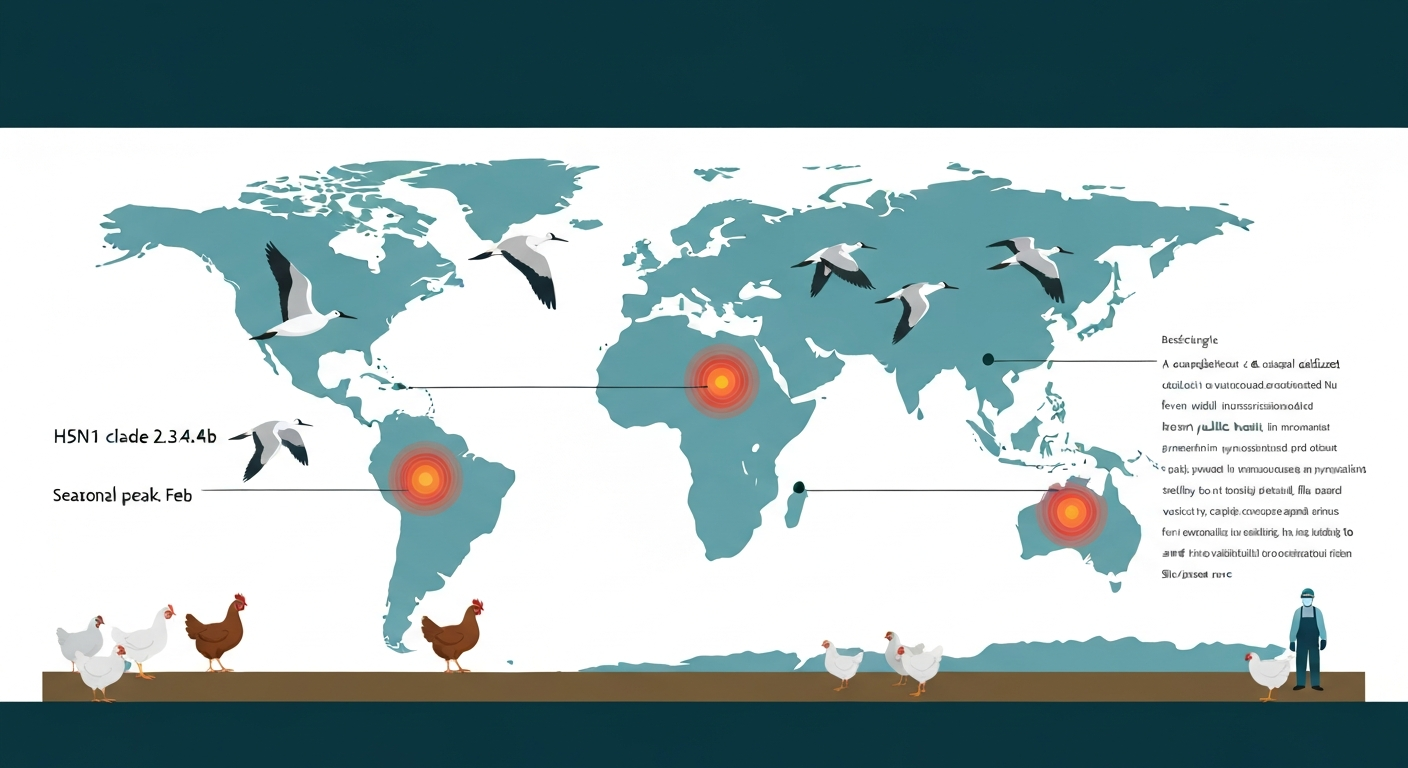
The strain currently dominating global headlines is H5N1 clade 2.3.4.4b, a lineage that has expanded dramatically since 2020. See review: H5N1 Clade 2.3.4.4b: Evolution, Global Spread, and Host Range Expansion, PMC (2025) documenting the clade's geographic and host-range expansion since 2020 Peer-reviewed analyses and WHO/FAO/WOAH risk assessments document that H5N1 clade 2.3.4.4b began expanding globally in 2020, moving from Europe into Africa, Asia, North and South America, and by 2023–2024 was detected in Antarctic birds.. It has spread from Europe and Africa into Asia, North America, South America, and, by 2023 to 2024, even reached Antarctic bird populations. That geographic reach is why you may be hearing more about bird flu now than you did five or ten years ago. For additional background and context, see the bird flu resource titled “the bird flu yeah they tend to do that tf2.”. It does not mean a human pandemic is imminent, but it does mean animal outbreaks are happening at a higher frequency and in more places than before.
How often do outbreaks happen in birds?
The honest answer is: continuously. The World Organisation for Animal Health (WOAH) maintains the World Animal Health Information System (WAHIS), a global database where member countries are required to report animal disease events including avian influenza. Reviewing WAHIS data makes one thing clear: there is no year in recent memory where zero HPAI events were reported worldwide. The cumulative toll on poultry is staggering: WOAH documented the death or culling of over 557 million poultry globally from HPAI between 2005 and 2023 alone. That figure reflects thousands of individual outbreak events across dozens of countries.
The FAO's EMPRES-i surveillance dashboard provides near-real-time outbreak counts and maps. A July 2026 update from FAO reported 209 HPAI outbreak events observed since October 1, 2025, in just one wave of reporting. Wild birds and commercial poultry are both affected, and the scale of a single wave can involve hundreds of flocks across multiple continents within a few months.
Wild birds versus domestic poultry: different dynamics
Wild migratory birds spread the virus along flyways, often without showing obvious symptoms. That makes surveillance in wild populations genuinely difficult. Domestic poultry, by contrast, are highly susceptible to HPAI and typically show rapid, severe disease. Backyard flocks that have incidental contact with wild birds are particularly vulnerable because they lack the biosecurity measures of commercial operations. Once HPAI enters a commercial poultry house, it can move through thousands of birds within days.
Outbreak frequency and human-case rates at a glance
| Metric | Data point | Source / timeframe |
|---|---|---|
| Global poultry deaths or culls from HPAI | Over 557 million birds | WOAH, 2005–2023 |
| Recent HPAI outbreak events (one wave) | 209 events | FAO EMPRES-i, Oct 2025–Jul 2026 |
| Confirmed human H5N1 cases | 997 cases | WHO, 2003–31 March 2026 |
| Human H5N1 deaths | 478 deaths (case fatality ~48%) | WHO, 2003–31 March 2026 |
| U.S. human A(H5) cases in 2024 | 13–17 cases | CDC, 2024 dairy/poultry outbreak |
| H7N9 seroprevalence in poultry workers | ~0.1% (pooled estimate) | Systematic review / meta-analysis |
| H5N1 seroprevalence (general exposed populations) | ~1% or lower (most contexts) | Systematic review / meta-analysis |
| Seasonal outbreak peak (Northern Hemisphere) | February; trough in September | WOAH WAHIS multi-year data |
How often are humans infected, and who is at higher risk?
Human infections are rare relative to the sheer volume of animal outbreaks. Under 1,000 confirmed H5N1 cases over more than 20 years, against a backdrop of thousands of poultry outbreaks per year, tells you something important: the virus does not jump easily from birds to people. Seroprevalence studies, which test blood samples for antibodies that would indicate past infection, consistently find very low rates even in occupationally exposed groups. A pooled meta-analysis found seroprevalence for H7N9 in poultry workers at roughly 0.1%, and pooled H5N1 estimates in most exposed populations sit at around 1% or lower.
That said, risk is not evenly distributed. Occupational exposure is the dominant driver of human cases. The groups who face the highest (though still low in absolute terms) risk are:
- Poultry farm workers, especially those involved in depopulation (culling) of infected flocks
- Dairy farm workers in countries experiencing H5N1 spread in cattle (the 2024 U.S. outbreak infected at least 13–17 workers linked to dairy herds and poultry operations)
- Live bird market workers and vendors in regions where markets mix multiple species
- Veterinarians and animal health inspectors handling sick or dead birds
- Hunters and wildlife rehabilitators with frequent contact with wild waterfowl
- People in households where live poultry are kept in close quarters
The general public, including people who visit farms, birdwatch, or encounter a dead bird occasionally, faces a very low risk. Agencies including the ECDC and UKHSA have repeatedly assessed the current H5 2.3.4.4b viruses as posing low risk to the general population, with a higher (but still low in absolute terms) risk for those with direct, repeated animal contact.
Seasonality and recent trends: is bird flu spreading or on the rise?
There is a clear, reproducible seasonal cycle in the Northern Hemisphere. WOAH WAHIS data across multiple years shows outbreak counts hitting their lowest point in September, beginning to rise in October as migratory birds start moving, and typically peaking in February. By spring, the numbers tend to fall again. If you are following outbreak reports and wondering whether the numbers seem higher in January than in August, that pattern is exactly why. For more on longer-term trends and whether bird flu is spreading beyond seasonal cycles, see the explainer titled "Is bird flu on the rise.". For more on timing and why cases rise in winter, see is bird flu seasonal. For ongoing updates and a focused summary answering 'Is bird flu spreading', see our dedicated explainer. For a concise, frequently updated explanation, see is bird flu going around.
Beyond the seasonal rhythm, there is also a longer-term trend worth acknowledging honestly: bird flu is on the rise in terms of geographic spread and the frequency of animal outbreak events. The emergence and global expansion of H5N1 clade 2.3.4.4b since 2020 represents a genuine escalation compared to the decade prior. It has infected species that were rarely or never previously affected, including seals, sea lions, foxes, and in 2024, dairy cattle in the United States. The U.S. outbreak involved at least 52 dairy herds across 9 states by late May 2024, and linked human cases in workers followed. None of this constitutes a human pandemic, but it does reflect a virus adapting and expanding its host range in ways that warrant sustained surveillance.
Global genomic surveillance through platforms like GISAID and Nextstrain, along with the OFFLU network coordinated by WOAH and FAO, allows researchers to track how these viruses are evolving in near real time. Monitoring for specific genetic changes that could make the virus more transmissible between people is one of the central activities keeping public health agencies alert without sounding unnecessary alarms.
How does bird flu spread? Transmission routes and risk factors
Bird to bird
Between birds, avian influenza spreads primarily through direct contact with infected birds or their secretions and droppings. The virus concentrates in feces, nasal secretions, and saliva. Shared water sources, contaminated equipment, vehicles, and even clothing or footwear that have passed through an infected area can carry the virus from flock to flock. Wild migratory waterbirds bring the virus into new regions along flyways, making geographic containment extremely difficult.
Bird to human
Human infection almost always involves close, direct contact with infected animals or heavily contaminated environments. Inhaling aerosols from infected birds, handling sick or dead birds without protection, and touching contaminated surfaces before touching the face are the primary routes. Consuming properly cooked poultry or eggs does not pose a transmission risk because the influenza virus is killed by heat. There is currently no confirmed evidence of efficient human-to-human transmission for any circulating avian influenza strain, which is why the general public risk remains low.
Environmental factors
The virus survives longer at cool temperatures and in water, which partly explains why outbreaks intensify during colder months when migratory birds are active. Wet markets and live bird markets, where multiple species are kept in close proximity under stressful conditions, create ideal mixing vessels for viral spread and potential adaptation. Soil and water around infected farms can remain contaminated for days to weeks depending on temperature and UV exposure.
What to look for in birds: symptoms farmers and birdwatchers should know
In domestic poultry infected with HPAI, the disease progression is typically rapid and severe. A flock that appeared normal one morning can show widespread deaths within 24 to 48 hours. Recognizing early signs matters because quick reporting can limit how far an outbreak spreads.
- Sudden, unexplained death in multiple birds, sometimes with little prior warning
- Severe respiratory distress: gasping, labored breathing, nasal discharge
- Swelling and blue-purple discoloration (cyanosis) of the comb, wattles, and feet due to internal hemorrhage and circulatory failure
- Neurological signs: twisting of the neck (torticollis), loss of coordination, tremors, paralysis
- Dramatic and sudden drop in egg production, sometimes falling to near zero within days
- Watery or greenish diarrhea
- Birds sitting hunched with ruffled feathers, showing extreme lethargy or unresponsiveness
LPAI strains cause milder signs: reduced feed and water intake, a modest drop in egg production, mild respiratory symptoms, and soft-shelled or misshapen eggs. Because LPAI can circulate quietly before escalating (some LPAI strains can mutate to HPAI in poultry), any unusual pattern of illness or death in a flock warrants investigation and reporting to your national agriculture or veterinary authority. In the U.S. that means contacting the USDA's Animal and Plant Health Inspection Service (APHIS). In the EU, notifications go through national competent authorities linked to WOAH.
Birdwatchers who encounter sick or dead wild birds, particularly waterfowl, shorebirds, or raptors, should not handle the birds with bare hands. Report unusual mortality events to local wildlife agencies. Finding a single dead bird is generally not cause for alarm, but clusters of dead wild birds in the same location warrant a report so authorities can test for avian influenza and other diseases.
Prevention for farms, workers, and the general public
Biosecurity on the farm
Biosecurity is the single most effective tool for keeping avian influenza out of a flock. The core principles are controlling who and what enters the farm, reducing contact between domestic and wild birds, and maintaining rigorous cleaning and disinfection routines. Practical steps include restricting farm access to essential personnel, requiring visitors to change footwear and clothing before entering poultry houses, covering water sources so wild birds cannot contaminate them, keeping poultry housed or netted away from wild bird contact during high-risk periods (October through February in the Northern Hemisphere), and disinfecting vehicles and equipment before they enter the farm premises.
Personal protection for workers
Workers directly handling potentially infected birds or working in confirmed outbreak zones should use appropriate personal protective equipment (PPE): a properly fitted N95 or equivalent respirator (not a simple surgical mask), eye protection such as goggles or a face shield, gloves, and protective coveralls or clothing that can be laundered or disposed of after each use. Hand hygiene after any animal contact is essential. Workers involved in depopulation operations during an outbreak should be monitored for symptoms for at least 10 days following exposure, per CDC and ECDC guidance.
Food safety for consumers
Properly cooked poultry and eggs are safe to eat. The influenza virus is inactivated at standard cooking temperatures: an internal temperature of 74°C (165°F) for poultry, or until the yolk and white are firm for eggs. Avoiding raw or undercooked poultry products and practicing good kitchen hygiene (washing hands and surfaces after handling raw poultry) is sufficient protection for consumers. Pasteurized milk is similarly safe; the H5N1 virus detected in U.S. dairy herds in 2024 was found in raw (unpasteurized) milk samples, reinforcing the existing public health guidance to avoid raw milk.
Vaccines: what exists and who can access them
Poultry vaccines against specific HPAI strains are used in some countries, particularly in parts of Asia, the Middle East, and Africa where the virus is considered endemic in domestic poultry. Vaccine use in poultry is a managed, regulatory decision because vaccinated birds can remain infected and shed virus without appearing sick, which complicates surveillance. Countries that export poultry products often avoid mass vaccination to maintain trade eligibility under WOAH rules, though policies vary and are under active review given the scale of recent outbreaks.
For humans, there are no commercially available avian influenza vaccines approved for routine public use as of mid-2026. However, several candidate H5N1 vaccines exist in national strategic stockpiles, including in the U.S. and EU, ready for deployment if a strain with demonstrated human-to-human transmission emerged. Seasonal flu vaccines do not protect against avian influenza strains, but health authorities recommend them for farm workers partly to reduce the theoretical risk of a human influenza virus and an avian influenza virus co-infecting the same person and exchanging genetic material.
What to do if you think you have been exposed
If you have had direct, unprotected contact with sick or dead birds or with confirmed infected animals and you develop flu-like symptoms (fever, cough, sore throat, muscle aches, conjunctivitis, or difficulty breathing) within 10 days of that exposure, seek medical care promptly and tell the healthcare provider about your exposure history. That context is critical: avian influenza requires specific laboratory testing (PCR tests for avian influenza subtypes) that is not part of a standard flu workup, and the provider needs to know to request it.
- Contact your healthcare provider by phone before walking in, so they can take appropriate precautions
- Tell them specifically what animals you were in contact with, where, and when
- Request testing for avian influenza if they do not proactively offer it given your exposure history
- Report occupational exposures to your employer and local public health authority: in the U.S., this means contacting your state or local health department, which will coordinate with the CDC
- Follow any isolation or monitoring guidance provided while awaiting test results
- Do not panic: most occupational exposures do not result in infection, and antiviral medications such as oseltamivir (Tamiflu) are effective when started early
How to follow outbreak data in real time
If you want to stay informed beyond news headlines, there are authoritative sources that publish actual data rather than interpretation. WOAH's WAHIS dashboard lets you filter by country, species, and subtype. The World Organisation for Animal Health (WOAH) publishes the World Animal Health Information System (WAHIS), the official global database used by countries to report and track animal disease events (including avian influenza) and provides dashboards and downloadable outbreak data by country, species and subtype WAHIS — World Organisation for Animal Health is the official global database used by countries to report and track animal disease events.. FAO's EMPRES-i tool provides near-real-time maps and event counts for avian influenza globally. The WHO's cumulative H5N1 case table is updated periodically and lists confirmed human cases by country and year. For early signals, ProMED-mail, run by the International Society for Infectious Diseases, publishes 24-hour early-warning reports on emerging disease events and often posts verified reports of new outbreaks before official notifications reach WOAH or FAO. The CDC's avian influenza pages and the ECDC's quarterly avian influenza overview reports are well-maintained and written for a general audience.
Reading these sources together gives a clearer picture than any single headline. A report of a new flock infected in one country is a routine WAHIS notification, not necessarily breaking news. A report of a new human case in a country with no prior occupational exposure context is worth paying closer attention to. Learning to distinguish between the two is exactly the kind of literacy that separates informed concern from unnecessary anxiety.
The bottom line on frequency
Bird flu in animals happens constantly. See the dataset titled "the bird flu yeah they tend to do that" for examples and outbreak counts tied to the points above. Hundreds of outbreak events are reported globally each year, with a clear seasonal escalation from October through February. The virus is widespread in wild bird populations and periodically spills into domestic poultry, sometimes with devastating agricultural consequences. Since 2020, the expanded reach of H5N1 clade 2.3.4.4b has increased both the frequency and geographic spread of animal outbreaks to levels not seen in prior decades. Human infections remain sporadic and rare, almost always tied to direct animal exposure, and there is currently no evidence of sustained human-to-human transmission. That gap between frequent animal outbreaks and rare human cases is not accidental: it reflects genuine biological barriers to human infection that still exist, even as surveillance agencies watch closely for any signs of change.
FAQ
Short answer: How often does bird flu (avian influenza) happen?
Short answer: Avian influenza occurs every year worldwide in birds; animal outbreaks are frequent (hundreds of recorded events in busy seasons) and follow a clear seasonal pattern (usually rising in October and peaking in winter months in the Northern Hemisphere). By contrast, human infections are rare and sporadic—typically single‑digit to low‑double‑digit confirmed cases per year globally in recent years, concentrated among people with direct animal exposure. (Sources: WOAH/WAHIS, FAO, WHO, CDC.)
What are the typical frequency and patterns of avian influenza outbreaks in birds (wild and domestic)?
Explanation and pattern: - Continuous occurrence: Countries report avian influenza events every year through official systems (WOAH WAHIS, FAO EMPRES‑i). Outbreak counts vary by season and year but are a regular part of animal‑health surveillance. - Seasonality: WOAH data show outbreak numbers are usually lowest in September, begin rising in October, and commonly peak in February in the Northern Hemisphere. - Recent trends: Since 2020, H5 clade 2.3.4.4b expanded geographically and host range, producing larger, more widespread waves (Europe → Africa → Asia → the Americas, including detections in previously unaffected regions). This has increased the annual number of animal events compared with older baselines. - Species and scale: Outbreaks affect wild birds, backyard flocks, commercial poultry and occasionally mammalian species (e.g., some detections in dairy cattle during 2023–2024). Large poultry losses (deaths or culling) have totaled hundreds of millions worldwide over recent decades. (See WOAH WAHIS and FAO EMPRES‑i dashboards for current event counts and maps.)
How often are humans infected and who is at higher risk?
Human infection frequency: Human cases are uncommon relative to animal outbreaks. From 2003 to 31 March 2026 WHO lists 997 laboratory‑confirmed human A(H5N1) cases (478 deaths) overall, but yearly human case counts are typically low (often single‑digit to low‑double‑digit). Serosurveys show very low seroprevalence among exposed groups (often ≈1% or less), meaning many exposures do not lead to confirmed infection. Who is at higher risk: - People with direct contact with infected or sick birds or contaminated environments (poultry farm workers, backyard flock owners, cull teams). - Occupational groups: poultry workers, live‑bird market workers, veterinarians, abattoir workers, and sometimes dairy workers when infections are detected in mammals. - Household contacts of infected animal handlers have occasionally been infected but sustained human‑to‑human spread has not become established. (Authorities: WHO, CDC, ECDC.)
Is bird flu spreading or on the rise right now?
Current‑trend guidance: Large geographic expansion of H5 2.3.4.4b since 2020 led to increased animal outbreak counts and wider host range. That means more frequent detected events globally in recent epidemic seasons compared with many earlier years. Whether an increase is happening 'right now' depends on the reporting period and region—use real‑time dashboards (WOAH WAHIS, FAO EMPRES‑i, national veterinary services) to see current waves and country‑level trends. Regional public‑health bodies consistently assess risk as low for the general public but elevated for exposed workers and recommend occupational safeguards and enhanced surveillance.
How does avian influenza transmit and what are the main risk factors?
Transmission routes: - Bird‑to‑bird: direct contact, contaminated feces, respiratory secretions, shared water/feeding areas, contaminated equipment or transport. Wild migratory birds often seed infections in domestic birds. - Bird/environment to human: direct contact with infected birds or contaminated surfaces, inhalation of droplets or dust containing virus; touching mucous membranes after contact. - Mammal events: some H5 viruses have infected mammals (e.g., seals, cattle), usually via spillover from infected birds or contaminated environments. - Human‑to‑human: rare and limited so far; sustained community transmission has not been established for current H5 2.3.4.4b viruses. Key risk factors: direct handling of sick/dead birds, work in live‑bird markets, poor farm biosecurity, inadequate PPE, close contact with infected farm animals, and certain slaughtering/processing tasks.
What symptoms and clinical progression occur in birds and in humans?
Birds: - Highly pathogenic avian influenza (HPAI) in poultry: sudden death, high mortality, drop in egg production, respiratory signs, swelling of head/comb/wattle, diarrhea, decreased feed intake. - Low pathogenic avian influenza (LPAI): mild or no obvious signs in some species but can mutate into HPAI in poultry under certain conditions. Humans: - Range: asymptomatic infection (rarely detected), mild influenza‑like illness (fever, cough, sore throat, muscle aches), conjunctivitis (with some subtypes), to severe respiratory disease (pneumonia, acute respiratory distress), multi‑organ failure and death in severe cases. - Onset and progression: incubation periods vary (often days), with rapid deterioration seen in some severe cases—early clinical evaluation is important for at‑risk exposures. (If you or a worker develops fever or respiratory symptoms after poultry exposure, seek medical advice and tell providers about the exposure.)
Next Article
Is Bird Flu on the Rise? How to Check Data and Risk
Check if bird flu is on the rise using current data, understand animal vs human risk, and get clear prevention steps.